
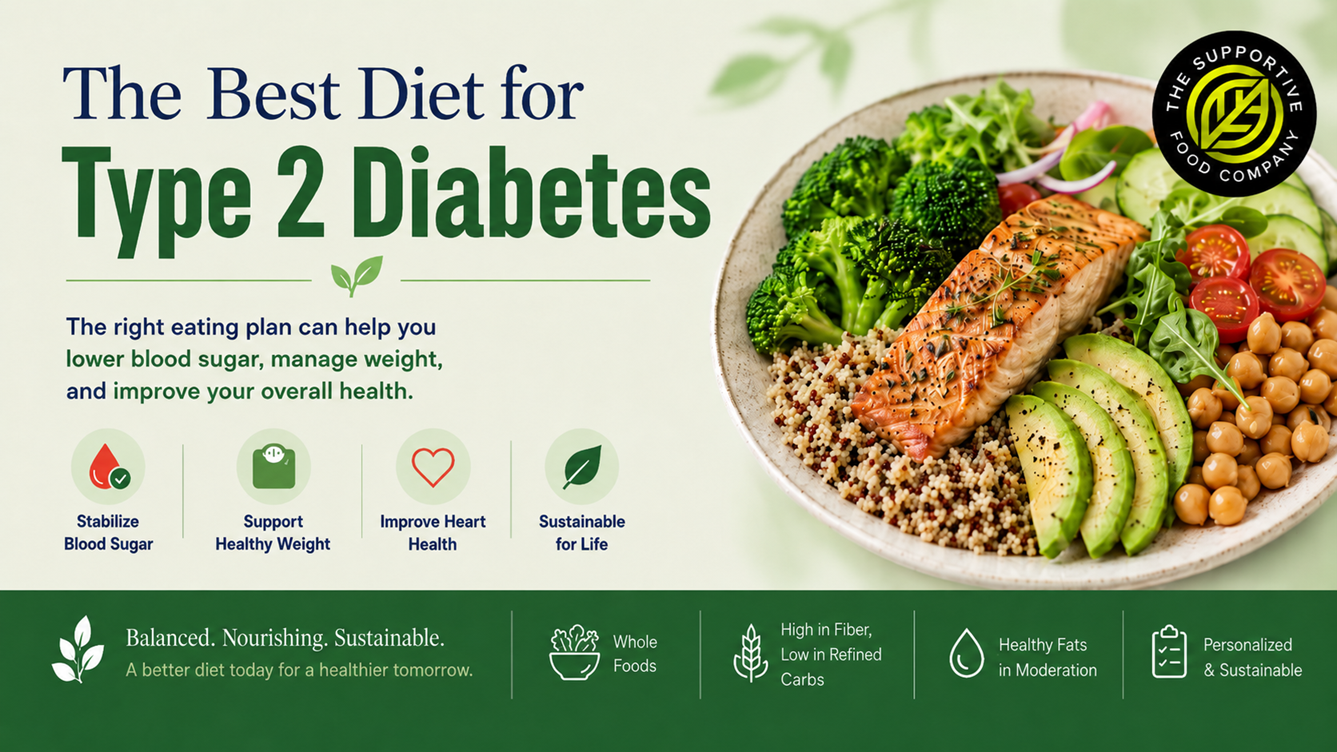
Getting diagnosed with type 2 diabetes can make every meal feel like a debate. One person swears by cutting all carbs, another pushes fasting, and someone else swears a smoothie will fix everything. With so much conflicting advice, the real question isn’t which trend is hottest, but what eating well for type 2 diabetes actually looks like in everyday life—with real budgets, real families, and real health needs.
The truth is, there’s no one-size-fits-all menu. But there is a common thread: the most effective approach helps keep blood sugar steady, boosts insulin sensitivity, protects heart health, and is something you can stick with. That usually means meals centered on high-fiber plant foods, enough protein, healthy fats, and carbs chosen for their quality, not avoided out of fear.
What the best diet for type 2 diabetes has in common
Type 2 diabetes isn’t just about sugar. It’s connected to insulin resistance, inflammation, liver health, body weight, stress, sleep, medication, physical activity, and often unequal access to healthy food. The best diet for managing it isn’t a punishment—it’s a realistic way of eating that eases strain on the body over time.
Many people do well with meals built around vegetables, pulses, whole grains, nuts, seeds, sensible portions of fruit, and protein from fish, eggs, yogurt, tofu, or lean meats, depending on personal preference and culture. These foods digest more slowly, helping to prevent sharp spikes and crashes in blood sugar, and they promote a steady feeling of fullness, which helps if hunger patterns have become unpredictable.
On the other hand, highly processed foods, sugary drinks, sweets, pastries, and large portions of refined starches can make blood sugar harder to manage. That doesn’t mean failure if they occasionally show up—it just means they’re best enjoyed once in a while rather than every day.
Why low-fibre, ultra-processed eating causes problems
For many people with type 2 diabetes, the food environment has been working against them for years. Cheap, calorie-dense options are everywhere, while high-fibre foods can be harder to find, store, or afford. Long hours, caregiving, and stress make convenience feel like a necessity instead of a treat.
Ultra-processed foods often mix refined carbs, added sugars, unhealthy fats, and salt in ways that encourage overeating. They’re easy to chew, quick to swallow, and not great at keeping you full, which can lead to bigger blood sugar swings and make maintaining a healthy weight harder.
That’s why any real talk about diet and diabetes has to address dignity and access to food. Advice only matters if it’s doable. Telling someone to eat fresh salmon and exotic grains every week isn’t guidance—it’s being out of touch.
Is low-carb the best diet for type 2 diabetes?
Cutting back on carbs can help some people lower blood sugar, lose weight, and even reduce diabetes medication under a doctor’s guidance. For those who tend to overeat bread, rice, potatoes, or snacks, eating less of them can bring quick results.
That said, low-carb isn’t right for everyone. It can feel too limiting, especially for vegetarians, people on a tight budget, families, or those with other health issues. Some start strong but end up stuck in a cycle of restriction and bingeing. A plan that works for a few weeks but falls apart after three months isn’t really a win.
It’s also worth noting the difference between cutting out unhealthy carbs and avoiding all carbs. Foods like beans, oats, lentils, whole grains, and many fruits can be part of a diabetes-friendly diet, offering fiber, nutrients, and a slower rise in blood sugar. It’s not just about how many carbs are on the plate, but what kind they are, how much there is, and what else they’re paired with.
Mediterranean-style eating often works well
If there’s one eating style worth talking about, it’s the Mediterranean approach. It’s not about chasing some dreamy lifestyle, but rather adopting its core principles: eating more vegetables, beans, olive oil, nuts, seeds, fish, whole grains, and minimally processed foods, while cutting back on sugary and heavily refined products..
This way of eating is often recommended because it supports blood sugar control while also helping heart health. That matters hugely, as type 2 diabetes raises the risk of cardiovascular disease. A diet that lowers glucose but ignores cholesterol, blood pressure and inflammation is only doing half the job.
Mediterranean-style eating is wonderfully flexible, easily fitting into British kitchens, cultural traditions, and modest budgets. Staples like tinned beans, porridge oats, frozen vegetables, plain yoghurt, eggs, carrots, cabbage, affordable oily fish, and wholemeal bread in sensible portions all work perfectly.
The plate matters more than perfection
For many people, the simplest starting point is to change the balance of the plate rather than chase a named diet. Half the plate from non-starchy vegetables is a strong foundation. Add a source of protein, include a modest portion of slower-digesting carbohydrate, and use healthy fats in realistic amounts.
That might look like vegetable soup with lentils and a slice of wholemeal toast, grilled fish with greens and new potatoes, or a bean chilli with brown rice and salad. It could also be Greek-style yoghurt with berries and seeds, or eggs with mushrooms, tomatoes and a small portion of oats later in the day. None of this is glamorous. That is partly the point. Useful food has to survive Tuesday.
What about weight loss?
For some, losing weight can greatly improve insulin sensitivity and even lead to remission. But weight isn’t the only factor that counts, and not everyone with type 2 diabetes has a larger body. The best diet should focus on supporting metabolic health without reducing someone’s worth to a number on the scale.
Rapid weight-loss programs can be useful in certain situations, especially with medical supervision. However, they’re not right for everyone, particularly those with a history of disordered eating, frailty, complex health issues, or unpredictable routines. Slower, steady changes may be less dramatic, but they’re often kinder and more sustainable.
Foods that tend to help most
Rather than sorting foods into saints and sinners, it is more useful to notice which foods consistently make daily management easier. Vegetables, especially leafy greens, cruciferous veg, peppers, tomatoes and courgettes, add volume and nutrients without sending blood sugar sharply upward. Pulses such as lentils, chickpeas and beans are especially valuable because they bring fibre and protein together.
Wholegrains like oats, barley and wholemeal rye often work better than refined cereals. Nuts and seeds can help with satiety. Protein foods reduce the chance that a meal leaves you hungry an hour later. Fruit is generally not the enemy, though fruit juice is much easier to overconsume and tends to raise blood glucose faster.
Practical changes that make a real difference
If you’re looking to eat better with type 2 diabetes, small, consistent changes can go a long way without overhauling your entire kitchen. Cut back on sugary drinks and fruit juice, and build your meals around vegetables and protein before adding starch. Try swapping white bread, white rice, and sugary cereals for higher-fiber choices. Keep simple, healthy staples on hand so convenience doesn’t have to mean processed food.
Eating at fairly regular times can help if your routine is all over the place, especially if your medication affects blood sugar. A short walk after meals works well for some, while others find that better sleep improves hunger and glucose more than any so-called superfood.
A note on personalisation and medication
Diet for type 2 diabetes is never one-size-fits-all. Age, ethnicity, income, cooking confidence, shift work, digestive conditions, kidney disease and medication all matter. Someone taking insulin or sulfonylureas needs to be especially careful with major carbohydrate reductions because hypos can become a risk.
This is why monitoring, support and honest self-observation matter. If a certain breakfast leaves you shaky by mid-morning, that is useful information. If a meal built on beans, vegetables and protein keeps you steady for hours, that matters too. Good nutrition advice should help people notice patterns, not chase purity.
At Supportive Food Directory, we believe better health should not depend on privilege, trendiness or shame. The best diet for type 2 diabetes is the one that improves blood glucose and overall health while still respecting culture, budget, appetite and daily reality.
A good diet will never solve every part of diabetes on its own. But every balanced meal is still a small act of care – and care, repeated often enough, can change the direction of a life.