
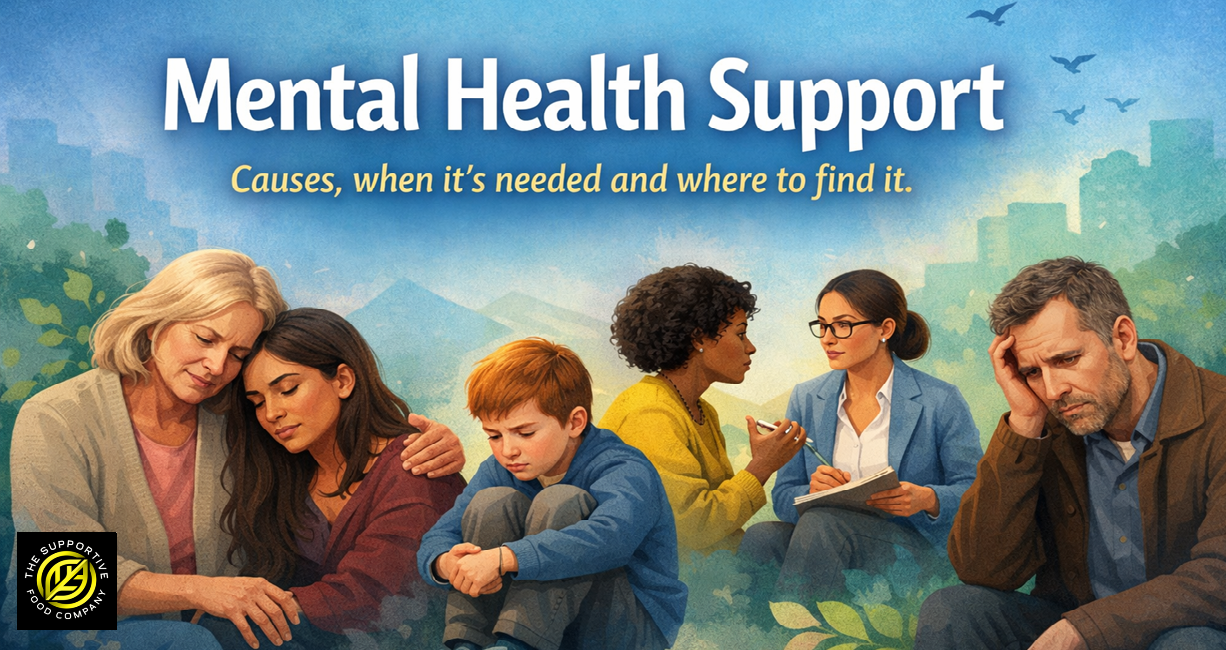
 Mental Health Support: causes, when needed, where to find it.
Mental health support is important at every stage of life. Many people think it’s only necessary during a crisis:
But it’s just as helpful for managing stress, grief, burnout, menopause, trauma, relationship issues, depression, major life changes, or those times when coping feels harder than usual.
Seeking help isn’t a sign of weakness—it’s a smart way to handle tough times.
 What can affect mental health?
Mental health is influenced by many factors, often all at once. Common triggers for emotional distress is a long list, including:
- Ongoing stress at work, school, or home
- Bereavement, separation, divorce, or loneliness
- Financial pressure, housing problems, or unemployment
- Physical illness, chronic pain, disability, or sleep problems
- Hormonal changes, including pregnancy, postnatal changes, and menopause
- Bullying, neglect, discrimination, or social isolation
- Abuse, including mental, physical, and sexual abuse
- Trauma from childhood or adult experiences
- Alcohol or drug misuse
- Caring responsibilities and burnout
Sometimes there’s no obvious reason. Someone might just start to feel down, anxious, stressed, angry, numb, or like they can’t handle things.
 When is mental health support needed?
Support can be helpful when emotional distress begins to interfere with daily life, relationships, sleep, appetite, work, school, parenting, or physical health. You don’t have to wait until things get really bad before reaching out for help.
Signs that support may be needed include:
- Feeling sad, anxious, hopeless, or constantly on edge
- Panic attacks or intense fear
- Trouble sleeping or sleeping too much
- Loss of interest in usual activities
- Withdrawing from friends and family
- Difficulty concentrating or making decisions
- Feeling tearful, irritable, or emotionally numb
- Changes in eating habits
- Using alcohol, drugs, or self-harm to cope
- Feeling unsafe at home or in a relationship
- Thoughts of self-harm or suicide
If someone is in immediate danger, has been seriously assaulted, is at risk from an abuser, or might act on suicidal thoughts, they need urgent help. In those moments, reach out to emergency services or a crisis line right away.
 Menopause and mental health
Menopause can significantly impact mental well-being, as hormonal changes may lead to low mood, anxiety, irritability, trouble sleeping, brain fog, panic, and a dip in confidence. While some experience only mild symptoms, others find these changes can deeply affect their work, relationships, and overall quality of life.
Mental health support during menopause may include:
- Speaking to a GP or clinician about symptoms
- Reviewing sleep, stress, and lifestyle factors
- Counselling or therapy for anxiety, mood changes, or overwhelm
- Medical support for menopause symptoms where appropriate
- Peer support groups for shared understanding and reassurance
Don’t brush off the distress of menopause as “just hormones.” The symptoms are real, and having support can make a big difference.
 Mental health support for children
Kids can face mental health challenges too, even if they can’t quite put it into words. Their struggles might show up more in changes to their behavior than in what they say.
Signs a child might need support include:
- Becoming withdrawn, fearful, or unusually clingy
- Big mood swings or frequent tearfulness
- Anger, aggression, or behaviour changes
- Trouble sleeping, nightmares, or bedwetting
- Loss of confidence or falling behind at school
- Complaints of stomach aches or headaches with no clear cause
- Avoiding school, friends, or activities they used to enjoy
- Changes after bullying, conflict at home, or a frightening event
Kids need calm, trustworthy adults who listen without judging. Support can come from parents, carers, teachers, school counselors, doctors, child therapists, or specialist mental health services. If there’s any suspicion of abuse, keeping the child safe is the top priority.
 Abuse and mental health
Abuse can deeply affect mental health, whether it is recent or happened years ago. Abuse may be:
- Mental or emotional abuse: threats, humiliation, coercion, manipulation, constant criticism, controlling behaviour
- Physical abuse: hitting, pushing, restraining, or any violent harm
- Sexual abuse: any sexual contact, pressure, coercion, assault, exploitation, or abuse without consent
People going through abuse might feel scared, ashamed, confused, guilty, panicked, worthless, depressed, numb, or have trauma symptoms. They might find it hard to trust others or even realise they’re being abused.
That’s why support is so important when someone is facing abuse. Helpful support can include:
- A trusted friend, family member, teacher, or colleague
- A GP or mental health professional
- Domestic abuse services
- Sexual assault or rape crisis services
- Child protection services where a child is at risk
- Police or emergency services if there is immediate danger
The most important message is this: abuse is never the victim’s fault.
 Where to find mental health support
Support can come from different places depending on the situation and level of need.
Everyday support
Opening up to someone you trust can be a great first step. It could be a friend, family member, partner, teacher, boss, faith leader, or community worker. Being listened to can help ease feelings of isolation and make it easier to reach out for more support.
Health professionals
A GP, family doctor, or primary care provider can help figure out what’s going on and suggest next steps. They might recommend talking therapy, medication, specialist care, or support for related issues like menopause, sleep, pain, or trauma.
Therapy and counselling
Counsellors, psychologists, psychotherapists, and other trained professionals can support people dealing with anxiety, depression, trauma, abuse recovery, grief, low self-esteem, and major life changes. Some services are offered privately, while others are accessible through public health systems, charities, schools, or workplaces.
School and child services
For kids and teens, schools can be a key place to find support. Teachers, safeguarding leads, school nurses, and counsellors are often there to help. There may also be access to specialist child and adolescent mental health services.
Abuse and crisis services
If someone is going through domestic abuse, sexual violence, coercion, or child abuse, specialist services are usually the safest and most helpful place to turn. They know how to handle trauma, create safety plans, and keep everything confidential.
Workplace or university support
Many employers and colleges provide wellbeing support, occupational health services, employee assistance programs, pastoral care, and counselling options.
Support groups
Peer groups can be a great way to feel less alone. They might focus on things like menopause, parenting stress, grief, recovering from abuse,, depression, or caring for others.
 What helps when asking for support?
It can help to say simple, honest things such as:
- “I’m struggling and I need some help.”
- “I don’t feel like myself.”
- “I’m not coping well.”
- “I feel unsafe.”
- “I think what happened to me was abuse.”
- “My menopause symptoms are affecting my mental health.”
- “I’m worried about my child.”
You do not need the perfect words. You only need a starting point.
Final thoughts
Mental health support is for anyone going through a tough time, not just those in crisis. It can be needed for many reasons, like stress, illness, trauma, menopause, childhood struggles, or abuse. Reaching out early can make it easier to stop problems from getting worse.
No one should have to face challenges alone, especially kids, people experiencing abuse, or anyone feeling overwhelmed or unsafe. Support is there, and taking the step to ask for it is both strong and important.
 Mental Health Support – a second opinion.
Mental health is just as important to our overall well-being as physical health, it can be trickier to talk about and define. It’s something that changes over time, shaped by our biology, environment, and the different stages of life we go through. Noticing when you need support—and knowing where to find it—is a key step toward building resilience.
Root Causes and Triggers
Mental health challenges rarely stem from a single source. Usually, they are the result of a complex interplay of factors:
-
Biological Factors: Genetics, brain chemistry, and hormonal shifts play a significant role.
-
Life Experiences: Trauma, loss of a loved one, or high-pressure environments can trigger long-term distress.
-
Social & Environmental Factors: Isolation, financial instability, or living in an unstable environment can erode mental fortitude over time.
Key Areas of Focus
Menopause and Hormonal Transitions
Menopause is often talked about in terms of physical changes like hot flashes, but the mental and emotional effects can be just as significant. Big swings in estrogen and progesterone levels can cause brain fog, increased anxiety, and bouts of depression. This stage of life often overlaps with major life changes—like kids moving out or taking care of aging parents—which can add to the stress. Support often comes through a mix of hormone therapy and focused counseling.
Support for Children and Adolescents
Kids see the world differently than adults, and their mental health challenges can show up as changes in behavior, slipping grades, or even physical issues like stomach aches. Getting help early is crucial—since their brains are still developing, teaching them ways to handle anxiety or depression can stop these problems from becoming long-term. Support often comes through school programs or family therapy.
Navigating the Aftermath of Abuse
Experiencing mental, physical, or sexual abuse is a profound trauma that can shatter a person’s sense of safety and self-worth.
-
Mental/Emotional Abuse: Often leaves invisible scars, leading to hyper-vigilance or “gaslighting” effects where the victim doubts their own reality.
-
Physical and Sexual Abuse: Requires immediate safety planning followed by trauma-informed care (such as EMDR or specialized CBT) to help process the event and reclaim autonomy.
When is Professional Support Needed?
It is time to seek help when mental health symptoms interfere with daily functioning. Look for these signs:
-
Duration: Feeling “low” or anxious for more than two weeks.
-
Withdrawal: Losing interest in hobbies, friends, and family.
-
Physical Changes: Drastic shifts in sleep patterns (too much or too little) or appetite.
-
Escapism: Increasing reliance on substances to cope with emotions.
-
Safety: Any thoughts of self-harm or feeling that the world would be better off without you.
 Where to Find Help
Support comes in many forms, from quick help during a crisis to ongoing connections with therapists for long-term care.
| Resource Type | Examples | Best For |
| Primary Care | GP or Family Doctor | Initial diagnosis, blood tests, and referrals. |
| Therapy | Psychologists, Counselors | Deep-diving into trauma, abuse recovery, and behavior patterns. |
| Support Groups | Peer-led circles | Finding community with others experiencing menopause or similar life hurdles. |
| Crisis Lines | Samaritans, Shout, National Domestic Violence Hotline | Immediate safety concerns or acute distress. |
| Charities | Mind, NSPCC (for children), Menopause Matters | Educational resources and specialized advocacy. |

Home Facebook Other sources About us
Sources this section:
- Find help for mental health | USAGov Provides information on mental health hotlines, counseling, and treatment options, including emergency contacts and resources for various mental health issues.
- Mental Health Resources | Mental Health | CDC Offers resources for immediate help, including the 988 Suicide & Crisis Lifeline, and directories for mental health service providers and support groups.
- Help for Mental Illnesses – National Institute of Mental Health (NIMH) Guides individuals to find immediate help, including the 988 Suicide & Crisis Lifeline, and provides information on locating mental health professionals.
- 7 Cups | Free Online Mental Health Support; Therapy & Counseling Connects users to free emotional support from trained listeners and offers affordable online therapy with licensed professionals.
- NAMI HelpLine | National Alliance on Mental Illness (NAMI) A free, confidential nationwide service providing one-on-one emotional support, mental health information, and resources.
Mental health awareness is an important step toward creating healthier communities where people feel comfortable seeking support. Access to compassionate professionals and personalized care can help individuals manage challenges such as stress, anxiety, life transitions, and emotional struggles.
It is encouraging to see more focus on making mental health resources easily available. Mindfully Fairfield is a great example of how accessible therapy and psychiatric support can help people take positive steps toward their overall well-being.