
Skip to content
Skip to content
Menu
1 supportive food logo top
  • Search
    • Cancer
    • Dementia
    • Depression
    • Diabetes
    • Heart
    • Kidney
    • Leukemia
    • Menopause
    • Mental Health
    • Obesity
    • Parkinson’s
    • Stroke
  • Food & Health
    • When all else has failed
    • Organic: Better Choice or Myth?
    • Food Waste Solutions
    • Whole Foods Versus Processed
  • Farming
    • Why a Regenerative Farming Future Matters
    • Advantages & challenges of Organic Farming
    • Organic Farming Benefits That Matter
  • Investors
    • Our Mission
    • Small Scale Local Appeals
  • Contact
    • About us
    • Medical Sources
    • Nutritional Sources
  • JOIN (Free)
    • The main benefits of joining
1 supportive food logo top

Advantages & challenges of Organic Farming

By team2 on 19 May 20262 August 2026

ecological advantages of organic farmingOrganic Farming | Farming Practices | Today’s Food System |  Advantages & challenges | A Message to Farmers | Farming benefits

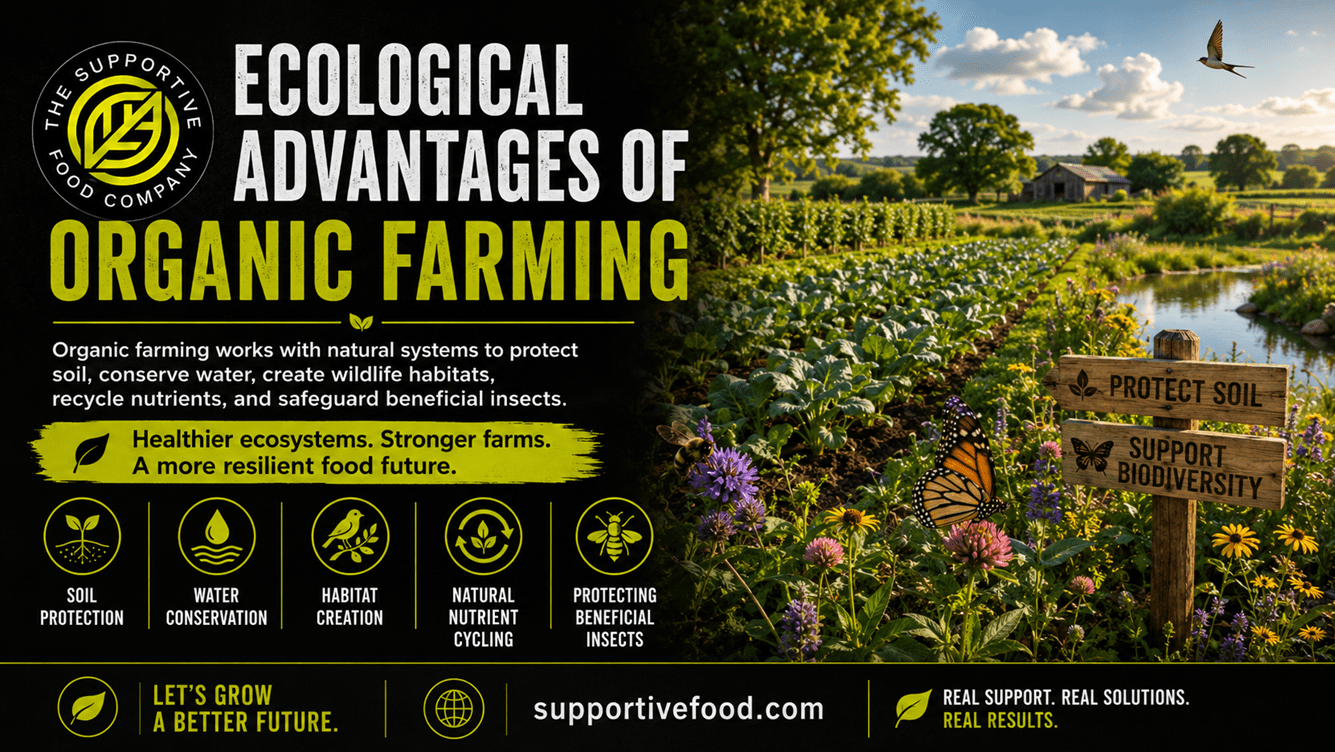
Ecological Advantages of Organic Farming

Organic farming offers several ecological advantages because it works closely with natural systems.

Soil Protection

Organic methods help reduce soil erosion by keeping the ground covered with crops, mulch, or plant residues. This protects topsoil from being washed or blown away.

Water Conservation

Soil rich in organic matter can hold more water, helping crops survive dry periods and reducing the need for irrigation. Cleaner farming methods also reduce the risk of polluting water sources.

Habitat Creation

Organic farms often include features such as trees, hedges, ponds, wild margins, and mixed planting areas. These habitats support birds, insects, small mammals, amphibians, and beneficial organisms.

Natural Nutrient Cycling

Organic farming recycles nutrients through compost, manure, plant residues, and cover crops. This reduces dependence on external synthetic inputs and helps create a more circular farm system.

Reduced Impact on Beneficial Insects

By avoiding broad-spectrum synthetic pesticides, organic farms can better protect beneficial insects that help with pollination and natural pest control.


Challenges of Organic Farming

Although organic farming has many benefits, it also comes with challenges.

Lower Yields in Some Conditions

Organic farms may produce lower yields than conventional farms, especially during transition periods or in systems where pests, diseases, or soil fertility are difficult to manage. However, results vary depending on crop type, region, climate, and farming skill.

Higher Labour Requirements

Organic farming often requires more manual work, especially for weed control, compost management, crop monitoring, and livestock care. This can increase production costs.

Certification Costs and Rules

Farmers who want to sell certified organic products must usually follow strict standards and undergo inspections. Certification can be expensive or complicated, especially for small farmers.

Pest and Disease Pressure

Without synthetic pesticides, organic farmers need strong prevention strategies. If pests or diseases become severe, control options may be more limited.

Transition Period

Land usually needs a transition period before it can be certified organic. During this time, farmers may face higher costs while not yet receiving organic price premiums.

Market Access

Some organic farmers struggle to reach customers willing or able to pay higher prices. Distribution, storage, and marketing can also be difficult in some regions.

Knowledge and Training

Organic farming requires a deep understanding of soil, ecology, crop cycles, pests, weather, and farm management. Farmers may need training and support to make the system successful.


Organic Farming and the Future of Food

Organic farming plays a key role in the global push for sustainable agriculture. It offers simple, effective ways to protect soil, cut down on pollution, support biodiversity, and grow food in harmony with nature.

Organic farming isn’t a cure-all for every challenge in our food systems, but it thrives when paired with solid science, local wisdom, fair markets, mindful consumption, and supportive policies.

As issues like climate change, soil erosion, water shortages, and biodiversity loss grow more pressing, organic farming offers important lessons: healthy soil counts, biodiversity counts, and farming should work with nature, not against it.


Conclusion.

Organic farming is a sustainable approach to agriculture that focuses on soil health, ecological balance, animal welfare, and reduced chemical use. Its methods include composting, crop rotation, cover cropping, natural pest control, and responsible livestock management.

Organic farming offers benefits like healthier soils, cleaner water, greater biodiversity, better pollinator protection, and long-term environmental resilience. However, it also comes with challenges such as lower yields in some cases, higher labor demands, certification expenses, and difficulties in managing pests.

Overall, organic farming plays a vital role in building a more sustainable, balanced, and environmentally responsible food system for the future.

In this section

  • Organic Farming – what is it?
  • Common Organic Farming Practices
  • Organic Farming in Today’s Food System
  • Advantages & challenges of Organic Farming (This page)
  • A Message to Farmers Using Chemical Inputs

Home | Food | Facebook | Other sources | Editors


Sources:

  • Organic farming | Definition, History, Methods, Practices, & Benefits | Britannica  An in-depth article from Britannica covering the definition, history, methods, practices, and benefits of organic farming, including its ecological advantages and challenges.
  • Organic Farming | US EPA  The U.S. Environmental Protection Agency’s overview of organic farming, detailing its practices, benefits, and the National Organic Program.
  • What is Organic Farming? | Soil Association  An explanation from the Soil Association about organic farming, emphasizing its holistic approach to soil health, ecosystems, and human well-being.
  • Organic Farming | USDA  The U.S. Department of Agriculture’s resources on organic farming, including data, research, and support for organic producers.
  • Organic food | Definition, Policies, & Impacts | Britannica  An article from Britannica discussing the definition, policies, and impacts of organic food, including its production methods and market growth.

Home | Food | Facebook | Other sources | Investors | Editors | Contact

Post navigation

A Message to Farmers Using Chemical Inputs
12 Heart Healthy Food Swaps That Help

Leave a Reply

Your email address will not be published. Required fields are marked *

search banner
the nutrition and disease connection
Ivermectin and Cancer What Does the Research Say
richest poorest nations 2
dandelion banner
zero hunger community projects that work
about founders an team
superfoods what exactly are they
depression causes symptoms supportive food
menopause symptoms
Mental Health Support
organic farming benefits that matter
full site index
1 how why the provision of clean water

Recent Posts

  • The Future of Food as Medicine Is Collective
  • Why Community Meals for Vulnerable Adults Matter
  • What Is Food as Medicine and Who Can It Help?
  • Fresh Produce Versus Supplements: What Helps?
  • Carer Meal Prep Ideas for Easier, Better Weeks
  • 12 Best Nutrient Dense Pantry Staples to Keep
  • Which Foods Support Immunity? A Practical Guide
  • A Guide to Food Insecurity and Fairer Access
  • Budget Meals for Fatigue That Keep You Going
  • Organic Versus Regenerative Farming Explained
  • What Foods Support Heart Health? A Practical Guide
  • Ivermectin and Cancer: What Does the Research Say?
  • Dandelion Root and Cancer: What Does the Research Actually Say?
  • Food Support After Hospital Discharge That Works
  • Nutrition Therapy Versus Medication: When Each Helps
  • Can Nutrition Support Recovery After Illness?
  • Best Foods for Immune Resilience Each Day
  • Meal Planning for Carers Made More Manageable
  • Can Nutrition Help Treatment Side Effects Safely?
  • Why the Farmers and Consumers Connection Matters
© 2026 SupportiveFood.com. All rights reserved. Supportive Food provides general educational information informed by healthcare, nutrition, food systems and lived professional experience. It is not a substitute for personalised medical, nutritional or professional advice.

Powered by
►
Necessary cookies enable essential site features like secure log-ins and consent preference adjustments. They do not store personal data.
None
►
Functional cookies support features like content sharing on social media, collecting feedback, and enabling third-party tools.
None
►
Analytical cookies track visitor interactions, providing insights on metrics like visitor count, bounce rate, and traffic sources.
None
►
Advertisement cookies deliver personalized ads based on your previous visits and analyze the effectiveness of ad campaigns.
None
►
Unclassified cookies are cookies that we are in the process of classifying, together with the providers of individual cookies.
None
Powered by