
Organic Food: What It Means, Where It Helps, and Why Access Matters
A small tray of strawberries can reveal a great deal about the way food is produced. One option may be inexpensive, plentiful and available almost every month of the year. Another may carry an organic label, come with a higher price, and invite a deeper question: what exactly are we paying for when we choose organic food?
For many people, this is not just a shopping preference. It may be connected to illness, recovery, family budgets, children’s sensitivities, worries about pesticide residues, or a belief that farming should protect the land rather than exhaust it. Organic food is often used as a quick way of saying “cleaner”, “healthier” or “more responsible”. Sometimes that is useful. Sometimes it oversimplifies a much more complicated story.
What does organic food mean?
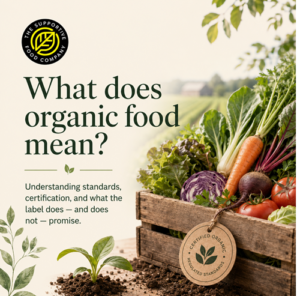 Organic food is produced under farming standards that control how crops are grown and how animals are raised. Although rules vary by country and certification body, organic systems usually place restrictions on synthetic pesticides and fertilisers, limit routine antibiotic use, and give greater attention to soil health, biodiversity and animal welfare.
That distinction matters. Organic is not simply attractive branding or a lifestyle word placed on packaging. When a product is certified organic, it has been produced within an inspected framework. This does not mean every organic farm is perfect, or that all organic products are equal. However, it does mean the label has a clearer basis than many vague food marketing claims.
It is also important not to overstate what organic means. Organic food is not always completely free from pesticides. An organic cake or biscuit is not automatically nutritious simply because some ingredients are organic. Organic does not always mean local, low-carbon, affordable or minimally processed. Those qualities depend on the individual product, the producer and the supply chain behind it.
Is organic food better for health?
 People often want a straightforward answer to this question, but the truth is more balanced.
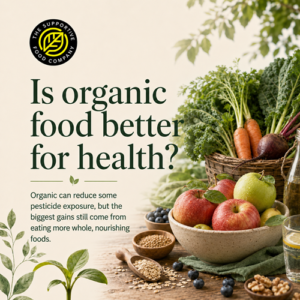
Choosing organic may reduce exposure to some synthetic pesticide residues. For families dealing with allergies, long-term health concerns, children’s diets, or a desire to reduce avoidable chemical exposure, that can feel significant. Sometimes the reassurance itself is part of the value.
However, the nutritional gap between organic and non-organic foods is not always large. An organic apple is still an apple. A conventionally grown apple can still provide fibre, vitamins and useful plant compounds. In many cases, the biggest health improvement comes from eating more vegetables, fruit, beans, lentils, nuts, seeds and whole foods overall, rather than focusing only on whether every item has an organic label.
This matters because healthy eating should not become something that only feels possible for people with more money. If organic food is presented as the only acceptable choice, those on tighter budgets may feel pushed out of the conversation altogether. That helps nobody.
For people living with illness, caring responsibilities or limited energy, food advice has to stay practical. Organic options may be worthwhile when they are available and affordable. When they are not, washing fruit and vegetables, choosing less processed foods, cooking simple meals and adding fibre-rich staples still matter. A realistic meal that supports the body is better than an ideal version that is financially or practically out of reach.
The environmental case for organic food
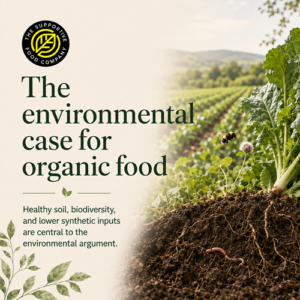 The strongest argument for organic food is often not just about personal nutrition, but about the health of the wider environment.
Organic farming generally aims to work more closely with natural systems. It often gives greater importance to soil structure, crop rotation, wildlife habitats and reduced reliance on synthetic inputs. In a world facing soil degradation, biodiversity loss, water pollution and climate pressure, these farming choices deserve serious attention.
Soil is not just dirt beneath our feet. It supports nutrient cycling, stores water, helps crops withstand difficult weather, and underpins long-term food production. When farming damages soil, the consequences eventually affect everyone through weaker ecosystems, poorer resilience and increased pressure on food security.
Organic practices can help support more diverse landscapes and reduce some types of environmental harm. But there are trade-offs. Some organic systems may produce lower yields, which can increase pressure on land if consumption habits stay the same. A food culture built around high waste, high meat consumption, constant availability and very low prices cannot easily be made sustainable by changing labels alone.
That is why organic food should be seen as one part of a wider food conversation. It cannot fix the food system by itself. Waste, diets, farming support, supply chains and fair prices all matter too.
Why price and access must be part of the discussion
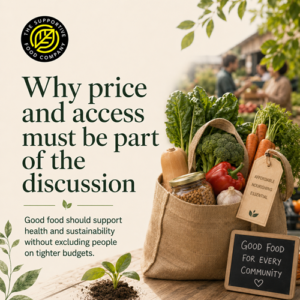 For many households, the organic debate ends as soon as they see the price. Organic food often costs more, and that difference can be difficult to manage when everyday living costs are already high. This can be especially challenging for people dealing with illness, disability, caring roles, reduced income or rising household bills.
This turns organic food from a personal choice into a social issue. If food that is better for people and the planet is only available to those who can comfortably afford it, then the wider system is not working well enough. Nobody should be forced to choose between eating well and staying financially afloat.
There are understandable reasons why organic products can cost more. Certification, smaller-scale production, extra labour, different farming methods and lower yields can all affect the final price. Many organic farmers are not making excessive profits; they are trying to survive while producing food in a more careful way.
Even so, the answer cannot simply be to ask shoppers to pay more. A fairer food system needs stronger local supply networks, less waste, better public food purchasing, support for independent producers, and a view of good food as part of public health rather than a luxury extra. This is where platforms such as the Supportive Food Directory can play a valuable role, helping connect food, farming, health, dignity and access.
When organic may be worth choosing
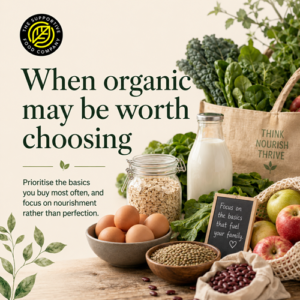 For people working within a limited budget, it can be more useful to think about priorities rather than perfection.
Some households choose organic for foods they eat most often, such as oats, milk, eggs, apples or salad leaves. Others may prioritise organic food for children, during periods of illness or recovery, or when they want to support farms whose values match their own.
The most useful organic choices are often simple foods rather than highly processed premium products. Organic vegetables, fruit, eggs, dairy, grains and pulses may offer better everyday value than expensive snacks that happen to carry an organic label. If the aim is nourishment, the overall quality of the diet still matters more than the label alone.
It is also worth looking beyond certification. A nearby grower who is not certified organic but uses thoughtful, low-input methods may be contributing more to the local community than an organic product wrapped in heavy packaging and transported over long distances. Labels are helpful, but trust, transparency and relationships matter too.
Organic food is not the only sign of a better food system
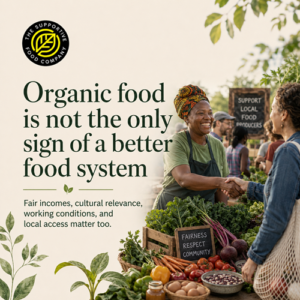 A healthier food future cannot depend on one label. It also requires fair incomes for farmers, decent working conditions, culturally appropriate food, better access in underserved areas, and honest education about diet, illness and prevention.
There must also be room for nuance. Some small producers use regenerative, ecological or low-input methods but cannot afford organic certification. Some families buy a mixture of organic and non-organic food because that is what their budget allows.
Some people managing illness may need simple, affordable, energy-efficient meals more than anything else. These realities should be respected.
Food choices are made in real homes, with real pressures. The goal is not purity. The goal is progress towards a food system where health, ethics, sustainability and affordability are not constantly in conflict.
A better way to think about organic food
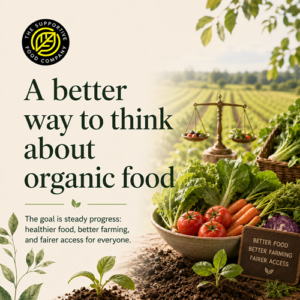 Rather than asking whether organic food is either essential or overrated, it may be more useful to ask where it genuinely helps.
Organic food can reduce some unwanted exposures, support more soil-conscious farming, and give people a way to back producers who are trying to work differently. Those are meaningful benefits. But organic food is not a cure-all, and it should never be used to shame people who are already doing their best with limited time, money, health or energy.
What matters most is not simply the right to buy organic food. It is the right for everyone to access food that supports wellbeing, respects nature and does not increase inequality. That requires more than individual shopping decisions. It requires community effort, public commitment and a refusal to treat good food as a privilege.
If organic food helps you feel more confident, more nourished and more connected to responsible farming, that has value. If it is not affordable or available to you right now, your food choices can still be caring, meaningful and worthwhile. A fairer food future will not be built through perfection, but through steady, shared change.