
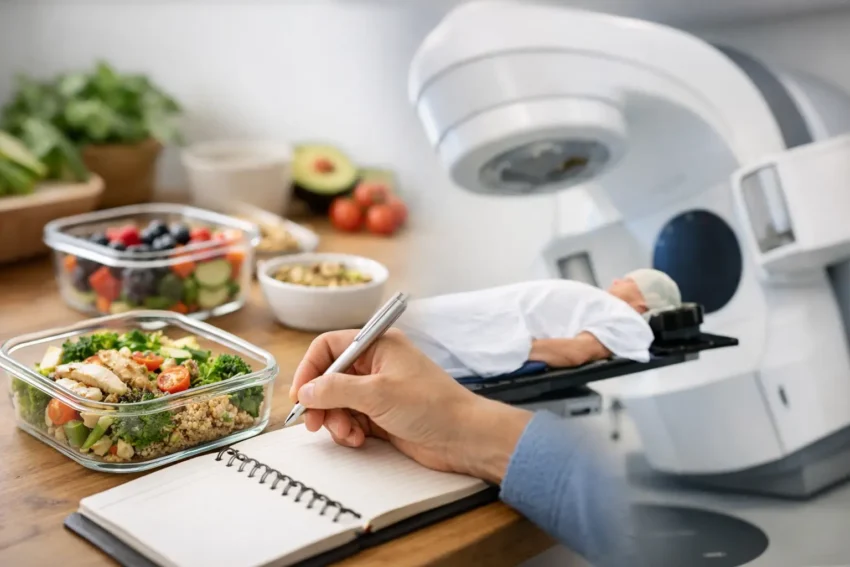
Radiotherapy can make food feel unpredictable. One week you may manage a normal meal, and the next you may be dealing with a sore mouth, dry throat, nausea, bowel changes or a level of tiredness that turns cooking into a serious task. That is why meal planning during radiotherapy is less about perfection and more about keeping nourishment practical, flexible and kind.
For many people, eating well during treatment is not about following an ideal diet. It is about protecting energy, helping the body cope with treatment, and reducing the strain on patients and carers who are already carrying a great deal. A good plan makes room for changing symptoms, changing appetite and changing capacity. It should work on the difficult days, not just the good ones.
Why meal planning during radiotherapy needs flexibility
Radiotherapy side effects depend on the area being treated, the dose, the number of sessions and whether other treatments are happening at the same time. Someone having treatment to the head and neck may struggle with chewing and swallowing. Someone having pelvic radiotherapy may experience diarrhoea, cramping or urgency. Others may feel nauseous, lose their appetite or notice that foods taste metallic or strangely flat.
This matters because a rigid eating plan can quickly become unhelpful. If your plan only works when you feel well enough to shop, cook and sit through a full meal, it is likely to fail when support is needed most. A realistic plan builds in alternatives. It assumes some days will be harder. It also accepts that the right food during treatment is often the food you can actually manage.
That can feel frustrating, especially for people used to cooking from scratch or eating in a very particular way. Yet there is dignity in adapting. Rest is not laziness. Convenience is not failure. When treatment is intense, food needs to serve health, not aspiration.
Start with what is manageable now
The best place to begin is with an honest picture of your current eating pattern. Can you manage three meals, or are small amounts more realistic? Are hot foods comforting or off-putting? Do mornings feel easier than evenings? Is shopping possible, or does it depend on someone else?
These questions shape a plan that fits real life. For many households, six smaller eating opportunities across the day are easier than expecting three substantial meals. A bowl of porridge, yoghurt with stewed fruit, soup with soft bread, scrambled eggs, rice pudding or a milky drink may all count as useful nourishment. During radiotherapy, every manageable mouthful has value.
It can help to think in categories rather than recipes. Keep a few soft foods, a few higher-protein foods, a few easy carbohydrates and a few drinks you tolerate. That way, if one option suddenly becomes unappealing, there is something else to fall back on.
Build meals around energy and protein
When appetite is poor, the priority often shifts from eating perfectly to eating enough. Radiotherapy can increase nutritional needs, and side effects can make meeting them more difficult. Protein matters because it helps maintain muscle and supports repair. Energy matters because fatigue can deepen quickly when intake drops.
This does not mean every plate must be large. It means looking for gentle ways to increase nourishment without creating pressure. Adding grated cheese to mashed potato, using full-fat yoghurt if tolerated, stirring milk powder into porridge, or choosing eggs, beans, fish, chicken or tofu in small portions can all help. Some people do better with familiar beige foods during treatment. That is not glamorous, but if it is what stays down and gets eaten, it has a place.
There is also an emotional side to this. People are often told to eat healthily, then find themselves surviving on plain pasta, custard and toast. Shame should not be part of cancer care. Meeting your needs during treatment may look different from your usual habits. That is allowed.
Meal planning during radiotherapy for common side effects
Different symptoms call for different adjustments, and sometimes those adjustments will conflict. A high-fibre meal may help one person but worsen diarrhoea for another. A sharp, acidic flavour may wake up the appetite for some and be painful for others. It depends on your symptoms, your treatment area and the advice of your clinical team.
If your mouth or throat is sore
Soft, moist foods are often easier than dry or scratchy ones. Porridge, yoghurt, custard, mashed vegetables, well-cooked pasta with sauce, cottage pie, soups and smoothies may be more manageable. Let hot food cool slightly, and avoid anything spicy, very salty or acidic if it stings. Sips of water or a sauce alongside meals can make swallowing easier.
If taste changes are making food unappealing
Cold or room-temperature foods sometimes smell less intense than hot meals. If meat tastes unpleasant, alternatives such as eggs, cheese, yoghurt, lentils or soft fish may be easier. Tart flavours can help some people, but not if the mouth is sore. Using plastic cutlery can reduce a metallic taste for a few patients, though not everyone notices a difference.
If nausea is a problem
Plain, dry foods may be easier first thing or between medicines. Small portions often work better than large meals. Greasy, rich or heavily spiced dishes can be difficult during active nausea, but this varies. Keep simple fallback foods nearby so you are not forced to make decisions when you feel sick.
If diarrhoea or bowel irritation develops
Low-fibre, easy-to-digest foods may help for a time. White rice, white toast, bananas, plain pasta, smooth peanut butter, potatoes without skins and simple soups can be gentler choices. Drinking enough is essential, especially if bowel losses are frequent. If symptoms persist or become severe, your medical team needs to know.
Practical planning for tired days
Fatigue is one of the biggest barriers to eating well during treatment. Many people do not need more recipe inspiration. They need a system that still works when standing up feels like effort.
Batch cooking can help if done before treatment starts or on stronger days. Small portions are often more useful than large family dishes because appetite may vary from day to day. Freeze single servings of soup, cottage pie, dhal, fish pie or pasta bake in clearly labelled containers. Keep easy items at eye level in the fridge and cupboard so the least effort is required.
A useful plan often includes foods that need little or no preparation. Yoghurt pots, rice pudding, bananas, oatcakes, soft bread, baked beans, tinned soup, eggs and ready-made mashed potato all have a role. This is where fairness matters too. Not everyone has time, money, transport or spare freezer space. Food advice must meet people where they are, including those relying on carers, hospital transport, community support or a local shop with limited stock.
If you are caring for someone having radiotherapy, ask what feels manageable before cooking a large meal. A person may want just a few spoonfuls, or they may be hungrier at unusual times. Flexibility is often more helpful than insistence.
Shopping with treatment in mind
A radiotherapy-friendly food shop is usually simpler than a wellness shop. Focus first on foods you know are tolerated, then add a few options for symptom changes. It is sensible to keep staples for quick meals, snacks that provide energy, and drinks that are easy to take when food feels difficult.
This might mean milk, yoghurt, eggs, bread, cereal, bananas, potatoes, pasta, rice, soup, beans, cheese and frozen vegetables. For some households, it may also mean nourishing convenience foods that save effort and reduce waste. There should be no moral hierarchy here. A ready meal that gets eaten is more useful than fresh ingredients left untouched because treatment has wiped out the energy to cook.
Where possible, try not to shop day by day. A short reserve of dependable foods can reduce stress after appointments and on weekends when symptoms sometimes catch up. If friends ask how to help, asking for a food shop, a home-cooked portion in a freezer tub, or help with collecting essentials is a practical and generous answer.
When to ask for more support
Meal planning during radiotherapy can do a great deal, but it is not a substitute for clinical advice. If eating becomes painful, if swallowing is difficult, if weight is dropping, if diarrhoea is severe, or if you are struggling to drink enough, speak to your radiotherapy team, CNS, GP or dietitian. Early help matters.
Some people need oral nutrition supplements, texture-modified diets or more individual guidance. That is not a sign that you have got it wrong. It is part of treatment support. The fairest healthcare approach recognises that people need different levels of help, and that good nutrition advice should be accessible rather than reserved for those with time, money or specialist knowledge.
Supportive Food Directory exists because food is never just about ingredients. It is about care, access, confidence and the conditions that make nourishment possible. During radiotherapy, those conditions matter just as much as the menu.
If food feels like one more battle right now, make the plan smaller. Aim for the next snack, the next drink, the next soft meal that feels possible. Small acts of nourishment still count, and they are often the ones that carry people through treatment with the most steadiness.