
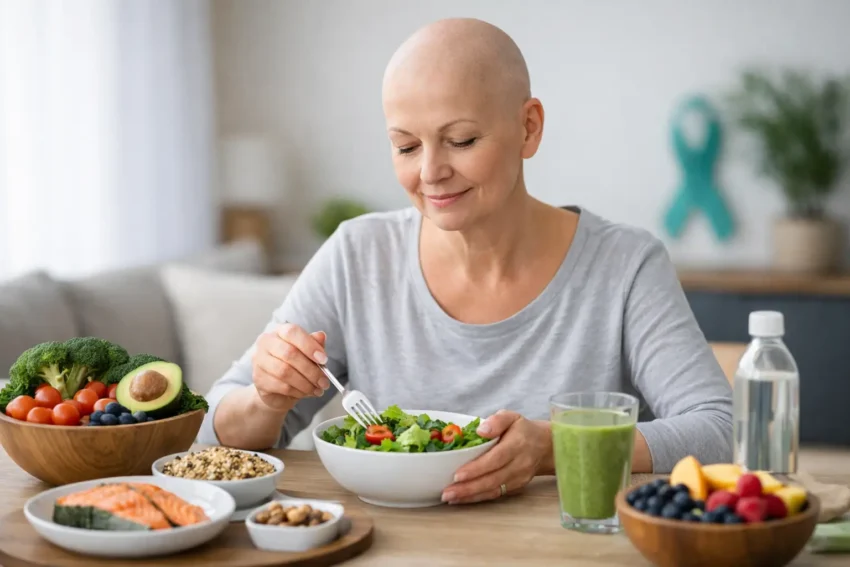
When treatment ends, people often expect life to return to normal quickly. In reality, the weeks and months afterwards can feel uneven. Appetite may still be low, taste may be altered, bowels may be unsettled, and energy can disappear without warning.
That is why thinking carefully about diet after cancer treatment matters – not as a perfect eating plan, but as a practical way to support healing, rebuild strength and make everyday life feel more manageable.
There is no single post-cancer menu that suits everyone. Recovery depends on the treatment you had, the part of the body affected, current symptoms, medicines, weight changes, mobility, other health conditions and, just as importantly, your budget and access to food. Advice that sounds simple on paper can be hard to follow if food shopping is exhausting, cooking feels impossible, or suitable food is too expensive. Good nutrition support has to be realistic as well as evidence-based.
What diet after cancer treatment is really trying to do
At this stage, food is not about chasing perfection. It is about helping the body repair tissues, maintain or regain muscle, steady energy levels, support immune function and improve quality of life. For some people, the priority is eating enough after weight loss. For others, it is adjusting to digestive changes, protecting bone or heart health, or slowly moving towards a more varied pattern of eating after a long period of treatment disruption.
Protein often becomes more important than people realise. Surgery, chemotherapy, radiotherapy and prolonged illness can all reduce muscle mass. If strength has dipped, regular protein through the day may help more than having one larger serving in the evening. Eggs, yoghurt, milk, cheese, fish, beans, lentils, tofu, chicken, nuts and seeds can all play a part, depending on what you tolerate and can afford.
Energy matters too. If you are struggling with tiredness or unplanned weight loss, lower-fat or lighter foods are not always the answer. Sometimes meals need to be fortified with olive oil, nut butter, grated cheese, full-fat dairy or nourishing snacks between meals. On the other hand, if treatment has ended and steroid-related weight gain, high cholesterol or raised blood sugar are now concerns, the balance may shift towards meals built around vegetables, pulses, wholegrains and modest portions of healthy fats. Both situations are valid. This is where blanket advice often fails people.
Eating well after treatment without chasing a perfect diet
A supportive diet after cancer treatment usually starts with consistency. Three regular meals may feel too much, so smaller meals and snacks can be easier. A bowl of porridge with seeds, yoghurt with stewed fruit, soup with beans, scrambled eggs on toast, dhal with rice, baked fish with potatoes, or hummus with oatcakes can all be useful building blocks. These are ordinary foods, and that matters. Recovery is difficult enough without being told that every meal must be worthy, expensive or fashionable.
Variety still counts. Fruit and vegetables bring fibre, vitamins, minerals and plant compounds that support overall health, but quantity and texture may need adjusting if your gut is sensitive. Cooked vegetables, peeled fruit, smoothies or blended soups may be easier than large raw salads early on. Wholegrains can help bowel health and fullness, yet some people recovering from bowel treatment or surgery need a lower-fibre approach for a while. Gentle progression is often kinder than trying to overhaul everything in a week.
Hydration is easy to overlook, especially when appetite is poor. Water, milk, tea, soup and diluted juice all contribute. If diarrhoea, vomiting or a high-output stoma is an issue, fluid and salt balance may need closer attention. If swallowing is painful or difficult, drinks with calories and protein may do more work than plain fluids alone.
Common problems with diet after cancer treatment
The detail depends on your symptoms. Taste changes are common after chemotherapy and some targeted treatments. Food may seem metallic, bitter or strangely bland. Sharp flavours such as lemon, herbs or pickled vegetables sometimes help, although they can irritate a sore mouth. Cold foods may be easier than hot meals if smells trigger nausea. If red meat tastes unpleasant, eggs, dairy, beans, lentils or fish may be better accepted.
Dry mouth can make eating feel like hard work. Moist foods such as yoghurt, custard, porridge, casseroles, soft fruits and sauces are often easier than dry crackers or plain bread. Sipping fluids with meals can help, though some people find drinking before meals makes them feel too full.
If your bowels have changed, the answer is not always “more fibre”. Constipation may improve with fluid, movement, fruit, oats, pulses and regular meals, but some medicines can make it stubborn. Diarrhoea may settle if you temporarily reduce very rich foods, alcohol, excess caffeine or large amounts of insoluble fibre, then build back up slowly. After bowel cancer treatment, pelvic radiotherapy or gastrointestinal surgery, individual tolerance can vary widely. Keeping a simple food and symptom note for a week or two can reveal patterns without becoming obsessive.
Weight loss deserves prompt attention. If clothes are hanging off, you feel weaker, or meals are becoming smaller and smaller, food needs to work harder. Fortified milk, milky puddings, cheese on soups, nut butters on toast, eggs added to mashed potato, and snacks that combine energy with protein can make a real difference. Weight gain can also feel distressing, especially after hormonal treatment, early menopause, reduced mobility or steroid use. In that case, the goal is not harsh restriction. It is rebuilding a steadier pattern of eating that keeps you nourished while supporting long-term health.
Food safety matters more than fads
After cancer treatment, people are often offered dramatic claims about detox plans, fasting, supplements or cutting out whole food groups. Most of these promises ask a lot and give little back. The body already has systems for processing waste. What it usually needs from food is adequacy, not punishment.
Food safety can be more relevant than fashionable rules, particularly if immunity is reduced. Safe storage, good hand hygiene, proper cooking and paying attention to use-by dates are basic but worthwhile. If you are unsure whether you still need extra precautions, ask your treatment team or dietitian, because recommendations differ depending on your current blood counts and treatment history.
Supplements also sit in an “it depends” category. Some people genuinely need them, especially if blood tests show a deficiency or intake has been poor for some time. Others spend money on products that are unnecessary or may clash with medicines. More is not automatically better. A clinician or registered dietitian can help judge what is sensible.
The wider reality: recovery depends on access, not willpower
Any conversation about food and cancer should be honest about inequality. It is hard to maintain a nourishing diet if income has dropped, transport is limited, fatigue stops you cooking, or local food options are poor. Many people leave treatment carrying not just physical side effects but financial strain and isolation. That is not a personal failure. It is a public-health issue.
Support may need to include meal sharing, community cooking, help with shopping, adapted kitchen routines, or better signposting to local food support. Farmers, producers, carers, neighbours and health professionals all have a role in making good food more reachable. That wider picture matters to us at Supportive Food Directory, because no one should be told to eat well while being left without the means to do it.
When to ask for more help
Please seek individual advice if you have ongoing weight loss, severe diarrhoea, constipation that does not improve, swallowing difficulty, mouth ulcers, nausea, signs of dehydration, or fear around eating. The same applies if you have had treatment affecting the bowel, stomach, pancreas, head and neck, or if you are managing a stoma. These situations often need tailored support rather than generic healthy eating tips.
A registered dietitian with oncology experience can be especially helpful where symptoms are persistent or eating has become stressful. Recovery is not only about nutrients on a plate. It is also about confidence, pleasure and feeling safe enough to eat again.
Food after treatment does not have to be perfect to be healing. Start where you are, eat what you can tolerate, and let progress be steady rather than strict. A nourishing future is built meal by meal, with dignity, support and enough room for real life.