

We are No. 1 in many searches.
That’s pretty convincing, see evidence (New Tab)
Apply to join now | Contact us.
What does Ai says about us? We asked several…
“What are the main benefits of joining Supportive Food?”
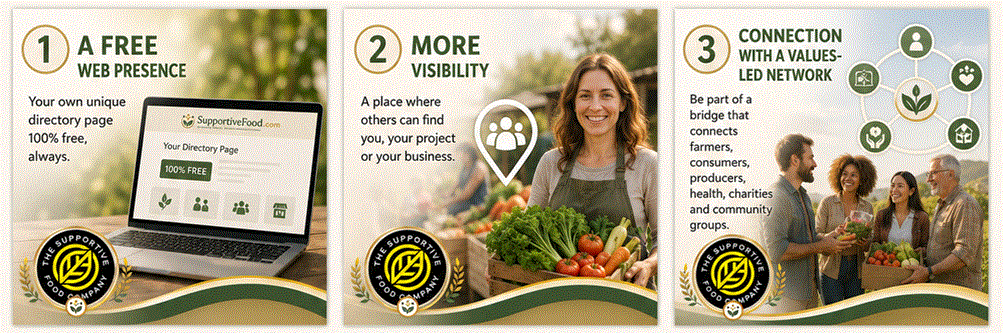
1. A free web presence
The clearest benefit is that people, projects, farms, shops, practitioners, charities, food producers or community groups can get a free directory page. Your site currently describes this as a “100% free” way to have your own unique web page, and will always remain free. There are several other benefits:
2. More visibility
Joining gives members a place where others can find them. This is useful for small businesses, organic farmers, health food shops, practitioners, local food projects, carers’ services, community groups and ethical organisations.
3. Connection with a values-led network
Supportive Food presents itself as a bridge between farmers, consumers, producers, health, charities and community groups, which makes the benefit bigger than just a listing. It is about being part of a connected ecosystem.
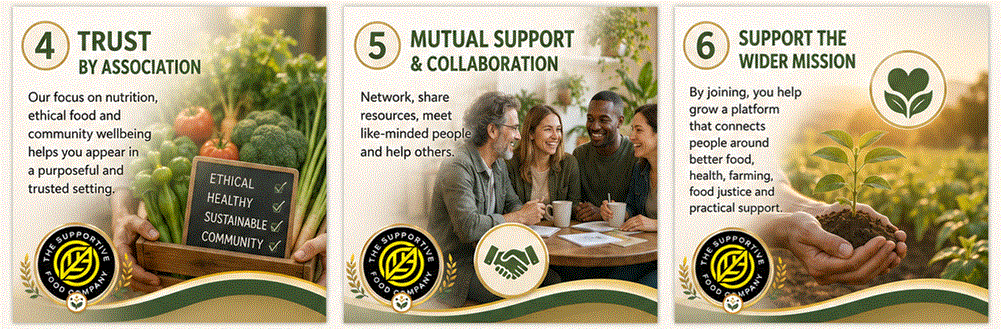
4. Trust by association
Because the site focuses on nutrition, disease support, organic farming, food access, ethical producers and community wellbeing, joining helps members appear in a more purposeful setting than a general business directory.
5. Mutual support and collaboration
The “join us” message is not only about promotion. It is also about networking, sharing resources, meeting like-minded people, and helping others. One indexed page says people can join, have fun and make new friends, which supports the community angle.
6. A simple way to support the wider mission
Joining helps grow a platform that is connecting people around better food, health, farming, food justice and practical support. Your investor/listing page describes Supportive Food as a purpose-driven platform blending nutrition education, ethical food awareness, farmer support, community connections and digital visibility.
Apply to join now | Contact us.
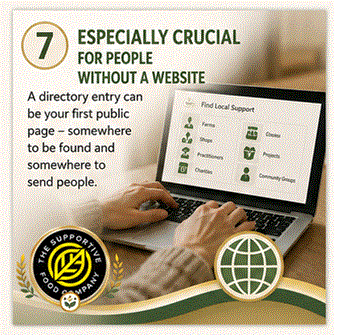 7. Especially valuable for people without a website
For many small organisations, independent practitioners, farmers, community projects and local businesses, creating a full website can feel expensive, complicated or simply too time-consuming.
A Supportive Food directory page offers a practical first step: a public place where people can learn who you are, what you do, where you are based and how to contact you.
It gives you something valuable immediately — a web presence that can be shared, found and trusted, without the cost or responsibility of building and maintaining a complete website.
Why is this helpful?
People increasingly look online before making contact, visiting a business, buying a product, joining a project or recommending a service. Even when somebody hears about you through a friend, leaflet, local event or social media post, they may still search for more information before taking the next step.
A directory page can provide that reassurance. It can bring your essential information together in one clear place, including your name, photographs, description, location, contact details and links.
Instead of repeatedly explaining everything by telephone, email or social media, you can simply send people to your page.
It can also help small organisations appear more established and easier to approach. Being listed within a values-led network may give visitors greater confidence that they are dealing with people who care about food, health, farming, community wellbeing or practical support.
Who may benefit most?
This can be especially useful for:
- small farms and independent food producers;
- market gardeners, growers and ethical suppliers;
- health food shops, cafés and local retailers;
- nutrition, wellbeing and supportive-care practitioners;
- charities, voluntary organisations and community groups;
- food banks, community kitchens and local food projects;
- carers’ services and patient-support groups;
- new businesses that are not yet ready for a full website;
- individuals offering a useful local service;
- people who rely mainly on Facebook or other social media;
- projects with limited funding, staff or technical experience.
It may also help people whose work is excellent but who are not confident with websites, search engines or online promotion. Their lack of technical knowledge should not prevent others from discovering the good work they do.
When is a directory page most useful?
A free page can be particularly valuable when:
- you are starting a new project or business;
- you are testing an idea before investing in a full website;
- your present website is outdated, unavailable or being rebuilt;
- you mainly use social media but want a more permanent public page;
- you are preparing for a market, event, exhibition or local campaign;
- you need somewhere to direct potential customers, supporters, volunteers or partners;
- your organisation has little or no marketing budget;
- you want to increase visibility in a community already interested in food, health, farming and social benefit.
It does not have to replace a full website. For some people, it may become the first step towards one. For others, it may provide all the public information they currently need.
Where can the page be shared?
Your directory page can be used wherever you promote your work. You may add the link to:
- business cards;
- leaflets and posters;
- email signatures;
- Facebook, LinkedIn and other social profiles;
- newsletters;
- local community pages;
- event information;
- funding or partnership applications;
- messages to customers, patients, supporters or volunteers.
People can then visit one page to understand what you offer and how to contact you.
More than simply being listed
The greater benefit is that you are not appearing in an unrelated general directory. You are joining a wider network built around better food, ethical production, health, farming, community connection and practical support.
Your page becomes both a place to be found and a doorway into a community of people and organisations with related values.
For somebody without a website, that may be their first proper public presence online. For somebody already established, it can become another route through which new people discover their work.
No worthwhile project should remain invisible simply because it cannot yet afford, build or manage its own website.