
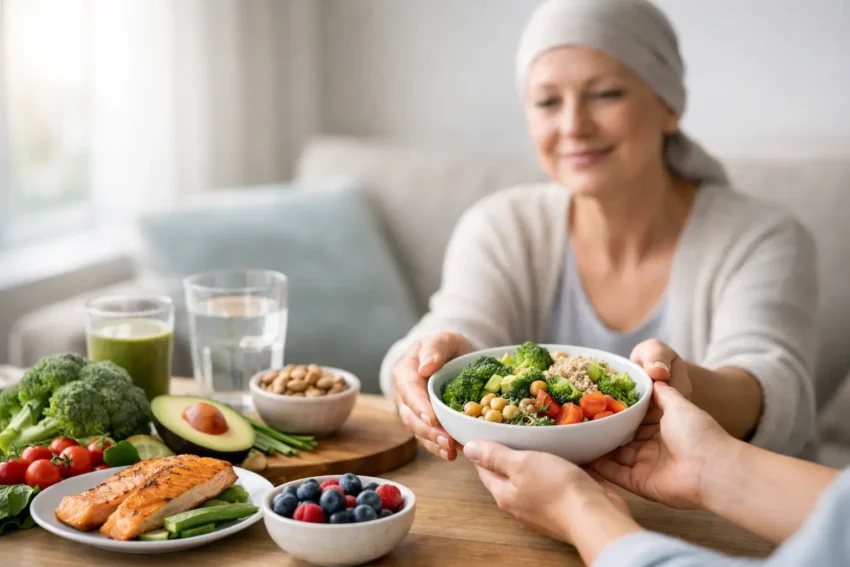
A plate that once felt ordinary can become a daily negotiation after a cancer diagnosis. Taste changes, nausea, exhaustion, mouth soreness, bowel changes and worry can all alter the way food feels. Food support for cancer recovery is not about demanding a perfect diet from someone already carrying too much. It is about helping people eat enough, feel more comfortable, retain strength where possible and access food with dignity.
Cancer and its treatment affect people differently. Some people need help preventing unplanned weight loss; others may be managing steroid-related appetite changes, diabetes, constipation or a loss of confidence around meals. Advice must fit the person, their treatment and their circumstances. There is no single cancer diet, and anyone claiming otherwise is selling false certainty at a vulnerable time.
What food support for cancer recovery can look like
Good support begins with the practical question: what can this person manage today? A nourishing meal does not have to be large, home-cooked or photogenic. It may be a bowl of soup enriched with lentils, a yoghurt, scrambled egg on toast, a ready meal shared with a carer, or several small snacks across the day.
For someone struggling to eat, energy and protein often matter more immediately than chasing an idealised version of ‘clean’ eating. Protein helps the body maintain and repair tissues, while enough energy helps prevent the body from drawing excessively on muscle stores. Foods such as eggs, fish, chicken, beans, lentils, tofu, Greek-style yoghurt, cheese, nut butters and fortified plant alternatives can all have a place, depending on appetite, swallowing ability, cultural preference and budget.
This does not mean fruit, vegetables and wholegrains stop mattering. They remain valuable sources of fibre, vitamins and phytochemicals. But during difficult stretches of treatment, a high-fibre salad may be much less useful than a soft, familiar food a person can actually tolerate. Nutrition is not a moral test. The best choice is often the one that is safe, acceptable and possible.
Small meals can be a serious strategy
When appetite is low, three conventional meals can feel impossible. Smaller portions every two or three hours may be easier: porridge made with milk, crackers with cheese, banana and yoghurt, a milky drink, hummus with soft pitta, or a pudding after a savoury meal.
Simple fortification can increase nourishment without adding much volume. Add grated cheese to mashed potato or soup, use full-fat milk in porridge and sauces, stir nut butter into oats, or add olive oil to vegetables where tolerated. For some people, prescribed oral nutritional supplements are appropriate. An oncology dietitian, clinical nurse specialist, GP or hospital team can advise on this, particularly if weight is falling or swallowing is difficult.
Eating around treatment symptoms
Symptoms deserve practical answers rather than cheerful instructions to ‘eat well’. Keeping a short note of what makes food easier or harder can help a person and their clinical team spot patterns.
Nausea, fatigue and altered taste
Cold foods often have less smell than hot meals and can be easier during nausea. Dry foods such as plain biscuits or toast may help some people first thing, while others find ginger, mint or a sharp fruit flavour more settling. Frequent sips can be more manageable than a full drink, but persistent vomiting, dizziness or very dark urine needs medical attention.
Fatigue changes the equation. Batch cooking may be helpful for one household and completely unrealistic for another. Frozen vegetables, tinned beans, pre-chopped ingredients, microwave rice, nourishing ready meals and meals brought by friends are legitimate forms of support. The point is to reduce labour, not create another standard to fail.
Metallic or strange tastes are common with some treatments. Plastic cutlery, chilled foods, tart flavours, marinades, and good mouth care may help. If red meat tastes unpleasant, protein can come from eggs, dairy foods, fish, pulses or tofu instead. Tastes can change from week to week, so flexibility matters more than forcing former favourites.
Sore mouth, bowel changes and swallowing problems
Soft, moist foods can be kinder when the mouth or throat is sore: custard, yoghurt, scrambled eggs, mashed potato, smooth soups, stewed fruit and well-cooked pasta are examples. Avoiding very acidic, spicy, rough or dry foods may reduce discomfort. If there is pain on swallowing, coughing when eating, food sticking, or a sudden reduction in intake, contact the hospital team promptly. Swallowing difficulties need individual assessment.
Constipation can be linked to pain medicines, reduced movement, dehydration or treatment. Fluids, gentle movement when possible and fibre can help, but increasing fibre rapidly is not right for everyone, especially with bowel symptoms or certain cancers and treatments. Diarrhoea may require temporarily plainer, lower-fibre foods and extra fluids. The care team should be involved if it is severe, prolonged or accompanied by fever, blood, worsening pain or signs of dehydration.
Be alert to risky nutrition claims
People living with cancer are regularly targeted with expensive powders, restrictive plans and claims that a particular food can starve cancer. Food can support wellbeing and recovery, but it does not replace surgery, chemotherapy, radiotherapy, immunotherapy or other clinical care.
Restrictive diets can cause real harm when they cut out energy, protein or whole food groups without a clear medical reason. Fasting may be discussed in research settings, but it is not automatically safe during treatment and should never be started without advice from the oncology team. The same applies to high-dose supplements and herbal products, which can interact with medicines or affect treatment.
A useful rule is to be cautious when a plan promises certainty, blames people for becoming ill, demands costly products, or tells someone to stop treatment. Compassionate support respects autonomy while protecting people from exploitation.
Food safety is part of care
Cancer treatment can sometimes lower immunity, making food poisoning more serious. The right precautions depend on the treatment and blood counts, so individual hospital guidance comes first. In general, careful handwashing, thorough cooking, safe chilling and avoiding food past its use-by date are sensible foundations.
Take particular care with raw or undercooked eggs, meat, fish and shellfish, unpasteurised milk products, and foods that have been left at room temperature. Wash produce well. If a person has been given neutropenic dietary advice by their hospital, follow that guidance rather than relying on general rules.
Support the household, not only the patient
Cancer can turn food work into an invisible burden for partners, relatives and friends. Carers may be shopping, cooking, monitoring intake and trying to keep everyone else fed while managing their own fear. Specific offers help more than “let me know if you need anything”. Offer to bring a freezer-friendly meal, collect a prescription, sit with someone during treatment, or ask which foods currently feel manageable.
It also helps to preserve choice. A person may want company at meals, or they may want quiet. They may prefer familiar family food over health-focused recipes. Respecting this is part of dignity.
Fair access to nourishing food matters
Advice to eat more protein or buy fresh ingredients can sound hollow when money, transport, housing or energy costs are under strain. Cancer can reduce income and increase household costs at exactly the moment food needs may grow. This is not a personal failure. It is a food justice issue.
Community food projects, hospital welfare teams, local councils, food banks, mutual-aid groups and social prescribers can sometimes help with practical access. Farmers and ethical producers also have a role in building a food system where nourishing food is not reserved for people with time, money and perfect health. Supportive Food Directory believes that health advice must be joined to fairer access, because information alone cannot fill an empty cupboard.
If eating becomes persistently difficult, weight changes quickly, or symptoms are getting in the way of daily life, ask for a referral to a registered dietitian with oncology experience. Good food support is not about doing everything right. It is the steady, humane work of making the next drink, snack or meal more achievable – and making sure nobody has to face that work alone.