When someone is dealing with cancer, diabetes, heart disease or another long-term condition, food choices can stop feeling simple very quickly. A patient nutrition support directory can help cut through that confusion by bringing together trusted guidance, relevant producers, community projects and practical support in one place. That matters not only for convenience, but for dignity, confidence and better day-to-day decision-making.
Too often, people are left to piece things together alone. A consultant may mention eating well, a leaflet may list general advice, and internet searches may throw up everything from evidence-based support to expensive nonsense. For patients and carers already carrying the weight of appointments, symptoms, side effects and financial strain, that is not a small problem. It is a structural one.
What a patient nutrition support directory should actually do
A good patient nutrition support directory is not just a list of names. It should act as a practical bridge between health needs, food access and reliable information. That means helping people find support that makes sense for their condition, their budget, their location and their energy levels.
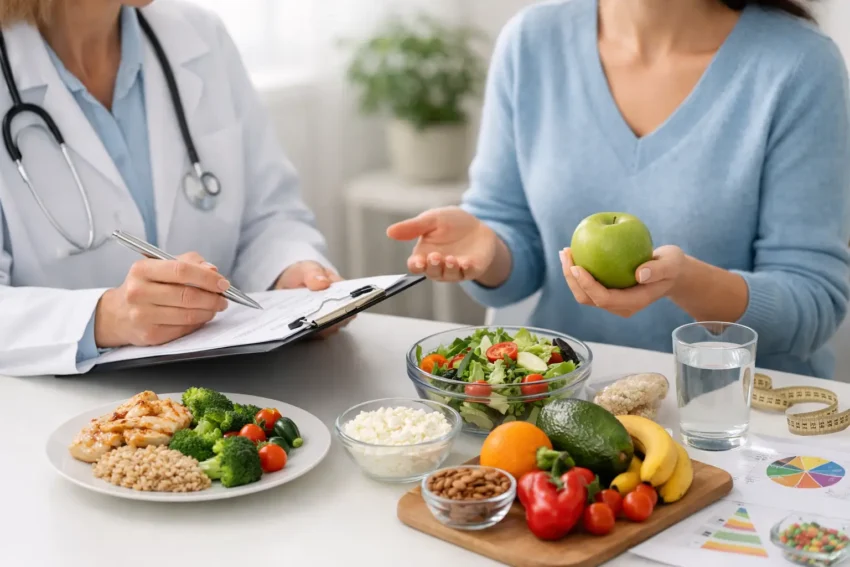
For one person, that may mean locating softer, higher-protein foods during cancer treatment. For another, it may mean finding culturally familiar ingredients that fit with diabetes management. A carer might be looking for local meal support, while a producer may want to connect with communities seeking nutrient-dense food grown with care. These are different needs, but they sit within the same bigger picture – nutrition is never only about nutrients. It is also about access, trust, affordability and real life.
The strongest directories recognise that people do not live in neat categories. A patient may also be a parent, a pensioner, a low-income household member, or someone living in a rural area with limited transport. Advice that ignores those realities is not much use. A directory worth using must be organised around people, not just conditions.
Why directories matter in a strained health and food system
Many families know the gap between being told to eat well and actually being able to do so. Fresh food can cost more upfront. Specialist products are not always necessary, but confusion around them can still lead to overspending. Travel, fatigue and reduced mobility can make shopping harder. Some people lose appetite. Others struggle with swallowing, nausea, digestive symptoms or food aversions. In those moments, practical support becomes as important as theory.
This is where a directory can become more than a convenience. It can support earlier intervention, reduce misinformation and make community assets more visible. It can also help professionals signpost with greater confidence, especially when clinical time is short.
There is a wider justice issue here too. Nutrition support should not be reserved for people with money, spare time or strong digital skills. If access to good food and trustworthy information depends on privilege, health inequalities deepen. A well-built directory can challenge that by making support easier to find, easier to understand and more grounded in local and community realities.
What patients and carers should look for
Not every directory will be equally useful. Some are broad but vague. Others are highly clinical but detached from everyday life. The best ones balance credibility with practicality.
Look first for clarity. Can you tell who the directory is for and what kind of support it includes? A useful resource should make it easy to find disease-specific information, food-related guidance, community help, and relevant providers or producers without forcing users through jargon.
Quality control matters just as much. Entries should feel curated rather than dumped into a database. If a directory presents health information, it should be careful with claims and avoid miracle language. Nutrition can support wellbeing, treatment tolerance and quality of life, but it is not a magic fix. Honest framing builds trust.
It also helps when a directory reflects the lived experience of illness. Does it acknowledge tiredness, treatment side effects, appetite changes, cost pressures or the emotional burden on carers? If it speaks as though everyone has endless time to batch cook and shop locally every week, it may not understand the reality of many households.
What professionals need from a patient nutrition support directory
Healthcare-adjacent professionals, support workers and community organisers often need somewhere dependable to refer people. They do not always need a perfect clinical textbook. They need a practical tool that can help someone after the appointment ends.
A patient nutrition support directory works best for professionals when it is easy to navigate, transparent about its standards and broad enough to reflect social determinants of health. That includes not only information on food and symptoms, but awareness of affordability, access schemes, grassroots initiatives and local producers who can serve communities with care.
There is a trade-off here. A very tightly controlled directory may feel safer but cover fewer real-world options. A very open one may include more community resources but vary in quality. The right balance depends on purpose. For frontline signposting, strong editorial judgement is essential. For wider community discovery, breadth can be useful if entries are clearly described and responsibly presented.
The difference between a directory and a sales platform
This distinction matters. A patient-focused directory should not push vulnerable people towards products simply because they are profitable. That does not mean businesses and producers have no place in it. Ethical growers, independent food makers and specialist suppliers can be valuable parts of the picture. But the platform must serve people before commerce.
That means being careful about how products are framed, avoiding inflated health claims, and recognising that not every patient needs a premium solution. Sometimes the most helpful guidance is about ordinary food prepared in manageable ways. Sometimes it is about local access or community meals rather than branded items.
Trust is built when people feel they are being supported rather than marketed to. For communities facing illness, that line is not trivial.
Building a directory around fairness, not just convenience
If we are serious about nutrition support, we have to talk about food inequality. The conversation cannot end at recipe ideas and supplement trends. People need fair access to nourishing food, and communities need systems that do not leave the most unwell to fend for themselves.
That is why the most meaningful directories include more than nutritional facts. They connect people to community food initiatives, educational resources, producers with integrity, and projects that strengthen resilience rather than deepen dependence. They treat food as part of public health, not merely consumer choice.
This is also where values-led platforms such as Supportive Food Directory have a distinctive role. By bringing together patients, carers, farmers, producers and professionals, a directory can help restore relationships that our wider systems have fragmented. The person needing nutrition support is no longer reduced to a search term. They become part of a connected network of knowledge, care and practical action.
What makes a directory genuinely useful over time
People’s needs change. A new diagnosis brings one set of questions. Treatment, recovery, recurrence or disease progression bring others. A useful directory should therefore be alive to change rather than fixed in a single moment.
It should be updated, seasonally aware where relevant, and responsive to emerging needs in the community. It should also avoid speaking down to people. Patients and carers do not need patronising wellness language. They need plain English, careful evidence, and enough humanity to recognise that some weeks are about survival, not ideal eating patterns.
There is also value in joining up information that is often split apart. Disease-specific content, shopping guidance, producer listings, community appeals, downloadable resources and educational articles can work well together when they are held within a clear mission. That joined-up approach saves people from repeating the same exhausting search across ten different places.
A better standard for nutrition support
A patient nutrition support directory should do more than help people find food. It should help them find steadier ground. That means reliable information, realistic options, stronger community links and a clear refusal to treat health as a luxury good.
We need resources that recognise food as care, knowledge as shared power, and access as a matter of fairness. When directories are built with that understanding, they stop being passive listings and start becoming part of a healthier local ecosystem.
If you are choosing or building one, the real test is simple. Does it leave people feeling sold to, or supported? The answer shapes far more than a search result.