
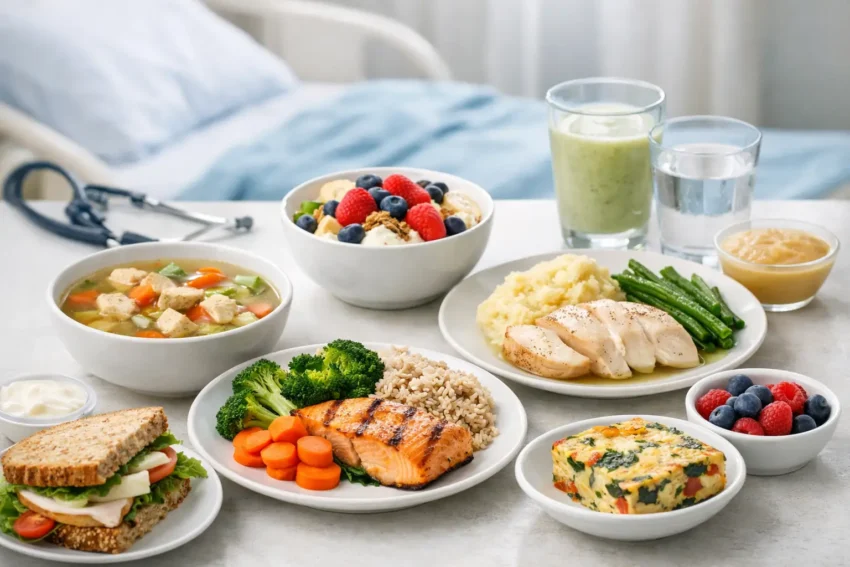
12 Patient Recovery Meal Examples That Help
Recovery meals do not need to be complicated, expensive, or perfect. When someone is recovering from illness, surgery, treatment, infection, injury, or a long period of poor appetite, the most helpful meals are often simple, soft, nourishing, and easy to manage.
For many patients, the question is not, “What is the perfect diet?” It is much more practical than that:
- What can they actually eat today?
- What will not overwhelm them?
- What gives some protein, energy, comfort, and dignity?
- What can a carer prepare without becoming exhausted?
This page offers 12 gentle recovery meal examples. They are not medical prescriptions, and they are not a substitute for advice from a doctor, nurse, dietitian, speech and language therapist, or care team. They are practical starting points for patients and carers who need real food ideas during a difficult time.
Important: If the patient has swallowing problems, choking risk, bowel obstruction risk, kidney disease, diabetes, food allergies, recent surgery to the stomach, bowel, throat or oesophagus, or has been given a special diet plan, always follow the professional advice given to them personally.
What makes a good recovery meal?
A good recovery meal is not just “healthy” in the general sense. During recovery, the body may need extra support for wound healing, strength, immune function, energy, and rebuilding lost muscle. This often means meals need to include:
- Protein from foods such as eggs, fish, chicken, yoghurt, cheese, lentils, beans, tofu, soya foods, nut butters, or fortified dairy alternatives.
- Energy from foods such as potatoes, rice, pasta, oats, olive oil, avocado, full-fat yoghurt, cream, milk, or smooth soups.
- Micronutrients from fruit, vegetables, pulses, whole foods, dairy or fortified alternatives, and varied meals where possible.
- Comfort and tolerance, because the best meal is the one the patient can actually manage.
Some patients can manage normal meals. Others may need small portions, soft foods, purées, soups, fortified drinks, or “little and often” snacks. Recovery eating should be flexible, kind, and realistic.
1. Soft scrambled egg with mashed potato
This is a simple, soft meal that gives protein from the egg and energy from the potato. It can be made very gentle by using milk, butter, olive oil, or a little grated cheese if tolerated.
Helpful for: low appetite, tiredness, soft food needs, and patients who cannot face a full plate.
Make it easier: serve in a small bowl rather than on a large plate. Add a little extra milk or butter to make the texture smoother.
2. Chicken, vegetable and rice soup
A warm soup can be comforting, especially when chewing feels tiring. Chicken adds protein, rice adds energy, and soft vegetables add colour and nutrients.
Helpful for: gentle nourishment, hydration support, and days when solid food feels too much.
Make it easier: blend fully or partly if chewing is difficult. For a higher-energy version, add olive oil, cream, or milk if suitable.
3. Greek yoghurt with banana and smooth nut butter
This is a quick no-cook option. Greek yoghurt provides protein, banana gives gentle carbohydrate, and smooth nut butter adds energy and flavour.
Helpful for: small appetite, weight loss risk, and easy snacks between meals.
Make it easier: mash the banana well and stir everything together until smooth. Use full-fat yoghurt if extra energy is needed.
4. Lentil dhal with soft rice
Lentils are a useful plant-based protein food, and dhal can be made soft, warming and easy to eat. Rice adds energy and helps make the meal more filling.
Helpful for: vegetarian recovery meals, budget-friendly nourishment, and batch cooking.
Make it easier: cook the lentils until very soft and use mild spices only. Avoid chilli if the mouth, throat, stomach, or bowel is sensitive.
5. Fish pie with soft vegetables
Fish pie can be a useful recovery meal because it combines protein, soft potato, milk-based sauce, and gentle vegetables in one dish.
Helpful for: higher-protein meals, family cooking, and freezer portions.
Make it easier: use boneless fish, mash the potato well, and keep the sauce moist. Avoid hard crusty toppings if swallowing is difficult.
6. Porridge made with milk, seeds or protein-rich additions
Porridge is soft, warm, inexpensive, and adaptable. Making it with milk or fortified soya milk increases protein. Ground seeds, smooth nut butter, yoghurt, or a spoon of milk powder can add extra nourishment if suitable.
Helpful for: breakfast, gentle snacks, and patients who prefer mild foods.
Make it easier: cook until very soft and thin with extra milk if needed. For throat or swallowing problems, check that the texture is safe for the individual.
7. Cottage pie with lentils, minced meat or vegetables
Cottage pie can be made with minced beef, turkey, lentils, beans, or a mixture. The mashed potato topping makes it soft and comforting.
Helpful for: family meals, batch cooking, and recovery after general illness.
Make it easier: keep the filling moist with gravy or sauce. Add finely chopped vegetables and cook them until soft.
8. Omelette with cheese and soft vegetables
An omelette is quick, protein-rich, and flexible. Cheese adds extra energy and protein, while soft vegetables such as spinach, mushrooms, courgette, or peppers can add flavour and nutrients.
Helpful for: quick lunches, protein support, and smaller meals.
Make it easier: cook the vegetables until soft and keep the omelette moist rather than dry.
9. Smooth soup with beans, lentils or tofu
A blended soup can carry more nourishment than it first appears. White beans, red lentils, chickpeas, silken tofu, milk, cream, or olive oil can all help make soup more filling.
Helpful for: soft food needs, low appetite, and carers who need simple batch options.
Make it easier: blend until completely smooth if texture is a problem. If the patient needs thin fluids only, ask a dietitian or speech and language therapist before changing textures.
10. Pasta with tuna, soft cheese or tomato sauce
Soft pasta can be useful when appetite is low. Tuna, soft cheese, lentils, minced meat, or tofu can increase protein. Tomato sauce, olive oil, or cheese can make it easier to swallow and more energy-dense.
Helpful for: simple meals, gentle family food, and patients who need familiar flavours.
Make it easier: use small pasta shapes and cook until soft. Add extra sauce so the meal is not dry.
11. Rice pudding, custard or milky dessert with fruit purée
During recovery, desserts can have a useful role. Milky puddings can provide energy, protein, and comfort, especially when savoury meals feel difficult.
Helpful for: poor appetite, sore mouth, low mood around eating, and small portions.
Make it easier: use full-fat milk if extra energy is needed. Add stewed apple, banana, or smooth fruit purée if tolerated.
12. Fortified smoothie or drinkable meal
For some patients, drinking is easier than eating. A smoothie or drinkable meal can include milk, yoghurt, banana, oats, smooth nut butter, avocado, protein powder if advised, or prescribed nutritional supplements.
Helpful for: low appetite, chewing difficulty, tiredness, and patients who cannot manage full meals.
Make it easier: keep it smooth, avoid seeds or lumps if swallowing is difficult, and serve in small amounts. If the patient coughs, chokes, or feels food or drink is sticking, seek professional advice urgently.
Small meal ideas for very low appetite
When a full meal is too much, try “mini meals” instead. These can be less intimidating and easier to repeat through the day.
- A boiled egg and a few spoonfuls of mashed potato
- Half a bowl of soup with added cream or olive oil
- Greek yoghurt with honey or banana
- Cheese on soft toast, if safe to swallow
- Custard, rice pudding, or semolina
- Hummus with soft pitta or mashed avocado
- Soft fish with mashed sweet potato
- A small smoothie or prescribed nutrition drink
For carers: make the plate kind, not stressful
Mealtimes can become emotional when someone is unwell. Carers may feel rejected when food is left uneaten, and patients may feel guilty for not managing more. A kinder approach is often more successful.
- Offer small portions first. The patient can always ask for more.
- Use a small bowl or plate so the food does not look overwhelming.
- Ask what feels possible today, not what they “should” eat.
- Keep easy options available for better appetite moments.
- Avoid pressure, arguments, or making mealtimes feel like a test.
- Remember that some days will be better than others.
When to ask for professional help
Please speak to a doctor, nurse, dietitian, pharmacist, or relevant care professional if the patient:
- is losing weight without trying
- cannot eat or drink enough
- is choking, coughing, or struggling to swallow
- has persistent vomiting, diarrhoea, constipation, or pain
- has a sore mouth, mouth ulcers, thick saliva, or taste changes
- has diabetes, kidney disease, bowel problems, or a special medical diet
- has recently had surgery to the mouth, throat, oesophagus, stomach, bowel, or abdomen
- is becoming weaker, dehydrated, confused, or unusually sleepy
Recovery meals can help, but they should never replace medical care when symptoms are serious or worsening.
Bottom line
The best recovery meal is not always the most impressive meal. It is the meal that meets the person where they are today.
Sometimes that means soup. Sometimes it means yoghurt. Sometimes it means mashed potato with egg. Sometimes it means a prescribed nutrition drink, a few spoonfuls at a time, offered with patience and love.
Food cannot promise recovery on its own, but supportive food can still offer strength, comfort, dignity, and practical help when people need it most.
Sources and further reading
- Royal National Orthopaedic Hospital NHS Trust: Eating well before and after surgery
- Guy’s and St Thomas’ NHS Foundation Trust: Protein in your diet for upper gastrointestinal surgery
- Macmillan Cancer Support: Eating problems and cancer
- Macmillan Cancer Support: Tips for managing eating problems
- Cancer Research UK: How cancer treatment causes diet problems
- NHS Inform: Malnutrition