
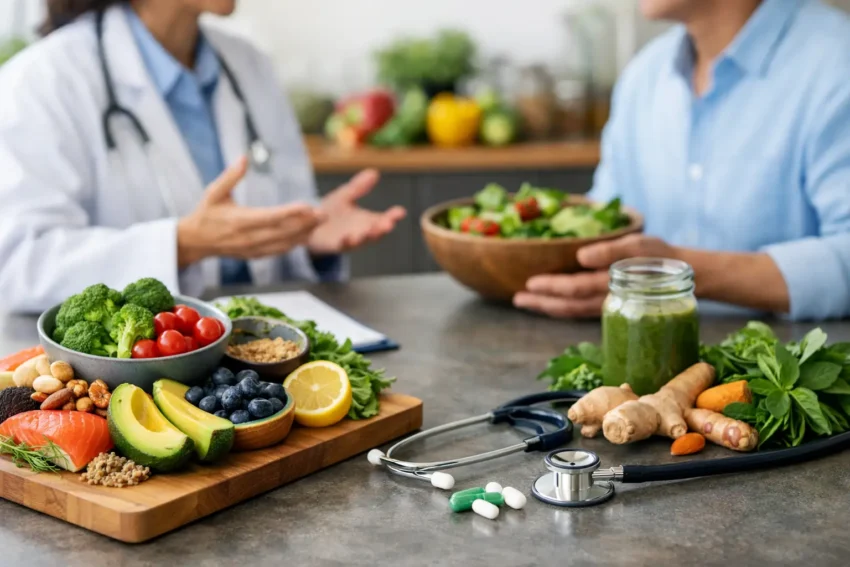
A person leaving a cancer appointment, managing diabetes on a tight budget, or caring for an older parent does not need another glossy promise. They need good food they can afford, clear information they can trust, and enough time and support to act on it. The future of food as medicine will be decided less by fashionable products than by whether those basic conditions become normal for everyone.
Food matters deeply to health. It can support energy, digestion, muscle strength, heart health and blood glucose management. It can bring comfort and connection at times when illness makes life feel smaller. But food is not a substitute for diagnosis, prescribed treatment or specialist care. Any honest conversation about food as medicine must hold both truths: nourishing meals can make a meaningful difference, and no ingredient should be sold as a miracle cure.
The future of food as medicine cannot be a luxury
There is growing interest in personalised nutrition, wearable health technology, microbiome tests and meal plans designed around individual data. Some of this work may prove useful, particularly where it helps people understand how food interacts with their own symptoms, culture, routine and medical needs.
Yet there is a serious risk in treating expensive personalisation as progress while millions of households are priced out of fresh food. A tailored nutrition report offers little to someone choosing between heating and a full shop. A prescription for more vegetables is not practical if the nearest affordable retailer is several bus journeys away, or if pain, disability or caring responsibilities make cooking difficult.
The future must not divide people into those who can purchase precision health and those expected to make do. It should begin with universal foundations: reliable access to fruit and vegetables, pulses, wholegrains, affordable proteins and culturally familiar foods; decent incomes; practical cooking facilities; and local places where people can ask for help without shame.
That is why food justice belongs at the centre of health policy. Hunger, poor diet and diet-related disease are not simply failures of individual willpower. They are shaped by wages, housing, transport, food retail, marketing, land use and whose voices are heard when decisions are made.
Food advice must work alongside healthcare
Healthcare professionals are rightly cautious about nutrition claims. Serious conditions are complex, and what is suitable for one person may be unsafe or unhelpful for another. Someone receiving cancer treatment may struggle with nausea, loss of appetite or swallowing difficulties. A person with kidney disease, coeliac disease or diabetes may need specific advice that differs from general healthy-eating guidance.
This is not an argument for saying less about food. It is an argument for saying better. Patients and carers deserve conversations that are practical, respectful and evidence-aware. They need to know when to seek a registered dietitian, GP, pharmacist or specialist nurse, particularly where weight loss, medication, treatment side effects or restrictive diets are involved.
Food as medicine works best when it complements care rather than competing with it. A clinician can recognise a health need, but a community food project, local grower, social prescriber, cookery group or trusted producer may help make change possible at home. Those connections are often missing from formal systems.
From advice sheets to everyday support
Telling someone to eat more fibre or cook from scratch can be technically correct and still feel impossible. Useful support asks different questions. Is there a kitchen? Is food storage available? Can the person stand long enough to prepare a meal? Are they feeding children, living alone, grieving, exhausted or dealing with altered taste after treatment?
Sometimes the most helpful intervention is a bag of ingredients with a simple recipe. Sometimes it is delivery support, a community meal, help to claim an entitlement, or reassurance that frozen and tinned vegetables count. Progress should be measured by whether people are better fed and less isolated, not by whether they have followed an idealised menu.
Farms and producers are part of the health system
Food begins long before it reaches a clinic, supermarket or kitchen table. It begins with soil, seeds, weather, farm workers, fishing communities, animal welfare, processing, transport and the economic survival of independent producers. If farms cannot make a fair living, communities cannot build a secure food future on goodwill alone.
A food-as-medicine approach must value the people who grow and make food. This means fairer routes to market, public procurement that supports local and sustainable producers, and fewer barriers for small farms and community enterprises. Schools, hospitals, care homes and councils have considerable purchasing power. Used well, it can strengthen regional food economies while improving the quality and dignity of meals served in public settings.
There are trade-offs. Local food is not automatically affordable, low-carbon or available all year round. Seasonal supply can be limited, and small producers face costs that large retailers can absorb. The answer is not to romanticise every local product. It is to build systems where ethical production is supported, transparent and genuinely reachable for ordinary households.
Better food information needs humility
Nutrition has become a crowded marketplace. Social media rewards certainty, dramatic before-and-after stories and diets with villains. People living with chronic illness can be especially vulnerable to claims that promise control when life feels frightening or unpredictable.
The future of food as medicine needs a different standard. Information should distinguish between strong evidence, early research and personal experience. It should explain that a dietary pattern matters more than a single so-called superfood. It should acknowledge that health is affected by sleep, movement, stress, medicines, poverty, relationships and access to care, as well as what is on the plate.
Clear language is an issue of dignity. People should not need a science degree to understand why regular meals may help with blood glucose, why protein can matter during recovery, or why severe dietary restriction deserves professional oversight. Nor should they be blamed when illness, disability or low income changes what they can manage.
Community knowledge deserves a place
Evidence matters, and so does lived experience. Families, carers and communities often hold practical knowledge about affordable meals, culturally meaningful ingredients and the small adaptations that make eating easier during illness. Listening to that knowledge can make professional advice more useful.
This does not mean every claim is equally valid. It means people are partners in their own care, not passive recipients of instructions. The strongest food-health initiatives make room for questions, uncertainty and shared learning.
What meaningful change could look like
A fairer model is already visible in fragments across communities: food co-operatives, surplus-food schemes, community gardens, social prescribing, cooking groups, school breakfast clubs, farm shops working with local charities, and producers who care about both nourishment and provenance. These efforts need stable support, not occasional praise when a crisis makes headlines.
For Supportive Food Directory, the work is about helping people see the connections. A farmer’s resilience, a patient’s ability to eat well, a carer’s time, a producer’s route to market and a child’s access to breakfast are not separate issues. They are part of the same food system.
The next step is to make that system more accountable. Health services can identify nutrition risk earlier. Local authorities can protect access to affordable food. Businesses can pay fairly and reduce waste. Producers can be recognised as partners in public health. Communities can share skills and challenge the idea that anyone should have to earn the right to eat well.
The most hopeful future will not be one where food is marketed as a private cure. It will be one where a nourishing meal is ordinary, growers can thrive, good advice is available without judgement, and nobody faces illness or hunger alone.