
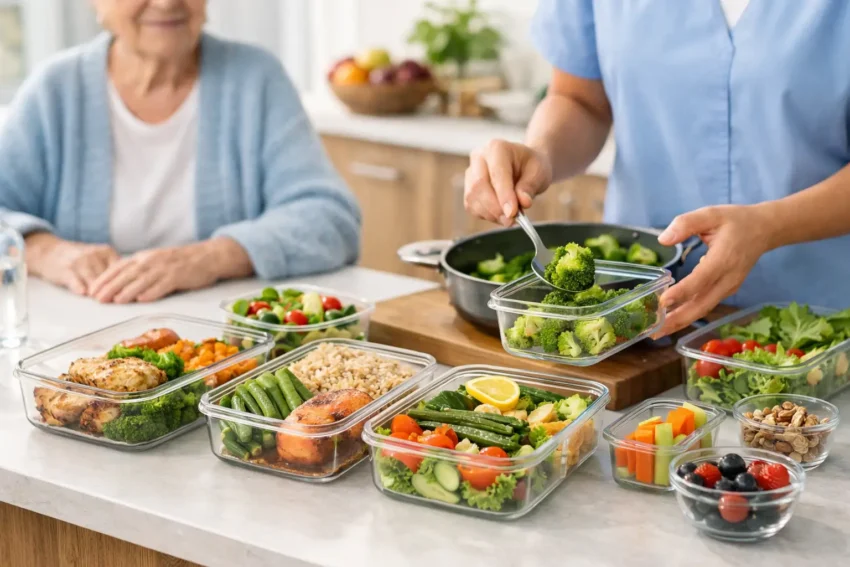
A fridge full of ingredients is not the same as a meal on the table. When you are caring for someone, the hardest point often comes late in the day: appointments have run over, medication schedules have shifted, everyone is tired, and the question of what to eat arrives with real pressure. Good carer meal prep ideas are not about producing picture-perfect batches of food. They are about creating a few dependable options that protect nutrition, energy, dignity and the carer’s own wellbeing.
For many households, food also has to work around changed appetite, fatigue, pain, nausea, constipation, diabetes, heart health, swallowing difficulties or a restricted budget. The most useful plan is therefore flexible. It makes room for the person being cared for, while recognising that carers need feeding too.
Start with meals that can change shape
A rigid seven-day menu can become another task to fail at. Instead, prepare a small number of building blocks that can become different meals depending on appetite and energy that day. A tray of roasted vegetables, a pot of lentil and tomato sauce, cooked chicken or pulses, and a carbohydrate base such as potatoes, rice or pasta can cover several meals without forcing anyone to eat the same thing repeatedly.
For example, roasted carrots, peppers, onions and courgettes can be blended into soup with stock and beans; folded through pasta with cheese; served alongside an omelette; or added to a jacket potato. Cooked salmon can become fishcakes one day and a soft rice bowl the next. This approach cuts waste and gives the person you support some choice, which matters when so much else may feel outside their control.
Keep portions modest at first. Smaller containers are easier to reheat, less daunting when appetite is low, and more likely to be finished. If more is wanted, there is always another portion.
Carer meal prep ideas that reduce the daily load
The most sustainable preparation is often one or two short sessions each week, rather than a heroic Sunday afternoon. Choose a time when you have help, or when the person you care for is resting comfortably. Aim to make food easier, not to fill every shelf in the freezer.
Make one nourishing pot meal
Soups, stews, dhal, chilli and casseroles are valuable because they are forgiving, affordable and easy to adapt. A vegetable and red lentil soup can be made with onions, carrots, tinned tomatoes, red lentils and whatever greens are available. Add cumin or mild curry powder if flavours are welcome, but keep a portion plain if taste changes have made strong seasoning unpleasant.
A pot meal can be served in different ways: with wholemeal toast, a baked potato, rice, couscous or simply on its own. For someone who needs extra protein or energy, stir in grated cheese, yoghurt, beans, flaked fish, shredded chicken or olive oil as appropriate. If swallowing is difficult, seek advice from the relevant speech and language therapist or dietitian before changing texture. Blending food is not always enough to make it safe.
Prepare breakfasts before they become an afterthought
Breakfast is often skipped when mornings involve washing, dressing, transport or medication. Prepare two or three easy choices that require almost no decision-making. Overnight oats can be made in small jars with oats, milk or a fortified alternative, yoghurt and soft fruit. Egg muffins with finely chopped vegetables can be chilled or frozen. Porridge portions can be measured out in advance, ready for the hob or microwave.
If weight loss or poor appetite is a concern, low-fat substitutions may not be helpful. Full-fat yoghurt, milk, nut butter, cheese or enriched porridge can provide more energy in a small serving. This depends on the person’s health needs, so follow clinical advice where it has been given, particularly for kidney disease, diabetes or a prescribed diet.
Keep a freezer bank for difficult days
A freezer is not just for emergencies. It is a practical form of care when a crisis, a hospital visit or a sleepless night makes cooking impossible. Freeze portions flat in labelled containers or bags so they thaw faster and take up less room. Write the name and date clearly, because carers should not have to play detective with frozen food.
Useful freezer meals include cottage pie, vegetable lasagne, chicken and bean casserole, lentil bolognese, fish pie and individual portions of soup. It can also help to freeze cooked rice, mashed potato and sliced bread in manageable amounts. The aim is a choice of proper meals, not a freezer containing only beige convenience food and guilt.
Create a visible snack station
When appetite is poor, three large meals can be unrealistic. A basket or shelf at eye level can make nourishing snacks easier to reach for both of you. Choose foods suited to the individual’s needs: bananas or soft fruit, yoghurt, oatcakes, hummus, cheese, boiled eggs, unsalted nuts, rice pudding, crackers, tinned peaches in juice, or small pots of soup.
For people living with dementia, clear containers and familiar foods may be more helpful than a packed cupboard. For someone who tires easily, opening packets and preparing fruit may be the barrier, so portioning snacks in advance can make a genuine difference. Always consider choking risk, dental comfort and any texture guidance.
Build meals around what is affordable and available
Healthy eating advice can sound detached from real household budgets. Carers are often absorbing extra costs, from travel to appointments to higher heating bills. Meal preparation should never demand expensive specialist products to be worthwhile.
Tinned beans, lentils, tomatoes, frozen vegetables, oats, eggs, potatoes and seasonal produce are nutritious foundations. Frozen vegetables are often picked and frozen quickly, cost less than many fresh alternatives, and prevent the familiar disappointment of finding wilted greens at the back of the fridge. If you use tinned foods, choosing lower-salt versions where possible can be helpful, though the broader pattern of eating matters more than perfection.
A simple weekly rhythm can reduce expense: use fresh food with the shortest life early in the week, turn remaining vegetables into soup or a traybake, then rely on frozen portions later. This is good for the household budget and for a food system where too much edible food is discarded while many people go without.
Include the person you care for in the plan
Meal prep can easily become something done to a person rather than with them. Even when someone cannot safely cook, they may be able to choose between two meals, wash vegetables while seated, stir a bowl, share a family recipe or decide which portions go in the freezer.
These small acts are not merely practical. Food carries memory, culture, faith and identity. A familiar stew, a preferred cup of tea, or the right way to serve potatoes can provide comfort in a period when illness has disrupted routine. If a person refuses a meal, try not to turn the table into a battleground. Ask whether the portion is too large, the smell is too strong, the texture feels wrong, or the timing is unhelpful.
Protect the carer’s health as well
Carers are frequently advised to look after themselves, then handed a list of tasks that makes this feel impossible. Meal preparation is one place where a small boundary can help: make enough of the same base meal for yourself, rather than preparing a separate dish unless medical needs require it. Add a side salad, extra seasoning or a different topping to suit your own appetite.
Accepting food from neighbours, relatives or community groups is not a failure of care. If someone asks how they can help, a specific request is easier to answer: a bag of prepared vegetables, a double batch of soup, fresh bread, or a cooked meal that can go straight in the freezer. Mutual aid works best when practical support is welcomed without shame.
A few food safety habits worth keeping
Illness and fatigue can make routine safety steps easier to miss. Cool cooked food promptly, divide it into shallow containers, refrigerate it within two hours, and reheat it until piping hot throughout. Keep raw meat separate from ready-to-eat food, and use labels so leftovers are not forgotten.
If the person you support has a weakened immune system, is receiving cancer treatment, is pregnant, or has been given food-safety guidance by their clinical team, follow that advice carefully. There may be extra precautions around undercooked eggs, unpasteurised foods, prepared salads and reheated leftovers.
A workable meal plan is one that leaves room for real life. Cook the lentil soup, portion the fish pie, keep breakfast simple, and let a freezer meal count as care rather than a compromise. The best preparation is not a perfectly stocked kitchen. It is the quiet reassurance that, on a hard day, there is still something nourishing within reach.