
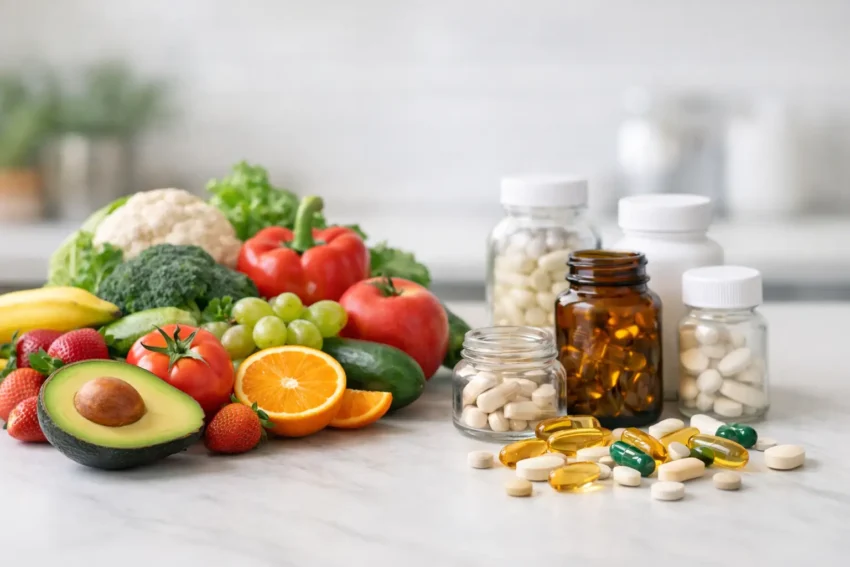
A punnet of berries cannot replace a prescribed medicine, and a tablet cannot reproduce the full experience of eating a varied diet. That is the heart of the fresh produce versus supplements question. People managing cancer, diabetes, heart disease, menopause or fatigue are often offered confident claims from both sides. They deserve something better than a false choice: clear information, practical options and the dignity of being able to access nourishing food.
Fresh produce versus supplements: food is the foundation
Fruit and vegetables do far more than supply a list of vitamins. An apple brings fibre, water and plant compounds alongside its vitamin C. Leafy greens offer folate and vitamin K, but also texture, volume and a place in a meal. Beans, root vegetables, herbs, berries and brassicas each contain different combinations of nutrients that work within a wider dietary pattern.
This matters because health is rarely changed by one nutrient in isolation. Fibre supports bowel health, helps many people feel fuller for longer and can contribute to steadier blood glucose after meals. The naturally occurring compounds that give plants their deep green, purple, red and orange colours are being studied for their relationship with inflammation and long-term health. Food also displaces less nourishing choices when it is available, affordable and enjoyable to eat.
Fresh produce can support recovery, energy and everyday wellbeing, but it should never be sold as a cure. For someone living with a serious condition, nutrition is one part of care alongside medical treatment, rest, movement where appropriate, emotional support and reliable clinical advice. The aim is not dietary perfection. It is to build meals that nourish the body often enough, within the realities of symptoms, budget, time and access.
Why a supplement is not simply fruit and veg in a capsule
Supplements have a useful place, but they do not contain the whole food matrix. A vitamin C tablet may provide vitamin C, yet it does not bring the fibre, water, flavour and range of compounds found in a kiwi, pepper or orange. A multivitamin can help fill a nutritional gap, but it cannot make a low-fibre diet high in fibre or turn a meal of ultra-processed snacks into a varied pattern of eating.
There is also a risk in assuming that more is always better. High-dose supplements can cause side effects, interact with medicines or be unsuitable for particular health conditions. This is especially relevant for people receiving cancer treatment, taking blood-thinning medicines, managing kidney disease or living with conditions that affect nutrient absorption. Herbal products deserve the same caution as vitamin and mineral products. Natural does not automatically mean harmless.
Marketing often turns understandable worries into expensive routines. A person who is exhausted, losing weight, coping with brain fog or trying to support a loved one may be told that a powder, gummy or concentrated extract is the missing answer. Sometimes a diagnosed deficiency genuinely needs treatment. Often, however, the bigger need is regular meals, affordable ingredients, help with shopping or cooking, and clinical attention to the cause of symptoms.
When supplements can genuinely be needed
There are circumstances in which supplements are sensible, necessary or recommended. In the UK, many people are advised to consider a daily vitamin D supplement during autumn and winter, when sunlight is not strong enough for the body to make sufficient vitamin D. Some people, including those with very limited sun exposure or darker skin, may need to take it throughout the year following appropriate advice.
Folic acid before conception and in early pregnancy is a well-established example of preventive supplementation. Vitamin B12 may be needed by people following a vegan diet, depending on the foods they eat and fortified products they use. Iron, calcium, iodine and other nutrients may also require attention for people with restricted diets, malabsorption, heavy menstrual bleeding, older age, certain medicines or confirmed deficiencies.
The key distinction is purpose. A supplement is most helpful when it responds to a known need, a recognised life stage or professional guidance. It is less helpful when it is used as insurance against a diet that has become difficult to sustain, or as a substitute for investigating persistent symptoms. A GP, pharmacist, registered dietitian or specialist clinical team can help make that distinction safely.
The real comparison includes access, not just nutrition
The debate around fresh produce versus supplements can become oddly detached from everyday life. Telling a household to eat more fresh food is not enough if the nearest shop has poor-quality produce, the bus fare is unaffordable, pain makes cooking difficult or a carer has no spare hour to prepare a meal. Health advice that ignores these barriers can leave people feeling blamed rather than supported.
Fresh food should not be treated as a luxury reserved for those with money, transport and spare time. Food justice means better access to good produce through local growers, markets, community food projects, food-growing spaces, fair wages and policies that reduce hunger. It also means respecting frozen, tinned and dried alternatives. Frozen vegetables are often picked and preserved quickly. Tinned tomatoes, peas, pulses and fruit in juice can be nourishing, lower-cost cupboard staples. Choose lower-salt and lower-sugar options where possible, but do not let an ideal of fresh food prevent a practical meal from happening.
For independent farmers and ethical producers, this is a public health issue too. Local and resilient food systems can shorten the distance between what is grown and who needs it. They can also create relationships in which people understand seasonality, ask questions and value the labour behind food. Supporting growers must sit alongside making their food reachable for communities facing hardship.
A workable approach for ordinary weeks
Start with the meals already on the table rather than attempting a complete dietary overhaul. Add vegetables to a pasta sauce, soup, curry or omelette. Keep fruit where it is easy to see and eat. Build a simple plate around a vegetable, a source of protein and a filling carbohydrate such as potatoes, oats, wholegrain bread or rice. If appetite is low, smaller meals more often may be more realistic than large portions.
Variety over a week matters more than chasing a perfect plate at every meal. A mixture of fresh, frozen, tinned and dried produce can make this more affordable and less wasteful. Try buying what will be eaten first, then relying on freezer and cupboard staples for the final days before the next shop. Bruised bananas become porridge toppings or baking ingredients; soft vegetables can become soup. Reducing food waste protects both household budgets and the resources that went into growing food.
If you are considering a supplement, pause before buying the biggest dose or the most heavily advertised blend. Ask what problem it is intended to solve, whether you have symptoms or a diagnosis that need checking, and whether it could affect your medicines or treatment. Keep a note of everything you take, including teas, powders and herbal remedies, and share it with your pharmacist or healthcare team.
Food should support people, not become another burden
No one should feel they have failed because illness, cost, fatigue or caring responsibilities have made five-a-day difficult. A bowl of tinned beans on toast, a freezer bag of mixed vegetables or an orange eaten on the way to an appointment can all be meaningful acts of nourishment. Small, repeatable choices count.
Supportive Food Directory stands for a food system where sound nutrition information is shared without judgement, producers are valued, and every person has a fair chance to eat well. The most helpful next step may be to add one more vegetable to tomorrow’s meal, speak to a pharmacist about a supplement, or check in on a neighbour whose cupboard is running low. Better health grows through those practical acts of care, made possible by a community that refuses to accept hunger and poor access as inevitable.