
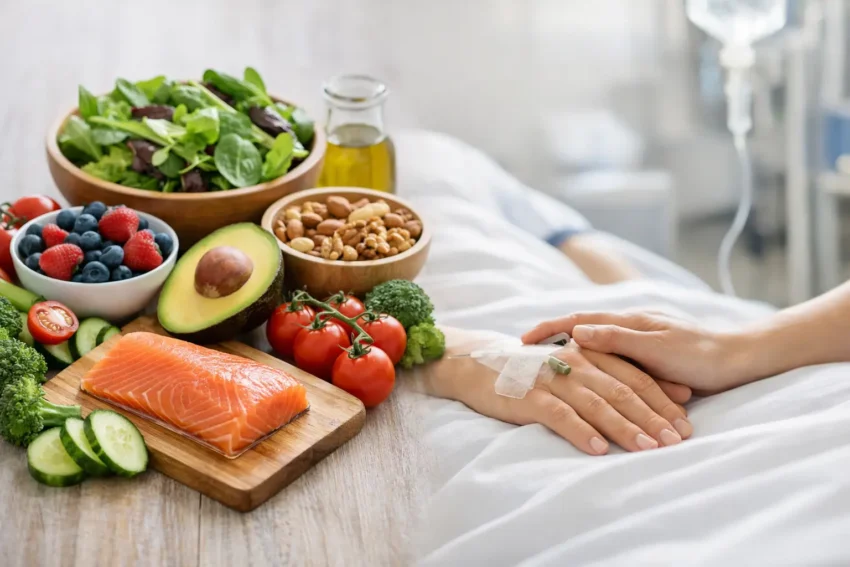
When porridge tastes of metal, water stings a sore mouth, or the smell of a familiar meal turns the stomach, advice to simply “eat well” can feel painfully out of touch. Can nutrition help treatment side effects? Often, yes – not by replacing medical care or making difficult treatment easy, but by helping people protect strength, comfort and dignity when eating becomes hard.
For someone having chemotherapy, radiotherapy, surgery, immunotherapy or long-term medicines, food may need to become more flexible than ideal. There are days when vegetables, wholegrains and carefully planned meals are manageable, and days when a bowl of custard, a cheese sandwich or a nourishing drink is the better choice. That is not failure. It is responsive care.
Can nutrition help treatment side effects?
Nutrition can support the body through treatment in several practical ways. Enough energy and protein can help maintain muscle, support recovery after surgery, and reduce the impact of unintended weight loss. Fluids can lessen the effects of vomiting, diarrhoea and poor intake. Adjusting textures, temperatures and flavours may make food more tolerable when the mouth, throat or gut is affected.
But nutrition is not a cure for treatment side effects, and it should never be used to delay medical help. Severe diarrhoea, persistent vomiting, dehydration, a high temperature, rapidly worsening weakness, pain when swallowing, or an inability to keep fluids down all need prompt advice from the treatment team. Side effects can also be caused by infection, medication reactions or the condition itself, not simply by what a person has eaten.
The right approach depends on the treatment, diagnosis, symptoms, weight changes, cultural food preferences, budget and access to food. A specialist oncology dietitian, dietitian, GP, nurse or pharmacist can give advice that is properly tailored, particularly where diabetes, kidney disease, swallowing difficulties or food allergies are involved.
Eat for the problem in front of you
During treatment, the most useful nutrition plan is often the one that deals with today’s barrier to eating. Trying to follow a perfect diet while managing nausea or exhaustion can add guilt to an already heavy load.
When appetite is low or weight is falling
Small amounts eaten often can be less daunting than three large meals. Aim to add nourishment without making portions bigger: full-fat yoghurt, fortified milk, cheese, eggs, nut butter where safe to eat, olive oil, avocado, beans, fish, chicken or tofu can all help. A snack plate may be more realistic than a cooked meal.
If energy is scarce, convenience matters. Tinned soup, microwave rice, frozen vegetables, ready-made meals, milk puddings and supermarket sandwiches are not moral failures. They can be practical bridges through a difficult week. If a clinician recommends prescribed nutritional drinks, use them as directed; they are designed for particular needs and should not be dismissed as somehow less wholesome than home cooking.
When nausea changes everything
Nausea is often worse when the stomach is empty, so dry crackers, toast, plain biscuits or cereal may help before getting up or between meals. Cool foods can be easier because they have less smell. Try yoghurt, chilled fruit, cold pasta, sandwiches or a smoothie if tolerated.
Greasy, very rich or strongly scented foods may make nausea worse for some people, though not everyone. Keep portions modest, sip fluids through the day and let someone else cook where possible. Ginger or peppermint may feel soothing, but check with the pharmacist before using concentrated supplements or herbal products. “Natural” does not automatically mean safe alongside cancer drugs, blood thinners or other medicines.
When the mouth or throat is sore
Radiotherapy to the head and neck, some chemotherapy medicines and infections such as oral thrush can make eating deeply uncomfortable. Soft, moist foods are often kinder: porridge, scrambled egg, soups, stews, mashed potato, yoghurt, custard and well-cooked lentils. Sauces, gravy and extra butter or oil can make swallowing easier while adding energy.
Avoid rough, dry, sharp, acidic or spicy foods if they sting. That may mean pausing crusty bread, crisps, citrus fruit, vinegar and chilli for a while. Food should be warm or cool rather than very hot. If swallowing becomes difficult, do not try to manage alone: ask the clinical team for an urgent assessment, as texture changes may be needed for safety.
When taste has changed
A metallic, bitter or flat taste can make cherished foods seem unfamiliar. Plastic cutlery may help with a metallic taste, as can marinating meat, using tart flavours if the mouth is not sore, or choosing cold foods. Some people find eggs, red meat and tap water particularly difficult for a time; alternatives such as beans, lentils, dairy foods, fish, poultry or bottled water may be more acceptable.
Keep experimenting gently. A food that is impossible this week may be fine next week. There is no prize for forcing down a meal that causes distress.
When bowels are unsettled
Diarrhoea raises the risk of dehydration. Frequent drinks, oral rehydration solutions if advised, and easy-to-digest foods can be useful. Some people tolerate lower-fibre choices temporarily, such as white rice, white toast, potatoes without skins, bananas and smooth soups. If dairy worsens symptoms, lactose-free options may help, but there is no need to cut out dairy automatically.
Constipation can be linked to pain medicines, low fluid intake, reduced movement and changes in eating. Fluids, gentle movement where possible and fibre can help, but increasing fibre quickly without enough drink may worsen discomfort. Ask the team before using laxatives, fibre supplements or remedies marketed as “detoxes”.
Food safety is part of supportive care
Treatment can weaken immune defences, so food safety deserves more attention, not fear. Wash hands, fruit and vegetables; keep chilled food properly refrigerated; heat leftovers until steaming; and follow use-by dates. The treatment team may advise avoiding particular higher-risk foods, such as unpasteurised dairy, raw or undercooked eggs, meat or shellfish, depending on your immune status.
Do not assume every restriction applies to every patient. Overly strict food rules can make an already limited diet smaller, more expensive and more isolating. Get clear advice from the professionals looking after you rather than relying on alarming claims online.
Beware promises that put people at risk
People facing serious illness are routinely targeted with costly powders, restrictive diets, fasting protocols and claims that certain foods can “starve” disease. These messages can be seductive because they offer certainty and control. They can also lead to weight loss, nutrient deficiencies, dangerous interactions and blame when bodies do not respond as promised.
A nourishing diet can sit alongside treatment. It should not be made to carry the burden of curing illness. If someone recommends stopping prescribed medicine, spending money you do not have, or cutting out whole food groups without a clinical reason, pause and discuss it with the medical team.
Support must include access, not just advice
Food guidance is only meaningful when people can act on it. A carer may be juggling hospital travel, work and childcare. An older person may have no energy to cook. Someone on a low income may be choosing between heating, transport and groceries. Advice built around expensive ingredients or hours of preparation excludes the people who most need practical support.
Simple, affordable foods can be deeply nourishing: oats, eggs, tinned fish, beans, lentils, frozen vegetables, milk, yoghurt, potatoes and fortified cereals. Community food projects, local welfare support, hospital social workers and carers’ services can sometimes help where food access is under pressure. Asking for that support is a sensible health decision, not a personal shortcoming.
At Supportive Food Directory, we believe food dignity belongs in every conversation about health. The person in treatment deserves more than instructions. They deserve meals that fit their symptoms, their culture, their budget and their right to be cared for.
If eating is difficult today, make the next choice a kind one: a few sips, a soft snack, a fortified drink, or a call to the treatment team. Small acts of nourishment can be a practical form of solidarity with a body doing hard work.