
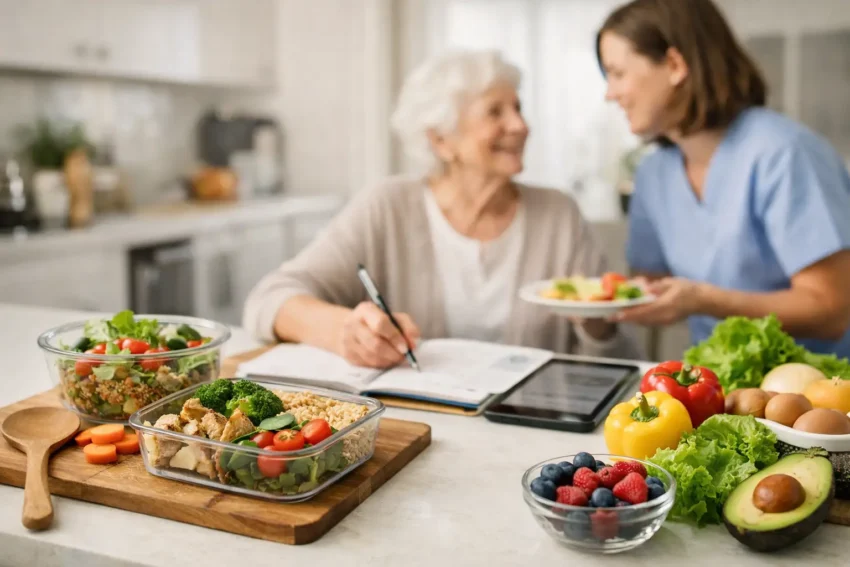
A missed lunch can quickly become a difficult afternoon. When you are supporting a parent, partner, neighbour or friend, meal planning for carers is not about producing perfect plates or following an idealised menu. It is about making sure food is available, suitable and comforting when energy, appetite, mobility, memory or money are under pressure.
Caring often involves decisions that cannot wait: a medication change, a poor night’s sleep, an unexpected appointment or a day when the person you support simply will not eat what they ate last week. A useful plan gives you a starting point, not another standard to fail. It should protect the wellbeing of the person receiving care and the health of the carer too.
Start with the person, not the meal plan
Before writing a shopping list, notice what is actually happening around food. Does the person eat better at breakfast than in the evening? Are they managing cutlery, chewing and swallowing safely? Do certain smells put them off? Is weight loss, constipation, diabetes, heart disease, kidney disease, dementia, cancer treatment or nausea part of the picture?
These details matter more than fashionable food rules. Someone recovering from illness may need more energy and protein in small portions. Someone with diabetes may benefit from regular meals that include fibre, protein and nourishing carbohydrates rather than long gaps followed by sweet snacks. For a person with swallowing difficulties, texture must be assessed properly by a speech and language therapist or other relevant clinician. Never assume that simply blending food makes it safe.
Ask the person what feels familiar and manageable. Their favourite soup, a soft egg on toast, porridge, beans with a jacket potato or a small bowl of stew may offer more nourishment than an ambitious meal left untouched. Choice is part of dignity, even when choice needs to be simplified.
Make meal planning for carers flexible enough for real life
A seven-day chart can be useful, but only if it leaves room for change. Instead of planning seven different evening meals, choose two or three main dishes that can be cooked once and served in different ways. A vegetable and lentil stew can become a lunch with bread, a topping for a baked potato, or a side dish with fish or eggs. Roast chicken can be used in a sandwich, soup or rice dish.
Think in building blocks. Aim to have a source of protein, a carbohydrate that provides energy, fruit or vegetables where possible, and fats that add flavour and calories when needed. This does not mean every meal has to look balanced on paper. It means the overall pattern gives the body something to work with.
A simple weekly rhythm may reduce decision fatigue. You might keep one day for soup or a slow-cooked dish, one for pasta, one for a tray bake, one for fish or eggs, and one for a freezer meal. Repeat meals without apology. Familiar food reduces waste, saves money and can be particularly reassuring for people living with dementia or fatigue.
It also helps to plan around the carer’s capacity. On days with hospital appointments or personal care visits, choose food that needs little more than reheating. Save chopping, batch cooking and trying new recipes for days when there is time and support.
Plan for small appetites
When appetite is low, large meals can feel overwhelming. Offer little and often: yoghurt with fruit, milky porridge, cheese and crackers, a small smoothie, scrambled egg, hummus on toast, rice pudding or soup with bread. Fortifying food can help where appropriate. Adding full-fat yoghurt, grated cheese, olive oil, nut butter or powdered milk may raise energy and protein without making portions much bigger.
This is one area where general healthy-eating messages need care. For a person losing weight unintentionally, low-fat choices may not be the priority. For someone with a condition requiring a restricted diet, the advice may be different. A GP, dietitian, specialist nurse or pharmacist can help make sense of individual needs, particularly where medication, supplements or treatment side effects are involved.
Shop for reliability, not perfection
The most ethical and nourishing plan is no use if it depends on a costly shop you cannot manage every week. Build a cupboard, fridge and freezer around foods that keep well, are easy to prepare and can become several meals. Tinned beans, lentils and fish; oats; wholegrain cereals; rice; pasta; tinned tomatoes; frozen vegetables and fruit; eggs; yoghurt; bread for freezing; and simple soups can provide a dependable base.
Fresh, local produce is valuable, and buying directly from independent growers and producers can strengthen local food systems when budgets allow. Yet nobody should be made to feel they have failed because they use frozen peas, tinned tomatoes or supermarket basics. Food justice means good food must be practical and affordable, not a privilege reserved for people with spare time and money.
Keep an emergency shelf or freezer section for difficult days. Four reliable options are enough:
- soup, bread and grated cheese;
- eggs, baked beans and toast;
- a frozen homemade portion or a good-quality ready meal;
- porridge, yoghurt or cereal with fruit.
Ready meals are not automatically a poor choice. Check whether the portion, texture and salt content suit the person, then use them as a tool rather than a source of guilt. The same applies to meal deliveries, community cafés and food parcels. Support that gets a nourishing meal onto the table is support worth accepting.
Reduce waste without making food feel scarce
Caring households often waste food because needs change suddenly. A person may be admitted to hospital, lose their appetite or decide they cannot tolerate a meal they previously enjoyed. Buying smaller quantities, freezing single portions and labelling food with the date can prevent both waste and frustration.
Try serving modest portions first, with more available. This is kinder than presenting a full plate that feels like a demand. Leftover cooked vegetables can be added to omelettes, soups or pasta sauces. Stale bread can become toast, breadcrumbs or a quick topping. But food safety comes first: chill cooked food promptly, reheat it thoroughly only once, and discard anything you are unsure about.
There is a wider issue here. Families should not have to choose between nutritious food and keeping the heating on, nor should carers be expected to absorb the cost of illness alone. If food bills are becoming unmanageable, speak to a local advice service, council support team, community pantry, social prescriber or carers’ organisation. Seeking help is not a personal failing. Hunger and ill health are social problems that deserve collective answers.
Share the work where you can
The hidden labour of food is more than cooking. It is noticing what has run out, checking dates, persuading someone to eat, washing up, adapting recipes and worrying about whether they have had enough. Carers deserve practical support with all of it.
When friends or relatives ask how they can help, be specific. A weekly bag of groceries, two labelled freezer meals, a lift to the shops or an hour spent batch-chopping vegetables can make a genuine difference. If several people are involved in care, keep a simple note of foods enjoyed, allergies, preferences, difficulties and what is in the freezer. This avoids waste and gives everyone a clearer picture.
Supportive Food Directory believes food knowledge belongs in the community, not behind a paywall or limited to those already confident in the kitchen. Sharing a recipe, surplus garden produce or a meal with a neighbour can be a modest act, but it strengthens the networks that help people stay well.
Let nourishment include the carer
It is common for carers to make a proper meal for someone else and then skip their own. That pattern is understandable, but it is not sustainable. Keep food you can eat quickly: fruit, nuts if safe for your household, toast, yoghurt, soup, leftovers or a sandwich. Sit down for ten minutes when you can. Drink water. Accept the same care you are offering.
A meal plan will not solve the pressure of caring, nor can it replace adequate income, respite, clinical support and fair access to food. What it can do is create a little more certainty in a week that may contain very little of it. Start with one dependable breakfast, one easy evening meal and a few foods for hard days. That is enough to begin making room for nourishment, dignity and a gentler kind of care.