
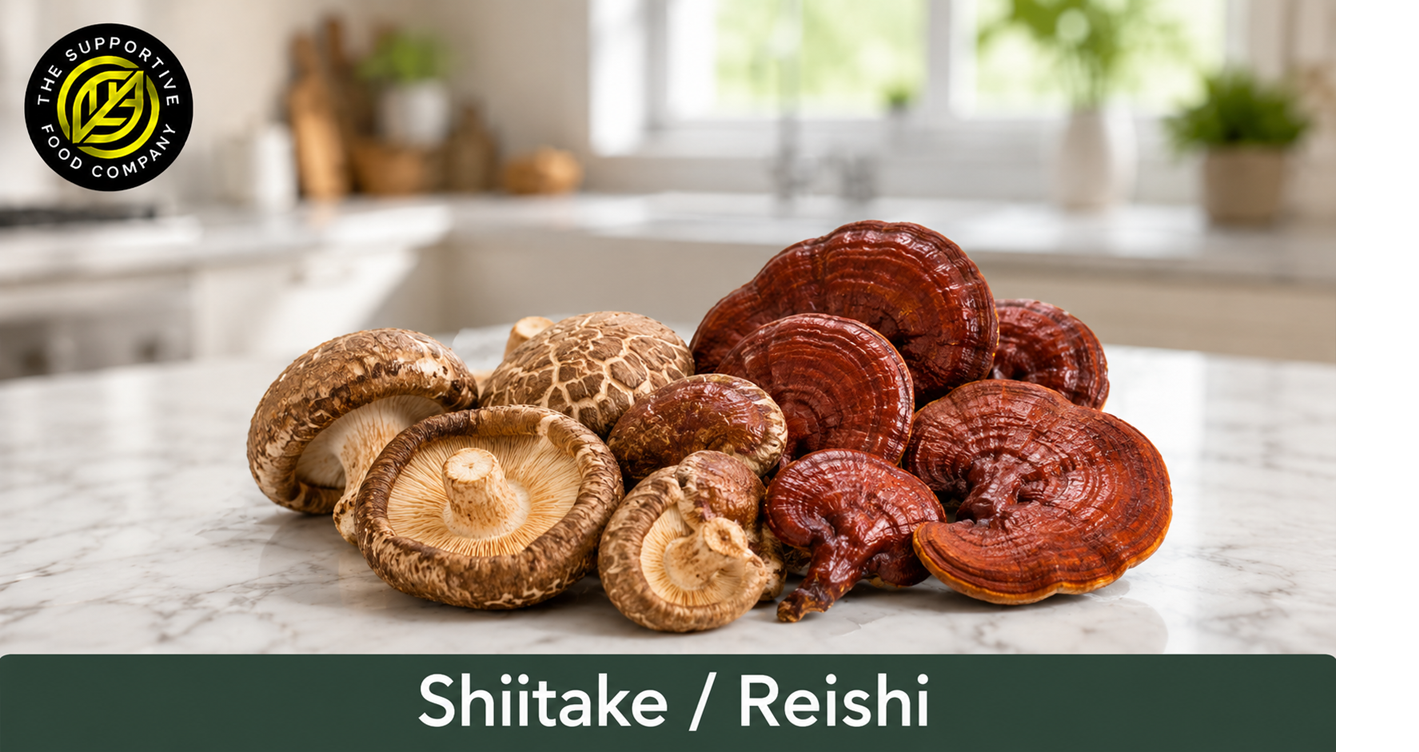
The benefits of shiitake and reishi mushrooms
Shiitake mushrooms are a favorite in the kitchen, bringing a deep, savory flavor, a good dose of fiber and minerals, and a hearty texture that makes it easy to pass on heavily processed meat alternatives.
Reishi mushrooms are a whole different story. They’re too tough and bitter to eat like most, so they’re usually turned into teas, extracts, or supplements. Because these extracts can be strong and might interact with certain medications, it’s best to handle reishi with a bit more caution than your average edible mushroom.
Overall, shiitake can be promoted as an everyday ingredient. Reishi can be described as a traditional mushroom used in some wellness preparations, but with a reminder that supplements need professional caution.
What dishes frequently use shiitake and reishi?
Shiitake mushrooms are common in soups, broths, stir-fries, noodle dishes, rice bowls, dumplings, omelettes, stews, and vegetable sautés. They are used fresh or dried.
Reishi is more often used in mushroom tea, broths, or supplement products rather than regular dishes.
How and why shiitake and reishi can be supportive foods
Shiitake mushrooms are supportive because they help make plant-rich meals feel savoury and satisfying. They add umami flavour, which can help reduce the need for excess salt or rich sauces.
Dried shiitake mushrooms are especially useful because they store well, rehydrate easily, and make a flavourful broth.
Suggested recipes
Shiitake Miso Soup – Simmer shiitake, tofu, spring onion, greens, and miso.
Shiitake Stir-Fry – Cook shiitake with broccoli, garlic, ginger, and noodles or rice.
Mushroom Barley Soup – Use shiitake, onion, celery, carrots, barley, and herbs.
Shiitake Rice Bowl – Serve sautéed shiitake with brown rice, greens, sesame, and egg or tofu.
Mushroom Broth – Simmer dried shiitake with onion, garlic, ginger, and vegetables for a savoury stock.
Home | Food | Facebook | Other sources | Editors