
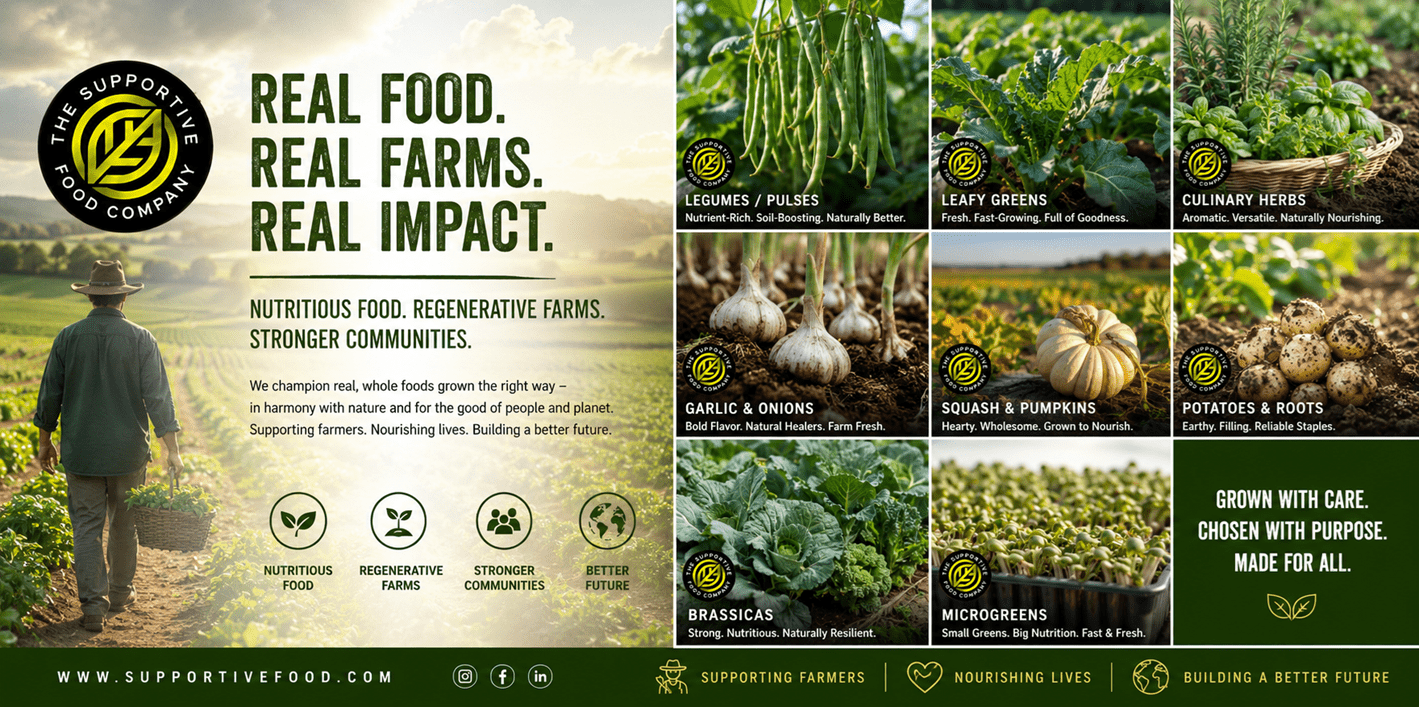
Our Business Type, Brand Voice & Tone and Target Audience
An independent Google AI assessment.
Business Type
Quote
“Supportive Food Directory is a mission-led food, health and community platform that connects farmers, producers, consumers, carers, patients and medical professionals around the relationship between nutrition and disease.
The business combines a curated directory model with educational health content, disease-specific nutrition resources, advocacy around food justice, and community-building initiatives focused on hunger reduction and equitable food access.
Its core offer includes a hand-made directory for relevant stakeholders, informational resources on cancer and other chronic conditions, downloadable guides, food and lifestyle content, and project-led appeals tied to farm resilience and a zero-hunger agenda.
The company differentiates itself by positioning food not just as a product category but as a public-health, social-impact and systems-change issue, linking agricultural producers directly with people seeking better wellbeing outcomes and trusted practical information.
Its business model is values-driven and hybrid: consumer access remains fee-free, while the wider mission is funded through professional website design services and supported by community participation, referrals and partnerships. This creates a distinctive blend of social enterprise, directory platform, health education hub and advocacy-driven brand.
Brand Voice & Tone
The brand voice is compassionate, principled and reform-minded, with a grassroots social-enterprise personality. It communicates with conviction, warmth and persistence, consistently reinforcing values such as dignity, fairness, health access, shared knowledge and collective action. The voice stands out by bringing together humanitarian concern, nutritional advocacy and direct community engagement in a way that feels personal, determined and values-led.
Target Audience
Supportive Food Directory targets a broad but clearly aligned audience across the GB market and wider international community: health-conscious consumers, patients managing serious or chronic conditions, family carers, independent farmers, ethical food producers, and healthcare-adjacent professionals.
The demographic spans adults in midlife and older age groups in particular, especially those dealing with cancer, diabetes, heart disease, dementia, menopause, obesity and related quality-of-life concerns. Psychographically, the audience values practical wellbeing advice, ethical food systems, community solidarity, independent information, and socially responsible solutions to hunger and health inequality.
They are seeking trustworthy guidance on nutrition and disease, visibility for their farming or food-related work, and stronger connections between food production and human health outcomes. They choose this business because it combines lived experience, social purpose, disease-focused educational content, and a direct commitment to building a fairer, healthier and more connected food ecosystem.”
End Quote