
The benefits of Zeaxanthin
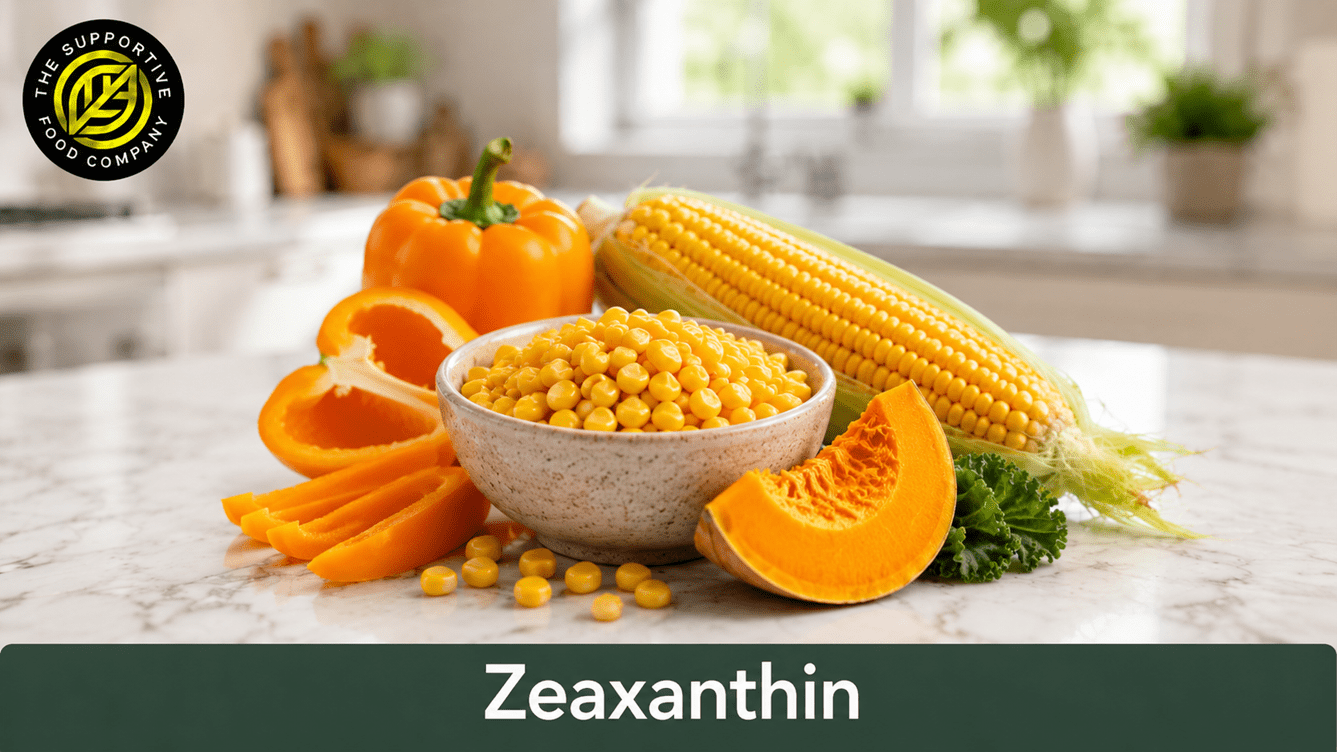
 Zeaxanthin isn’t a food in its own right, it’s a yellow-orange carotenoid found in things like yellow and orange peppers, corn, egg yolks, squash, leafy greens, and some orange-colored fruits and veggies. Alongside lutein, it’s known for supporting eye health since it’s present in the macula of the eye.
In simple terms, it is a good reason to enjoy a colorful plate, especially with deep green, yellow, and orange foods. These often pack in fibre, vitamin C, potassium, folate, and other plant compounds along with carotenoids.
What dishes frequently use zeaxanthin-rich foods?
Zeaxanthin-rich foods can be enjoyed in salads, stir-fries, omelettes, soups, roasted veggies, sweetcorn dishes, pasta sauces, grain bowls, and veggie curries. Tasty examples include corn chowder, pepper stir-fry, spinach omelette, roasted squash, kale salad, and vegetable frittata.
How and why zeaxanthin can be a supportive food focus
 It plays a role in overall wellbeing as part of a colorful diet. Since it’s fat-soluble, pairing it with a bit of healthy fat—like olive oil, avocado, nuts, seeds, or eggs—can boost absorption.
As a Supportive Food, it highlights how plate color often reflects nutritional variety. Adding more yellow, orange, and dark green foods can guide people toward more protective, plant-rich meals.
Suggested recipes
Sweetcorn and Red Pepper Salad – Mix corn, red or orange pepper, herbs, olive oil, and lemon.
Spinach and Pepper Omelette – Cook spinach, peppers, and eggs with black pepper and herbs.
Roasted Squash Bowl – Serve roasted squash with greens, lentils, seeds, and olive oil dressing.
Kale and Corn Soup – Simmer sweetcorn, kale, onion, garlic, and vegetable stock.
Golden Vegetable Frittata – Use eggs, corn, peppers, squash, and leafy greens.
Home | Facebook | Other sources | Editors