
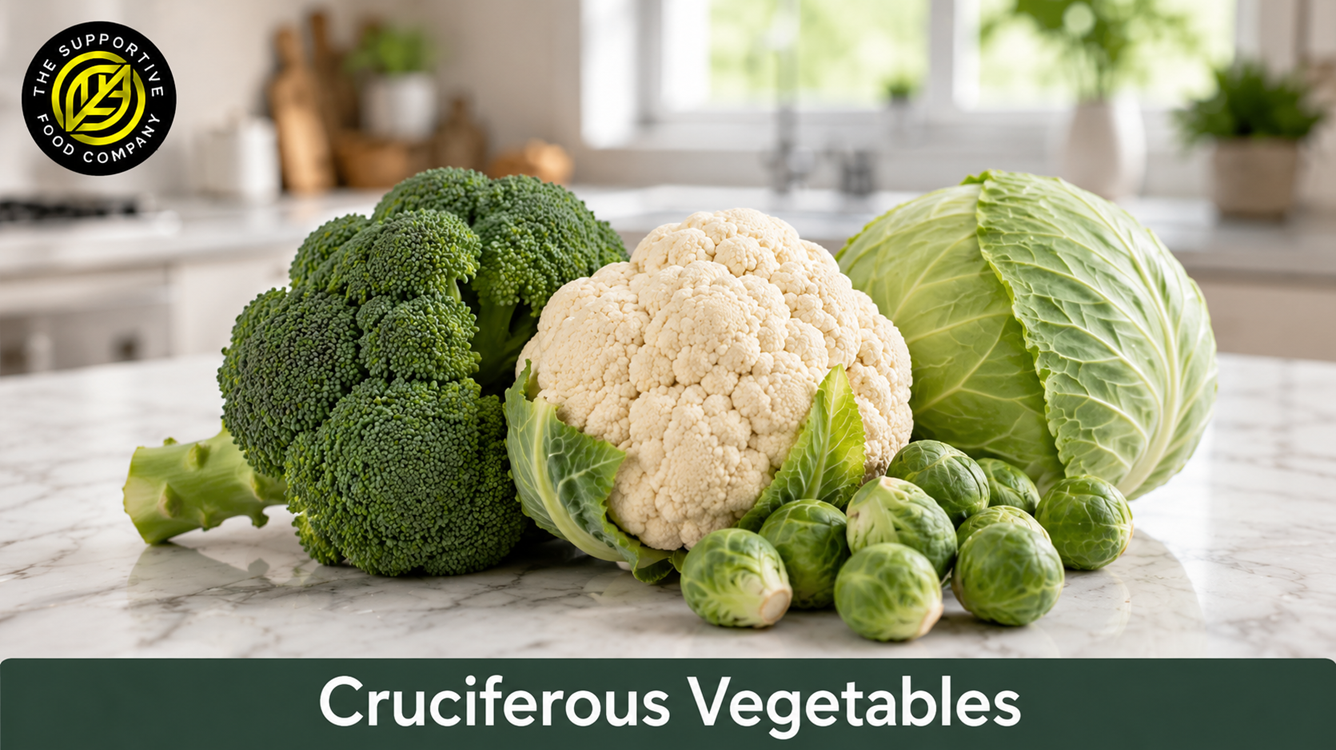
The benefits of cruciferous vegetables
Cruciferous vegetables like broccoli, cauliflower, cabbage, Brussels sprouts, kale, rocket, bok choy, watercress, turnips, and radishes are packed with fibre, vitamins, minerals, and unique sulfur-containing compounds called glucosinolates.
They’re filling, versatile, and nutrient-rich, making them great for supporting digestion, heart health, and a plant-forward diet. Plus, they bring a range of textures and flavours, from the sweetness of roasted cauliflower to the peppery kick of rocket and watercress.
What dishes frequently use cruciferous vegetables?
They appear in stir-fries using olive oil, soups, salads, slaws, curries, tray bakes, stews, pasta dishes, grain bowls, and side dishes.
Popular examples include broccoli stir-fry, cabbage slaw, cauliflower curry, Brussels sprout tray bake, kale soup, and bok choy with garlic.
How and why cruciferous vegetables can be supportive foods
Cruciferous vegetables are great because they make it easy to center meals around veggies instead of treating them as an afterthought. They’re usually budget-friendly, available both fresh and frozen, and simple to toss into everyday dishes.
The way you cook makes a big difference. Light steaming, stir-frying, roasting, or tossing raw shredded vegetables into salads helps keep their flavor and texture intact. Overboiling, on the other hand, can intensify their smell and make them less appealing.
Suggested recipes
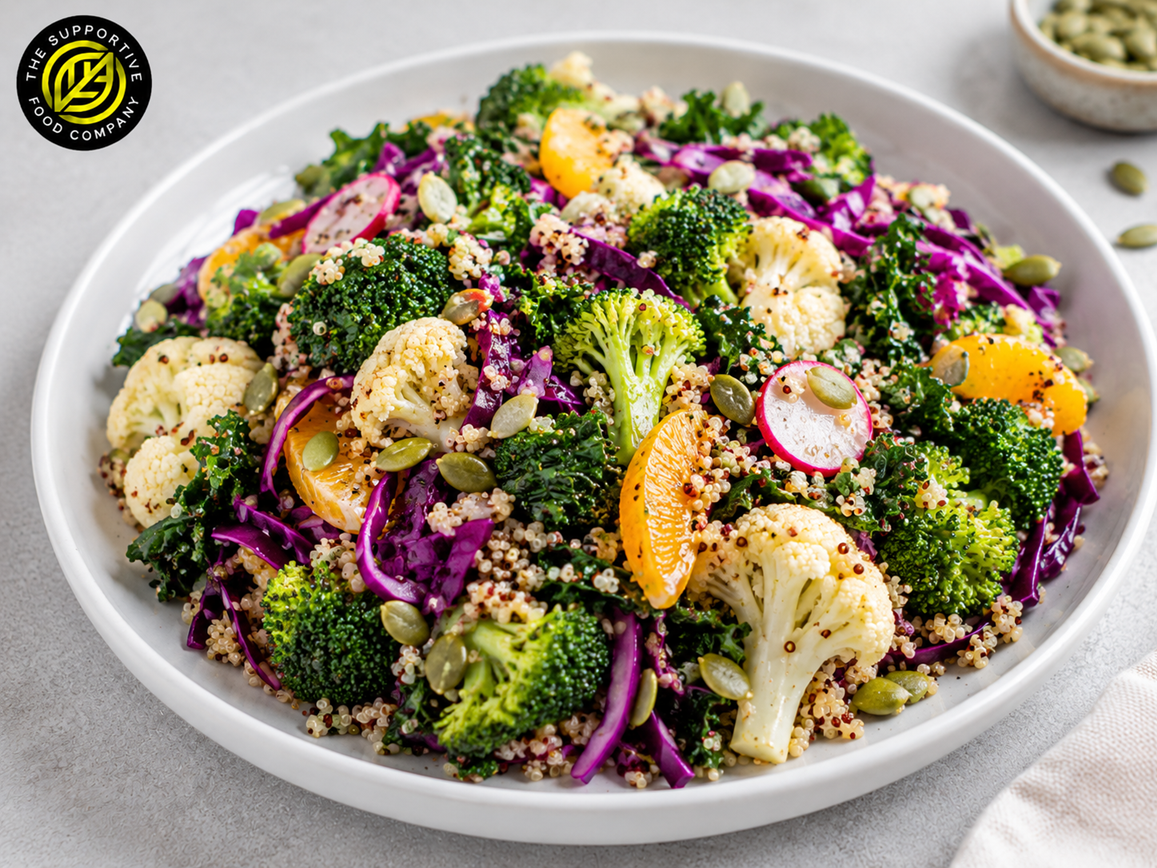
Mixed Cruciferous Tray Bake – Roast broccoli, cauliflower, Brussels sprouts, and red onion with olive oil and herbs.
Cabbage and Carrot Slaw – Shred cabbage and carrots, then dress with yoghurt, lemon, and mustard.
Cauliflower and Chickpea Curry – Cook cauliflower with chickpeas, tomatoes, turmeric, and spices.
Garlic Bok Choy Stir-Fry – Stir-fry bok choy with garlic, ginger, and a splash of soy sauce.
Kale and White Bean Soup – Simmer kale, beans, onion, garlic, and vegetable stock.
Home | Food | Facebook | Other sources | Editors