
Discover characterful sparkling and still wines from British / English vineyards, with guidance on organic certification, grapes, styles, food pairing and the people behind the barrels. (under construction)…
 Helpful guidance without unnecessary wine jargon
Supportive Food is also here to make choosing good food and drink simple and clear.
This page offers practical insights for anyone curious about English organic wine and looking for an honest, down-to-earth response.
First thing to say is that, after its formative years and some tough times, English Organic Wine has become a blossoming global market, and a perfect time for ethical investment.
Explore English organic wine by style
Start with a style you already enjoy, or use this guide to discover something new. Current bottles, vintages, prices and delivery details can be confirmed through our contact page. (coming soon)
- Sparkling wine: Fresh, elegant wines for aperitifs, celebrations, gifts and the dining table.
- White wine: Crisp, aromatic or gently textured styles shaped by England’s cool-climate vineyards.
- Rosé wine: Usually med-dry and refreshing, with red-fruit, floral or citrus character.
- Red wine: UK wine is often lighter-bodied, fragrant and lively rather than heavy or strongly oaked.
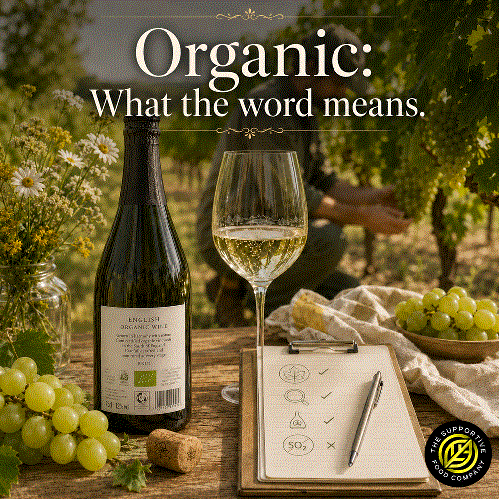 Organic: What the word means.
Organic is a certified claim, not simply a description. Organic wine begins with grapes grown under recognised organic farming rules. Certification also covers permitted production methods, records, traceability and inspection.
This doesn’t mean nothing is ever used in the vineyard, nor does it guarantee the wine is free of sulphites. The best way to know is to check the certification and the details provided for each individual bottle.
Useful label checks
The label should state “English Wine” for grapes grown in England, include a recognized organic certification mark or control-body code, producer details, vintage, bottle size, and alcohol percentage. It should also list allergen information, such as sulphites where applicable, and note any separate vegan, biodynamic, or sustainability claims if relevant.
Find your preferred style: From traditional sparkling wine to lighter reds.
- Sparkling: Brisk acidity, fine bubbles and flavours that can move from citrus and apple to brioche and toast with ageing.
- White: Fresh, aromatic or textured styles made from grapes such as Bacchus, Chardonnay and Seyval Blanc.
- Rosé: Dry and refreshing, with strawberry, cranberry, raspberry, floral or citrus character.
- Red: Usually lighter in body, with red fruit, herbs and gentle earthy notes.
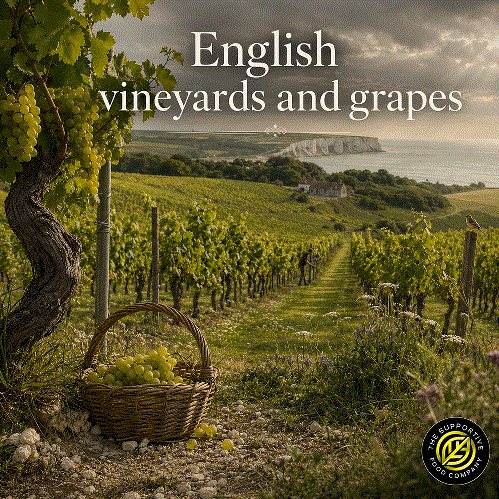 English vineyards and grapes
- Freshness shaped by a cool maritime climate
Vineyard site, soil, aspect, rainfall and the conditions of each vintage all influence the finished wine.
Why organic growing can be demanding
Wet or humid conditions can create disease pressure in English vineyards.
Organic growers This approach may rely on careful pruning, maintaining an open leaf canopy, using manual or mechanical weed control, planting cover crops, adding compost, promoting biodiversity, and closely monitoring weather conditions and vine health.
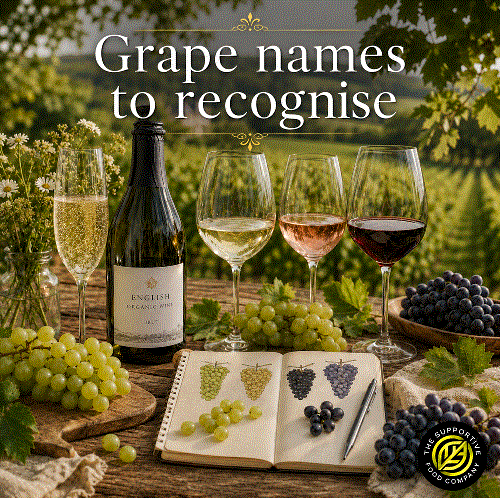 Grape names to recognise
- Chardonnay, Pinot Noir & Pinot Meunier: central to traditional-method sparkling wine.
- Bacchus: an aromatic English white associated with elderflower, citrus, herbs and orchard fruit.
- Seyval Blanc and Solaris: useful cool-climate varieties for fresh white or sparkling styles.
- Pinot Noir and Pinot Noir Précoce: used for sparkling wine, rosé and lighter still reds.
Wine language made clearer: Organic, biodynamic, natural and vegan are not the same.
- Organic: Regulated and certified. certification covers recognised farming and production rules, inspection and traceability.
- Biodynamic: A whole-farm philosophy. Biodynamic production normally has organic principles at its foundation, with additional farming practices and certification.
- Natural wine: A broad description
- Natural wine: commonly implies limited intervention, but it does not have one universal legal definition.
- Sustainable: A wider set of concerns. Sustainability can address energy, water, carbon, packaging, biodiversity and employee welfare.
- Vegan: About production aids: Vegan wine avoids animal-derived processing aids. Organic wine is not automatically vegan.
- Sulphites Possible in organic wine. Sulphites occur naturally during fermentation and controlled amounts may also be used to protect wine.
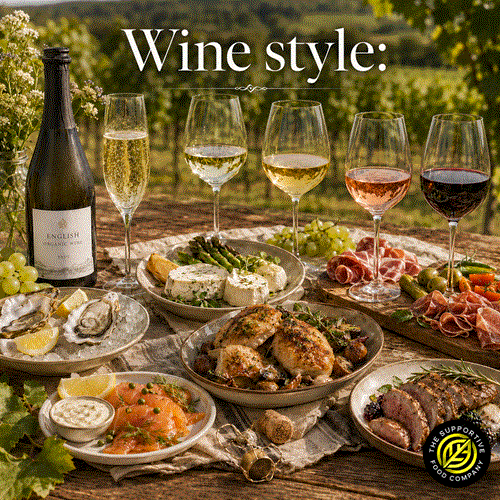 Wine styles:
Pair by weight, acidity, texture and flavour intensity rather than relying only on the colour of the wine.
| Wine style | Good starting points | Serving guide |
|---|---|---|
| Traditional-method sparkling | Oysters, smoked salmon, fish and chips, fried food and hard cheese |
Well chilled, approximately 8–10°C |
| Bacchus and aromatic whites | Goat’s cheese, asparagus, shellfish, salads and green herbs | Chilled, without making the wine icy |
| English Chardonnay | Roast chicken, crab, creamy fish dishes and mushrooms | Approximately 10–12°C for richer styles |
| Dry rosé | Salmon, charcuterie, summer vegetables and Mediterranean dishes |
Chilled |
| Light Pinot-based red | Duck, mushrooms, roast pork, lentils and mild game | Slightly cool, approximately 13–15°C |
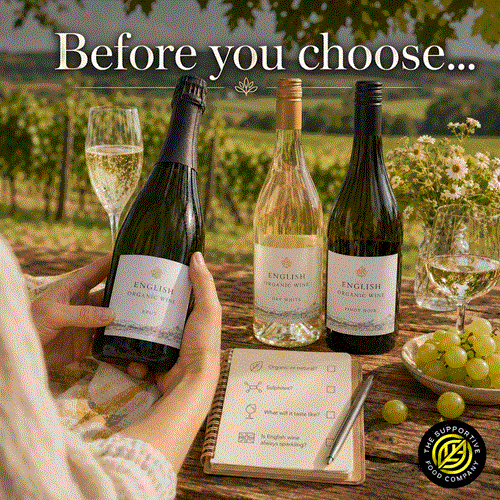 Before you choose…
UK & Ireland Vineyards, Acreage and Yield
Vineyard-site records for England, Wales, the Republic of Ireland and Scotland, with disclosed planted acreage and five-vintage aggregate production evidence.
Country summary
| Country | Directory rows | Rows with known area | Known area (ha) | Known area (acres) |
|---|---|---|---|---|
| England | 845 | 827 | 3,430.327 | 8,476.522 |
| Wales | 34 | 34 | 52.595 | 129.966 |
| Ireland | 8 | 6 | 4.770 | 11.787 |
| Scotland | 3 | 3 | 1.371 | 3.387 |
| Total | 890 | 870 | 3,489.063 | 8,621.661 |
Five-vintage aggregate yield evidence
Yield is expressed in hectolitres per producing or cropping hectare. Bottle equivalents use 750 ml bottles.
Some harvest-report area and yield figures are estimates; the status column identifies this.
| Vintage | Geography | Producing/cropping area (ha) | Average yield (hl/ha) | Production (hl) | Bottles (million) | Data status |
|---|---|---|---|---|---|---|
| 2021 | England & Wales | 2,841 | 23.62 | 67,125.00 | 8.95 | Official table; bottle figure rounded |
| 2022 | England & Wales | 3,200 | 32.00 | 91,500.00 | 12.20 | Official bottles; estimated area and yield |
| 2023 | England & Wales | 3,661 | 44.00 | 161,960.84 | 21.59 | Official production; harvest-report yield |
| 2024 | England & Wales | 3,763 | 21.30 | 80,077.42 | 10.68 | Confirmed |
| 2025 | Great Britain | 4,100 | 30.00 | 124,377.00 | 16.58 | Official production; modelled area and yield |