
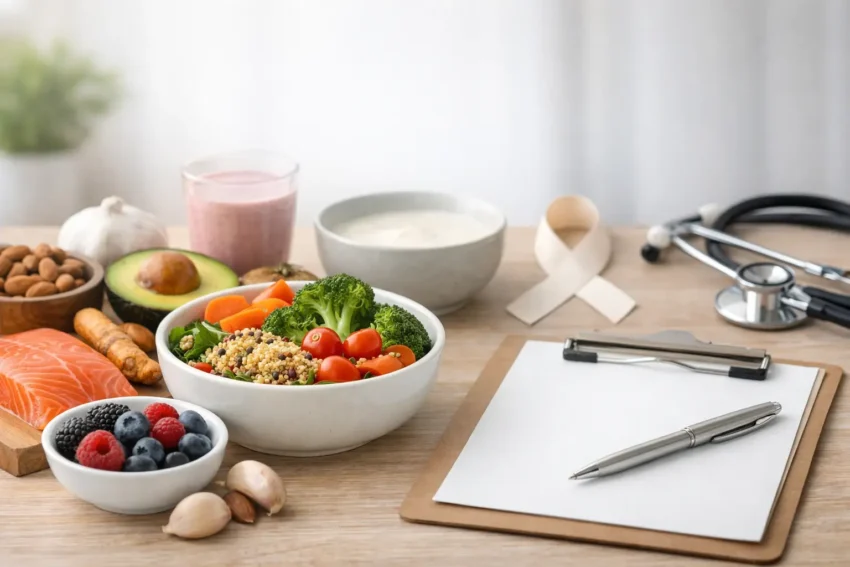
A cancer diagnosis can make eating feel unexpectedly challenging. Foods that once brought comfort might taste off, feel tiring to prepare, or become just another worry in a day full of appointments.
This guide to cancer nutrition support is for patients, carers, and families looking for practical, compassionate ways to stay nourished without turning every meal into a battle of willpower.
While nutrition can’t cure cancer, and no diet should replace treatment, eating and drinking well can help maintain strength, cope with treatment, recover after surgery, and preserve day-to-day quality of life. The right approach isn’t about perfection—it’s about meeting each person where they are, respecting their symptoms, budget, culture, appetite, and personal wishes.
Why cancer nutrition support matters
Cancer and its treatments can change what the body needs nutritionally. Some people lose weight and muscle because pain, nausea, fatigue, changes in taste, trouble swallowing, or anxiety make eating harder. Others may put on weight during treatment because activity levels drop, steroids increase appetite, or comfort foods become easier to manage. Neither situation is a personal failure.
Unplanned weight loss is worth noting, especially if it happens quickly or comes with weakness, low appetite, or trouble eating. The body needs enough energy and to keep muscle, promote healing, and handle treatment. Sometimes, having small, nourishing snacks throughout the day is more doable and helpful than trying to finish a large, perfectly balanced meal.
There’s no one-size-fits-all cancer diet. Recommendations vary based on the type and stage of cancer, treatments, other health issues like diabetes or kidney disease, and whether someone needs to gain, maintain, or lose weight. A registered dietitian with oncology experience can help turn general guidance into a plan that works and feels realistic.
A guide to cancer nutrition support that starts with the person
The first question is not, What is the healthiest food? It is, What can this person manage today? Appetite, energy, chewing ability, faith, food traditions, access to a cooker and the support available at home all matter. A useful plan works with real life rather than judging it.
Focus on enough before aiming for ideal
When appetite is low or weight loss is an issue, choosing foods higher in energy and protein can help, even if they’re not your usual picks. Things like full-fat yoghurt, cheese, eggs, fish, beans, chicken, fortified porridge, milky drinks, nut butters, and puddings can all be useful, depending on personal needs and allergies.
Boosting the nutrition of everyday meals doesn’t have to mean bigger. Make porridge with milk instead of water, add cheese, cream, yoghurt, or olive oil to soups and mashed potatoes, or blend up a smoothie with yoghurt, milk, and fruit if a big breakfast feels too much. For those who fill up quickly, three smaller meals with snacks in between can work better than forcing down a large plate.
If eating is going well and weight is steady, keeping variety in your diet is still a plus. Fruit and veg, wholegrains, pulses, proteins, and healthy fats like olive or rapeseed oil all bring valuable nutrients and fibre. Just avoid strict rules that cause worry, guilt, or unnecessary weight loss—treatment isn’t the time to cut out whole food groups without medical advice.
Put protein into the moments that already exist
Protein helps maintain and repair muscles. Instead of making big changes all at once, try adding it to foods you already enjoy: an egg on toast, yoghurt with cereal, hummus with pitta, beans in soup, cheese with crackers, or fish with a baked potato. Vegetarian and vegan diets can provide enough protein too, though they might need a bit more planning when appetite is low.
Carers can help by keeping ready-to-eat snacks close by, like a bowl of washed grapes, individual yoghurts, a flask of soup, soft cheese with crackers, or frozen portions of a favourite meal. Offering options makes a difference—asking, “Would you like something cold or something savoury?” is often kinder and more effective than simply asking, “What do you want to eat?”
Managing common eating problems during treatment
Symptoms can vary from week to week, so flexible approaches work better than sticking to a strict menu. Jot down what felt manageable, what made symptoms worse, and when your appetite was best—this can help the care team spot patterns.
For nausea, bland or cold foods often go down easier since they have less smell. Dry toast, crackers, yoghurt, cereal, chilled fruit, or a small sandwich might be simpler than a hot meal. Eating small amounts regularly, sipping fluids through the day, and avoiding an empty stomach can help. Ongoing vomiting should be discussed promptly with the treatment team, as anti-sickness medication might need adjusting.
If you have a sore mouth, ulcers, or trouble swallowing, soft and moist foods are usually kinder. Options like custard, scrambled eggs, smooth soups, stewed fruit, mashed dishes, yoghurt, or meals with added sauces can help. Steer clear of sharp, acidic, very hot, or heavily spiced foods to reduce discomfort. New swallowing issues, coughing when eating or drinking, or repeated chest infections should be urgently reported to the clinical team.
Changes in taste can be frustrating. If food tastes metallic, using plastic cutlery and glass cookware can sometimes help, and cold foods may be less overpowering. Tart flavours like lemon might appeal but should be avoided with a sore mouth. If meat tastes unpleasant, try eggs, dairy, beans, lentils, tofu, or fish instead. Forcing down food you can’t stand isn’t worth it.
Bowel changes like diarrhoea or constipation need tailored advice, especially after bowel surgery or during certain treatments. Stay hydrated. Fibre can help with constipation for some but make things worse for others, so don’t assume a high-fibre diet is best during active treatment or bowel irritation. An oncology nurse, dietitian, or GP can guide you based on the cause.
Food safety without fear
Cancer treatment can sometimes lower immunity, making food poisoning more serious. Basic food hygiene is worthwhile: wash hands, keep raw and cooked foods separate, cook foods thoroughly, check use-by dates and refrigerate leftovers promptly. Ask the treatment team whether there are specific foods to avoid during periods of low immunity, as local guidance differs.
Be cautious with supplements, herbal remedies and high-dose vitamins. Natural does not automatically mean safe, and some products can interfere with chemotherapy, radiotherapy, surgery or prescribed medicines. Bring the actual product, or a clear photo of the label, to a pharmacist, oncology doctor or dietitian before taking it.
Good nutrition also depends on fair access
Advice to eat fresh, varied food can feel unrealistic when money is tight, travel is tough, or someone is too unwell to shop and cook. Cancer can cut household income while driving up practical expenses. No one should have to choose between heating, getting to treatment, and eating food that aids recovery.
Families can reduce pressure by accepting help with shopping, batch cooking or meal deliveries. Community food projects, food banks, local welfare support and social prescribing services may offer practical assistance. Farmers, growers, producers and neighbours all have a role in building food systems where nourishing food is not a privilege reserved for those with the most time and money.
Supportive Food Directory believes this is a public health issue as much as a personal one. Dignified access to good food, clear information and community care belongs alongside clinical treatment.
When to ask for more help
Let the cancer team know about weight loss, ongoing poor appetite, dehydration, pain when eating, vomiting, diarrhea, constipation, trouble swallowing, or any worry that food is becoming a daily challenge. Ask directly for a referral a dietitian if one hasn’t been offered—this isn’t a luxury, it’s part of care.
For carers, keep in mind that encouragement shouldn’t turn into pressure. Sitting together might help, celebrate what was eaten, and let tough meals pass without blame. Food can still bring connection, even if it’s not the same as before.
The next step can be small: a nourishing drink within reach, a chat with the oncology nurse, or a neighbor bringing soup. When offered with care and without judgment, these small gestures can make someone feel less alone and more supported during treatment.
Home | Food | Facebook | Other sources | Investors | Editors | Contact