
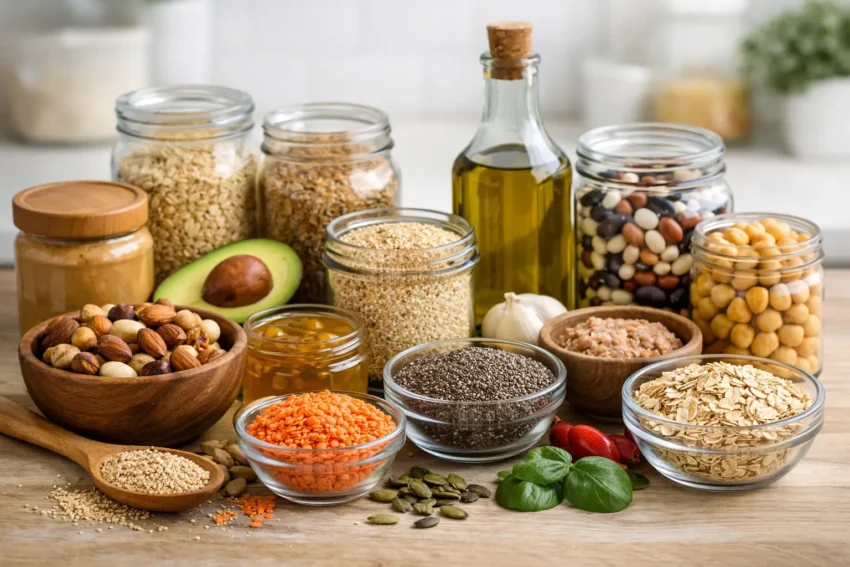
A well-stocked cupboard can be a quiet form of security. When energy is low, money is tight or getting to the shops is difficult, the best nutrient dense pantry staples make it easier to prepare a nourishing meal without starting from scratch. They are not miracle foods, and no single ingredient prevents or treats disease. But regular access to filling, minimally processed foods can support steadier eating, better bowel health and a more resilient household food budget.
Nutrient density means receiving a useful amount of vitamins, minerals, protein, fibre or beneficial fats for the energy a food provides. That matters for everyone, but particularly for people managing cancer treatment, diabetes, heart conditions, appetite changes, menopause or the demands of caring for someone else. A cupboard built around ordinary pulses, grains, tinned fish and vegetables is often more useful than a shelf of expensive powders and wellness promises.
What makes a pantry staple worth keeping?
The most helpful staples earn their place because they do more than one job. They store well, work in several meals, are affordable in sensible portions and contribute meaningful nutrition. A bag of red lentils, for example, can become soup, dhal, a pasta sauce or a filling for baked potatoes.
Price matters, too. Food advice that assumes everyone can buy organic speciality products, shop frequently or cook from fresh ingredients every day can deepen inequality rather than improve health. Tinned, dried and frozen foods are not inferior choices. They are practical tools, and often reduce waste. If salt, sugar or fat are a concern for a particular health condition, compare labels where possible, but do not let the pursuit of a perfect product stop you buying nourishing food at all.
The best nutrient dense pantry staples for everyday meals
1. Lentils
Red, green and brown lentils are among the most hardworking foods in a cupboard. They provide plant protein, iron, folate and plenty of fibre, which helps support digestive health and can make meals more satisfying. Red lentils cook quickly and break down into a soft texture, making them especially useful in soups and sauces when chewing is difficult or appetite is poor.
If you have anaemia or are following a largely plant-based diet, pair lentils with foods containing vitamin C, such as tinned tomatoes or peppers, to help the body absorb plant iron. People with sensitive digestion may find it easier to begin with small portions and well-cooked red lentils.
2. Tinned beans and chickpeas
Beans, chickpeas and peas bring protein, fibre, potassium and a range of minerals to low-cost meals. Keep a few tins for the days when soaking and cooking dried pulses is unrealistic. Add drained beans to casseroles, vegetable soups, salads, curries or scrambled eggs.
Choose no-added-salt versions when they are available and affordable, particularly if you have high blood pressure. Otherwise, draining and rinsing standard tinned beans can reduce some of the salt. There is no shame in using the option that lets dinner happen.
3. Oats
Plain porridge oats are inexpensive, adaptable and rich in soluble fibre. This type of fibre can help with cholesterol management as part of an overall eating pattern, and oats provide a steady base for breakfast or a simple snack. They are also easy to soften for people who have mouth soreness, dental problems or reduced appetite.
Use oats for porridge with milk or fortified plant drink, stir them into yoghurt, or blend them into soups to add body. Avoid assuming every flavoured sachet is equal: some contain a great deal of added sugar. Plain oats give you more control and usually cost less.
4. Wholegrain rice, pasta and other grains
Brown rice, wholewheat pasta, barley, bulgur wheat and quinoa can provide more fibre and micronutrients than their refined versions. They are useful foundations for meals built around vegetables and protein. Barley, in particular, makes soups and stews feel substantial without relying on large amounts of meat.
This is one area where it depends. During some digestive illnesses or treatments, high-fibre grains may aggravate diarrhoea, pain or bloating. White rice, white pasta and low-fibre foods can be appropriate temporarily, especially on clinical advice. Nourishment is not a test of moral virtue; the right choice is the one your body can tolerate and use.
5. Tinned tomatoes
Tinned tomatoes are a modest cupboard staple with real value. They contain vitamin C and lycopene, a plant compound associated with the red colour of tomatoes. They also turn lentils, beans, fish and vegetables into quick sauces, soups and stews.
Look for tomatoes without added sugar where possible. If acidity causes reflux or mouth discomfort, use a smaller quantity, balance the dish with other ingredients, or choose gentler alternatives such as a mild vegetable stock.
6. Tinned oily fish
Sardines, mackerel, salmon and pilchards offer protein, vitamin D, selenium and omega-3 fats. Fish canned with soft edible bones also supplies calcium, which can be helpful where dairy intake is low. Mash sardines into tomato pasta, add salmon to fishcakes, or put mackerel on toast with a little lemon and pepper.
Oily fish will not suit every household, whether due to taste, allergy, dietary preference or cost. Plant-based sources such as walnuts, chia and ground linseed contribute beneficial fats too, though they are not identical replacements for the omega-3 fats found in fish. Variety is more realistic than chasing one “perfect” food.
7. Nuts, seeds and nut butters
Peanuts, almonds, walnuts, sunflower seeds, pumpkin seeds and sesame-based tahini provide unsaturated fats, protein and useful minerals including magnesium and zinc. A small handful can make a light meal more sustaining, while nut butter on toast or stirred into porridge is valuable when someone needs extra energy in a small volume of food.
Choose unsalted varieties when you can. Whole nuts can be a choking risk for young children and some adults with swallowing difficulties, so smooth nut butter or finely ground seeds may be safer. For anyone with an allergy, these foods must of course be avoided entirely.
8. Tinned vegetables and vegetable soups
Tinned sweetcorn, peas, carrots, spinach and mixed vegetables are easy to overlook, yet they provide colour, fibre and nutrients with a long shelf life. Keep them for omelettes, pasta sauces, pies and soups. Tinned vegetables can be particularly helpful when fresh produce is scarce at the end of the week or mobility makes shopping harder.
Ready-made vegetable soups can also be useful, but check whether they are mostly cream, salt and starch with very little vegetable content. Improve a basic soup by adding lentils, beans, leftover grains or frozen vegetables.
9. Dried fruit
Raisins, prunes, apricots and dates are compact sources of energy, fibre and some minerals. Prunes can be especially helpful for constipation, a common issue for people taking certain pain medicines or experiencing reduced activity. Add dried fruit to porridge, couscous or yoghurt rather than treating it as a sweet only for baking.
Portion size matters because dried fruit is concentrated and can stick to teeth. People managing blood glucose may prefer to combine it with nuts, yoghurt or a meal rather than eating a large amount on its own.
10. Herbs, spices and stock
These may not provide the bulk of a meal, but they help good food get eaten. Garlic granules, mixed herbs, turmeric, cumin, black pepper, paprika, cinnamon and low-salt stock can make simple ingredients more appealing without leaning heavily on salt or sugar. For people whose taste has changed during treatment, try small amounts and gentle flavours first. Strong smells can be difficult on nauseous days.
Build a cupboard around the meals you actually eat
A nutrient-dense pantry does not need twelve ingredients bought at once. Begin with two proteins, two carbohydrate bases, a few vegetables and flavours you enjoy. For example, oats, lentils, tinned beans, rice, tomatoes, sardines and peanut butter can support breakfasts, soups, rice bowls and quick pasta meals for weeks.
Rotate what you use, put older tins at the front, and only buy in bulk if it genuinely saves money and will be eaten. Community food projects, food banks and mutual-aid groups also deserve food donations that offer real nourishment: pulses, oats, tinned fish, low-salt beans, long-life milk and culturally familiar staples are often more useful than surplus confectionery.
A thoughtful cupboard is not about performing healthy eating. It is about making decent food more reachable, for yourself and for others. Start with one shelf, one meal and one practical choice that makes tomorrow a little easier.