
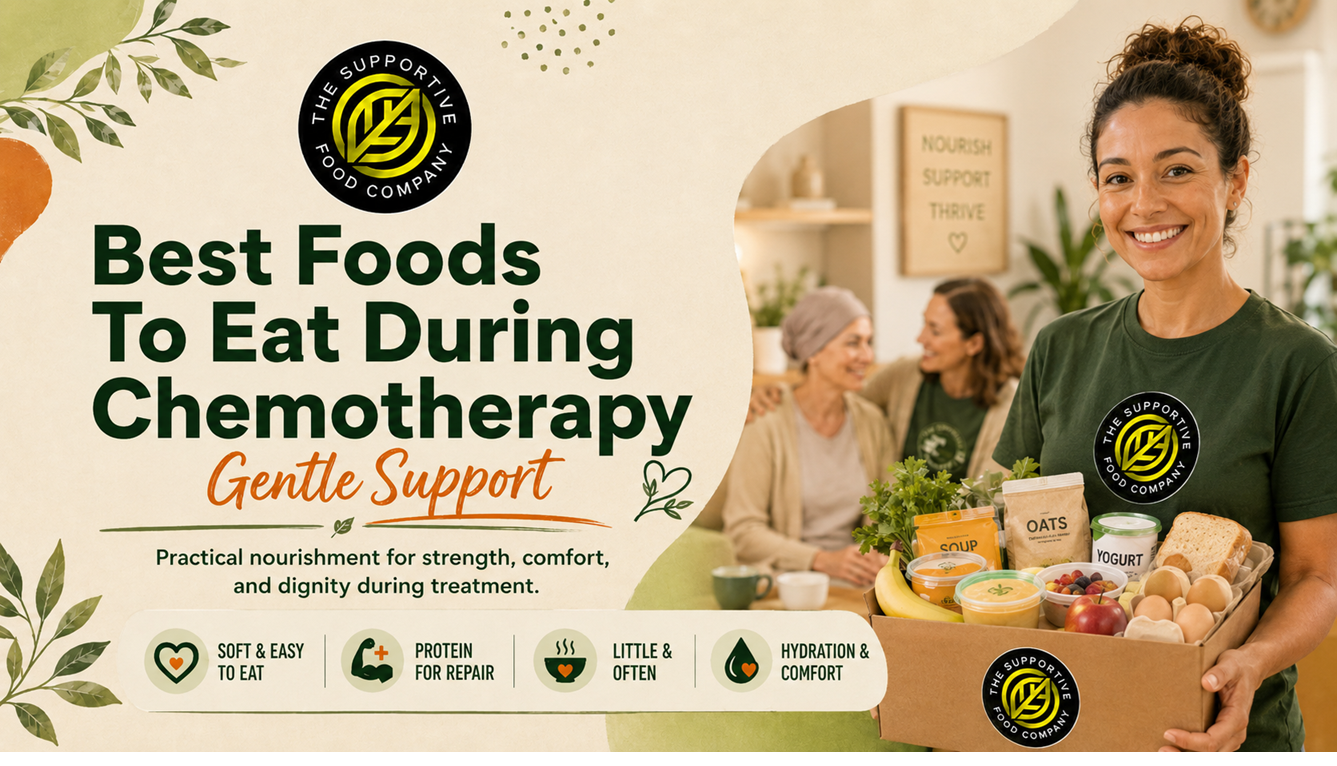
Best Foods to Eat During Chemotherapy
Starting treatment can make food feel anything but ordinary. Suddenly, it’s less about what sounds nice for tea and more about figuring out what’s manageable during chemotherapy, when taste changes, nausea, fatigue, and mouth soreness can all hit at once.
It can feel isolating, especially with advice coming from all directions. What really helps is calm, practical guidance that supports both the body under stress and the dignity of the person eating.
Everyone reacts differently to chemotherapy, so there’s no one-size-fits-all cancer diet. Some people can stick to regular meals, while others get by on toast, yogurt, and a few spoonfuls of soup — and both are okay. The goal isn’t perfect eating, but keeping some nourishment going in whatever way works best, while adjusting as symptoms change.
Foods to eat during chemotherapy: what matters most
When going through chemotherapy, the best foods are those that tick three boxes: they give you energy, provide protein for repair and maintenance, and are gentle enough to eat when your appetite is low. This often means soft, moist, and easy-to-digest options instead of rich, spicy, or dry meals.
Eating little and often can work better than trying to manage three large meals, which can feel impossible when nausea or fullness kicks in. Snacks every couple of hours, like porridge, scrambled eggs, mashed potatoes with soft fish, full-fat yoghurt, rice pudding, lentil soup, or a banana with nut butter, can be easier to handle depending on tolerance.
Protein is especially important since treatment can put extra strain on the body. Eggs, chicken, fish, Greek yoghurt, cottage cheese, tofu, beans, and lentils are all good sources. If chewing is difficult, softer choices like poached eggs, dhal, hummus, yoghurt, milk-based drinks, or blended soups with beans or red lentils can help.
Carbs are your friend here. When appetite is low, foods like oats, bread, pasta, rice, potatoes, crackers, and cereal offer quick, accessible energy. If weight loss is an issue, these should be encouraged rather than avoided.
Eating through common chemotherapy side effects
Symptoms often shape food choices more than nutrition theory. That is why flexibility matters.
If nausea is the main problem
Plain, dry, and starchy foods are often the go-to choice. Crackers, toast, plain biscuits, rice, noodles, and baked potatoes tend to sit better than greasy meals. Cold foods can also help since they give off less aroma than hot ones—a chilled yogurt, overnight oats, cold chicken, or a soft sandwich might be easier than a steaming dinner.
Ginger works for some, whether in tea, grated into dishes, or as ginger biscuits. For others, strong smells make nausea worse, so keeping the kitchen airy or opting for more cold meals can ease discomfort. Everyone’s different—what soothes one stomach might upset another.
If taste changes make food seem metallic or unpleasant
One of the most frustrating side effects is when favourite foods suddenly taste off. If tolerated, sharp flavours like lemon can help brighten dishes, while marinades with herbs, a splash of vinegar, or fruits such as pineapple might make food more appealing—unless the mouth is sore. Some people even switch to plastic cutlery to avoid a metallic taste.
When meat loses its appeal, other protein sources can take its place. Eggs, cheese, yoghurt, beans, lentils, or tofu may be easier to enjoy. During treatment, sweet foods can sometimes be more palatable than savoury ones, and that’s perfectly fine. If a creamy pudding goes down easier than a chicken casserole, then pudding might just be the better choice that day.
If the mouth or throat is sore
Soft textures are key. Foods like porridge, custard, mashed veggies, blended soups, smoothies, yogurt, soft pasta, scrambled eggs, and stewed fruit are often gentler than crusty bread, crisps, or acidic dishes. Very salty, spicy, or coarse foods can cause discomfort.
Cool or room-temperature meals can be more soothing than hot ones. Ice lollies made from diluted juice or yogurt can bring both relief and hydration. If swallowing becomes tricky, a dietitian or speech and language specialist might need to guide on texture and safety.
If diarrhoea or constipation develops
For diarrhoea, sticking to simple low-fibre foods can help for a while—think white rice, bananas, white toast, plain pasta, skinless potatoes, and clear soups. Staying hydrated is just as important as eating the right foods. For constipation, gentle fibre from oats, fruits, vegetables, pulses, and wholegrains can make a difference, but only if you’re drinking enough fluids. Sometimes medication is needed too, so ongoing bowel changes shouldn’t be managed with diet alone.
Practical meal ideas when energy is low
When treatment fatigue sets in, cooking can feel impossible, and carers may be stretched to their limits. That’s when realistic, low-effort meals really matter—the best meal is the one that actually gets eaten.
Porridge with milk is a great option: soft, warm, and easy to boost with banana, ground nuts, or honey. Soup with bread becomes more filling with lentils, beans, chicken, or a splash of cream. A jacket potato topped with baked beans, tuna mayo, or grated cheese is simple and familiar. Yoghurt with oats and soft fruit works well for breakfast or a snack.
Convenience foods have their place too. Ready-made soups, frozen veggies, tinned pulses, microwave rice, pre-cooked chicken, and fortified puddings can be perfect during chemotherapy. The pressure to cook from scratch isn’t helpful when someone’s exhausted—what matters is getting nourishment, no matter how it comes together.
If weight loss is a worry, enriching food can make a big difference. Stir milk powder into porridge, add cheese to mashed potato, drizzle olive oil into soups, blend nut butter into smoothies, or swirl cream into puddings to boost calories and protein without increasing portion size.
Hydration matters as much as meals
People often focus on food and forget about drinks, but dehydration can make fatigue, dizziness, constipation, and headaches worse. Water is important, yet it’s not the only choice—tea, milk, diluted juice, smoothies, soup, and nutrition drinks can all help.
If plain water isn’t appealing, try it chilled with lemon, a splash of squash, peppermint tea, or sparkling water if you like. Taking small sips throughout the day can be easier than tackling a full glass, and for some, using a straw or opting for very cold drinks makes it more enjoyable.

Food safety during chemotherapy
Certain chemotherapy drugs can lower immunity, making food poisoning more risky. This doesn’t mean being afraid of food, but it does mean taking extra care.
Keep hands, surfaces, and utensils clean. Cook meat, fish, and eggs thoroughly unless advised otherwise by your care team. Avoid unpasteurised dairy, mould-ripened cheeses, raw shellfish, and anything past its use-by date when infection risk is high. Store pre-prepared foods properly and reheat them well if serving hot.
This can feel unfair, especially when eating is already difficult. But safe food is part of supportive care, not an optional extra. For families under financial pressure, this is also where equitable food access matters deeply. No one should have to choose between safe food and enough food while going through treatment.
When healthy eating advice needs to loosen its grip
Chemotherapy isn’t the time for strict food rules, unless your medical team says otherwise. Many people have spent years hearing advice about cutting sugar, avoiding fat, or sticking to only whole foods. During treatment, those rules can feel like a burden if they keep someone from eating enough.
On tough days, a bowl of ice cream, a fortified milkshake, or buttery toast might be just what’s needed. Even plain chips can be the right choice if that’s all that stays down. Nutrition is still important, but perfection isn’t the goal—maintaining strength, comfort, and a sense of routine matters just as much.
Foods to eat during chemotherapy with confidence
Confidence often comes from having a short list of fallback foods that are usually tolerated. These are different for everyone, but common examples include porridge, toast, bananas, yoghurt, eggs, soup, mashed potato, rice, pasta, soft fruit, baked beans and smoothies. Keeping a few reliable options in the house can reduce panic when appetite appears briefly and then fades.
It’s helpful to keep track of patterns. Some people eat better in the morning than at night, while others handle cold food but not hot meals, or favor salty snacks over sweet treats. These little details aren’t insignificant—they’re part of understanding how the body is coping and how to best support it.
If eating stays difficult, weight drops fast, swallowing hurts, or keeping fluids down is tough, it’s time to get help from a GP, oncology team, or specialist dietitian. Food can do a lot, but it shouldn’t have to do it all.
There’s no shame in needing easy meals, help from others, or a plan that shifts week by week. During chemo, eating isn’t about performance—it’s about care, steadiness, and making every bite count in whatever way works that day.
After my wife was diagnosed with breast cancer, it felt like our world was falling apart. With the guidance and care of Dr. Kokobi, we began to find hope again. My wife followed the treatment plan he provided, and over time her health has greatly improved. We are truly grateful to God for using him in her healing journey. I sincerely recommend kokobiherbalremedycentre@ gmail.com for his support, care, and dedication.