
Skip to content
Skip to content
Menu
1 supportive food logo top
  • Search
    • Cancer
    • Dementia
    • Depression
    • Diabetes
    • Heart
    • Kidney
    • Leukemia
    • Menopause
    • Mental Health
    • Obesity
    • Parkinson’s
    • Stroke
  • Food & Health
    • When all else has failed
    • Organic: Better Choice or Myth?
    • Food Waste Solutions
    • Whole Foods Versus Processed
  • Farming
    • Why a Regenerative Farming Future Matters
    • Advantages & challenges of Organic Farming
    • Organic Farming Benefits That Matter
  • Investors
    • Our Mission
    • Small Scale Local Appeals
  • Contact
    • About us
    • Medical Sources
    • Nutritional Sources
  • JOIN (Free)
    • The main benefits of joining
1 supportive food logo top

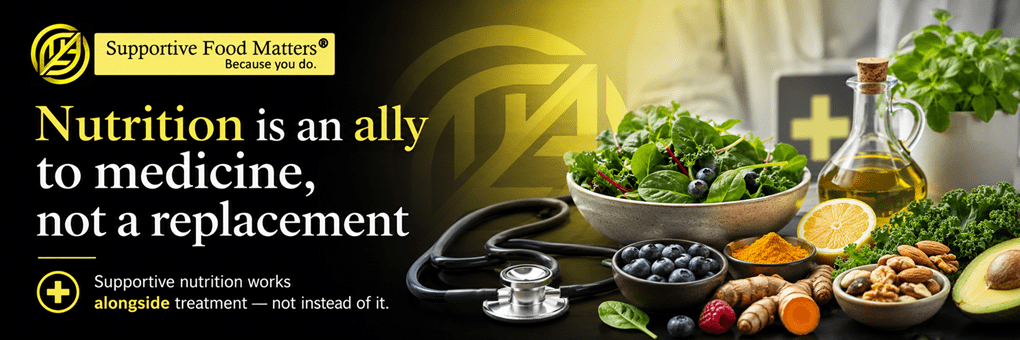
Nutrition is an ally to medicine, not a replacement

By team2 on 3 March 20264 June 2026

Nutrition is an ally 2Understanding our site as a “supportive” ally rather than an “alternative.”

A concise summary.

Many patients feel pressured to choose between “toxic” medicine and “clean” eating, creating a harmful and misleading either-or mindset.

Understanding that we can (and should) do both is where the real benefit lies.

Treatment-Specific Nutrition:

Different treatments come with different side effects. For instance, certain foods may help with “chemo-brain,” while others are better for easing radiation-related skin problems.

There’s also a “Goldilocks” zone for supplements—some antioxidants, like high-dose vitamin C, can actually interfere with how certain chemo or radiation therapies work, making timing important.

And when it comes to bioavailability, plenty of people take turmeric (curcumin) for inflammation, but without black pepper (piperine) or a fat source, the body absorbs very little of it.

This is practical “supportive” advice.

We support…

  • From consumers with treatable ailments to producers of organic food like farmers and agronomists, the network is vast and diverse. It includes:
  • expert horticulturists,
  • market gardeners,
  • manufacturers of organic fertilizers,
  • farming cooperatives, and agencies.

Homesteaders and self-sufficiency enthusiasts join forces with suppliers of eco-friendly household products, while investors back this unstoppable global movement.


Home | Food | Facebook | Other sources | Editors

Post navigation

Grape Tree: Feel Good Foods
11. Ursolic acid (UA): cancer prevention supplement

Leave a Reply

Your email address will not be published. Required fields are marked *

search banner
the nutrition and disease connection
Ivermectin and Cancer What Does the Research Say
richest poorest nations 2
dandelion banner
zero hunger community projects that work
about founders an team
superfoods what exactly are they
depression causes symptoms supportive food
menopause symptoms
Mental Health Support
organic farming benefits that matter
full site index
1 how why the provision of clean water

Recent Posts

  • How Farmers Reach Health Conscious Buyers
  • The Future of Food as Medicine Is Collective
  • Why Community Meals for Vulnerable Adults Matter
  • What Is Food as Medicine and Who Can It Help?
  • Fresh Produce Versus Supplements: What Helps?
  • Carer Meal Prep Ideas for Easier, Better Weeks
  • 12 Best Nutrient Dense Pantry Staples to Keep
  • Which Foods Support Immunity? A Practical Guide
  • A Guide to Food Insecurity and Fairer Access
  • Budget Meals for Fatigue That Keep You Going
  • Organic Versus Regenerative Farming Explained
  • What Foods Support Heart Health? A Practical Guide
  • Ivermectin and Cancer: What Does the Research Say?
  • Dandelion Root and Cancer: What Does the Research Actually Say?
  • Food Support After Hospital Discharge That Works
  • Nutrition Therapy Versus Medication: When Each Helps
  • Can Nutrition Support Recovery After Illness?
  • Best Foods for Immune Resilience Each Day
  • Meal Planning for Carers Made More Manageable
  • Can Nutrition Help Treatment Side Effects Safely?
© 2026 SupportiveFood.com. All rights reserved. Supportive Food provides general educational information informed by healthcare, nutrition, food systems and lived professional experience. It is not a substitute for personalised medical, nutritional or professional advice.

Powered by
►
Necessary cookies enable essential site features like secure log-ins and consent preference adjustments. They do not store personal data.
None
►
Functional cookies support features like content sharing on social media, collecting feedback, and enabling third-party tools.
None
►
Analytical cookies track visitor interactions, providing insights on metrics like visitor count, bounce rate, and traffic sources.
None
►
Advertisement cookies deliver personalized ads based on your previous visits and analyze the effectiveness of ad campaigns.
None
►
Unclassified cookies are cookies that we are in the process of classifying, together with the providers of individual cookies.
None
Powered by