
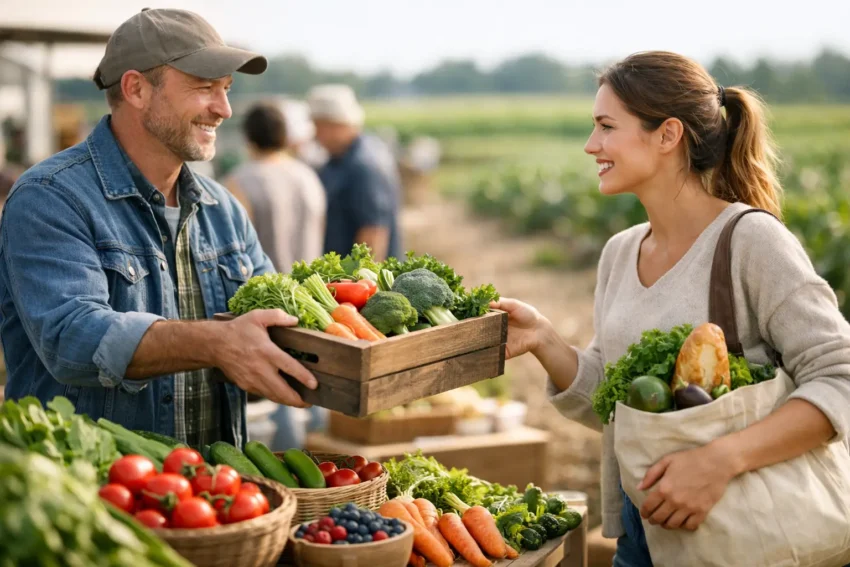
A shopper managing diabetes does not simply need a bag of vegetables. They may need confidence that the food is fresh, affordable, suitable for the meals they can realistically cook, and sold by someone who understands why those details matter. That is the human question behind how farmers reach health conscious buyers: not merely how to make a sale, but how to build a relationship around nourishment, trust and fair access.
For independent farmers and ethical producers, this is an opportunity, but it should not become another burden placed on already stretched shoulders. Farms are dealing with volatile costs, difficult weather, labour pressures and powerful supply chains. Reaching people who care about health works best when it strengthens the farm as well as the community it serves.
Health-conscious buyers are looking for more than labels
The phrase “health conscious” can describe many people. It includes someone trying to eat more fibre after a heart-health scare, a carer preparing gentler meals for a relative with cancer, a parent concerned about ultra-processed food, or a household simply trying to make good food stretch further.
They may share an interest in fruit, vegetables, pulses, wholegrains, minimally processed foods and food grown with care. But their needs, budgets and confidence levels will differ. A premium organic box may be exactly right for one household and completely out of reach for another. Farmers who recognise this avoid treating health as a fashionable lifestyle badge and instead speak about food as part of everyday wellbeing.
That means being careful with claims. No farm produce should be presented as a cure for cancer, diabetes or any other condition. Yet growers can confidently explain practical qualities: what is in season, how the food was grown, how to store it, how it tastes, and straightforward ways to cook it. This is useful information, especially for people who are rebuilding their confidence in the kitchen after illness or caring responsibilities.
How farmers reach health conscious buyers through trust
Trust is the real route to repeat custom. People have been promised too much by food packaging, diet trends and wellness marketing. They are increasingly alert to vague claims about being “clean”, “natural” or “superfood”. Clear, modest communication stands out.
Start with the farm story, but make it specific. Explain where the farm is, what is grown or raised there, the seasonality of supply, and the practices that matter to you. If you use organic methods, are working to improve soil health, reduce chemical inputs, protect hedgerows or improve animal welfare, say what that looks like in practice. Do not imply perfection where the reality is more complicated.
Buyers also value honesty when availability changes. If a wet spring has delayed crops, say so. If a product has sold out, offer a realistic alternative. This is not a failure of marketing. It helps people understand the realities of farming and makes the relationship less transactional.
Photographs, market conversations, simple newsletters and a well-kept directory listing can all do this work. The format matters less than consistency. A buyer who sees the same clear information over time is more likely to believe that their money is supporting food they can trust.
Make the healthy choice easier to use
A punnet of berries or a bag of kale is not automatically helpful if someone does not know how to use it before it spoils. Practical food knowledge turns interest into regular buying.
Share short, affordable serving ideas alongside produce. Think roasted roots for a traybake, greens stirred into soup, apples stewed for porridge, or beans and seasonal vegetables used in a filling stew. Keep recipes flexible rather than prescriptive, and acknowledge that energy, time and cooking equipment are not evenly distributed.
Storage advice is equally valuable. Explain which leaves should be used first, how to revive tired herbs, or which vegetables keep best in a cool cupboard. Reducing household waste respects the work that went into growing the food and helps customers make their budget go further.
Be visible where health conversations already happen
Farmers do not need to become clinicians to be part of a healthier food culture. They do, however, benefit from being present in trusted community spaces where people are already asking practical questions about eating well.
Local farm shops, markets, veg box schemes, community kitchens, food co-operatives and social prescribing networks can all create meaningful contact. So can community centres, carers’ groups, allotment projects and local organisations supporting people living with long-term conditions. The right partnership depends on the farm’s capacity, location and product range.
A small grower with limited time may gain more from one reliable local collection point than from trying to maintain several social media channels. A producer with a strong seasonal box offer may find that a clear online directory profile helps new customers locate them. At Supportive Food Directory, the wider purpose is to make these connections easier: linking food producers with people seeking practical, trustworthy ways to support their wellbeing.
Healthcare professionals can be useful allies, but the relationship must be respectful. Farmers should offer accurate information about food and provenance, while dietitians, nurses and doctors remain responsible for individual medical advice. Where dietary restrictions are relevant, such as allergies, kidney disease or swallowing difficulties, clarity is essential. “Healthy” is not one-size-fits-all.
Price, access and dignity cannot be an afterthought
There is a risk in health-focused food marketing: it can turn good food into a privilege for people with comfortable incomes. That does not serve public health, and it leaves farmers caught between the need for a fair price and the need for wider access.
There is no single answer, but farms can explore approaches that suit their circumstances. A sliding-scale veg box, a lower-cost “seconds” box, surplus produce for a community kitchen, or a pay-it-forward scheme may help. Some farms partner with local charities or food projects rather than trying to administer support alone. Others focus on growing dependable staple crops that offer strong value, rather than only high-margin speciality products.
These models need funding, planning and boundaries. Farmers should not be expected to absorb the cost of hunger caused by low wages, benefit delays or unequal access to land and retail. Food justice requires action from councils, retailers, funders and government as well. Still, when producers are included in local food-access conversations, more practical solutions become possible.
Dignity matters in every format. Avoid language that divides customers into “good” and “bad” eaters, or implies that people on tight budgets have failed morally. A nourishing diet is shaped by income, time, housing, disability, culture, transport and care responsibilities. Farmers who understand this are better placed to communicate with kindness rather than judgement.
Let the farm’s values show in the buying experience
Health-conscious buyers often care about what their purchase supports beyond their own plate. They may ask whether workers are treated fairly, whether packaging is excessive, whether the farm contributes to biodiversity, and whether money stays within local communities.
No producer can solve every issue at once. What matters is being open about priorities and progress. Perhaps the farm is reducing plastic where food safety allows, moving towards better water management, or working with a nearby bakery to use surplus grain. These are meaningful stories when they are grounded in real action rather than polished slogans.
The buying experience should reflect those values too. Make collection arrangements clear. Welcome questions. Use plain language. If possible, offer different ways to pay or order for people who are less comfortable online. Small choices can determine whether a person feels included or excluded.
Measure relationships, not just reach
A large following is not the same as a healthy customer base. For many farms, a smaller number of repeat buyers who understand the seasons and value the farm’s work is more secure than chasing constant online attention.
Look for signs of meaningful connection: returning customers, referrals, fewer wasted boxes, helpful questions at collection, feedback on what people can afford, and partnerships that bring produce into the hands of those who need it. Ask customers what information would make buying and cooking easier. Their answers may be more useful than assumptions about the latest health trend.
The strongest food systems are built when farmers are seen not as distant suppliers, but as essential partners in community health. Every honest conversation about a crop, every practical recipe, and every fairer route to fresh food can help make that partnership real.