
QUESTION: Do oncologists in the US or anywhere else in the world have more effective chemotherapy drugs than those in the UK? If not, which nation has the highest cure rate due to better drugs?
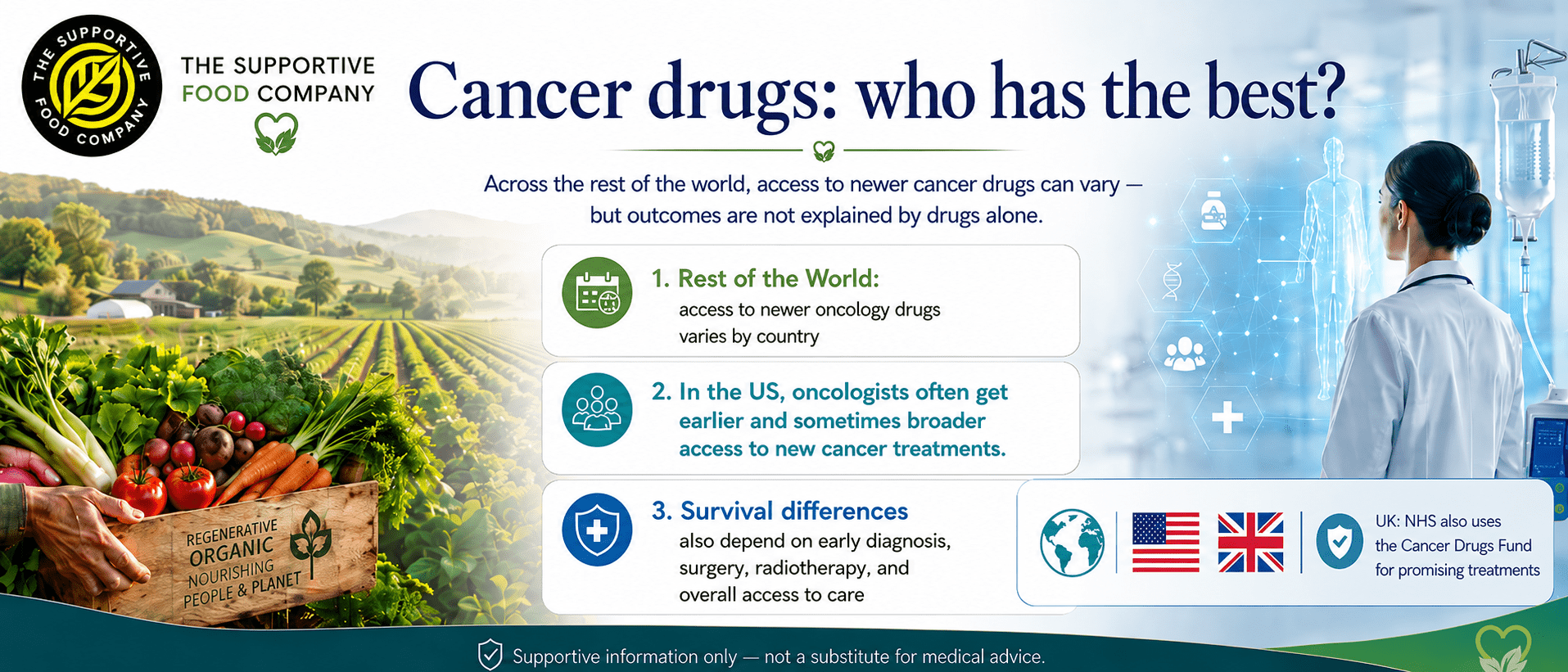
ANSWER: In general: yes, US oncologists often get access to new cancer drugs earlier than UK/NHS oncologists — but that does not mean US chemotherapy is always “better,” or that higher cure rates are simply due to better drugs.
For standard chemotherapy, the US and UK generally use similar evidence-based drugs and regimens. The main difference often lies in access to newer targeted treatments, immunotherapies, antibody-drug conjugates, and trial medications.
One study of 89 cancer therapies approved in both the US and Europe between 2010 and 2019 found that 95% were approved in the US first, with median FDA review times of 200 days compared to 426 days for the European regulator. However, the same research cautions that faster approval doesn’t always mean better survival rates or quality of life.
The UK’s NHS is more selective because NICE reviews whether a drug is both clinically useful and cost-effective before it’s funded. England also has the Cancer Drugs Fund, which offers earlier access to promising treatments while more data is gathered. Since July 2016, it’s helped provide 117 drugs for 284 cancer indications, with over 104,000 patient registrations.
When it comes to outcomes, the US has higher 5-year survival rates than the UK for several common cancers, though that doesn’t mean US drugs are the only reason. According to World Cancer Research Fund data, 5-year survival rates are: prostate cancer – US 98% vs UK 87%, breast cancer – US 90% vs UK 86%, colorectal cancer – US 65% vs UK 59%, and lung cancer – US 19% vs UK 17%.
Survival isn’t just about the drugs—it’s shaped by many factors like the stage at diagnosis, how many people get screened, how quickly referrals happen, the quality of surgery or radiotherapy, the patient’s age, other health issues, smoking rates, deprivation levels, and even how data is defined.
The WCRF points out that survival rates vary by cancer type and are heavily influenced by how early it’s detected, diagnosed, and treated, with early diagnosis being a big driver. The Nuffield Trust also notes that cancer survival depends on both detection and speedy access to effective treatment, not just access to medication.
So the fairest answer is:
In the US, oncologists often get earlier and sometimes broader access to new cancer treatments. Survival rates for several cancers are reported to be higher in the US than in the UK (for example), but there’s no solid proof that this is because of better drugs.
Cure rates depend heavily on the type of cancer, its stage, and the patient group. In fact, countries like Australia, Canada, Denmark, and Norway also show consistently higher survival rates than the UK.
For an individual patient, the real question isn’t “US, elsewhere or UK overall?” but rather: What specific cancer type, stage, biomarkers or mutations are present, what prior treatments have been tried, and whether there’s a licensed drug, NHS-funded option, private treatment, or clinical trial available.