
Skip to content
Skip to content
Menu
Supportive Food
  • < Discover
    • < Blueprint for a Zero-Hunger World
      • What a Waste! [feed the world]
      • The causes of poverty?
      • The richest and poorest (stats)
      • The Most Impoverished
    • < From the Medical Perspective
      • Dementia
      • Diabetes
      • Heart Disease
      • High blood pressure
      • Kidney disease
      • Leukemia
      • Obesity:
      • Parkinson’s
    • < Supplementary Herbs and Spices
      • Chinese Natural Therapy study
      • Apigenin
      • Artemisinin
      • Berberine
      • Curcumin
      • Emodin
      • Epigallocatechin (EGCG)
      • Ginseng Rg3, Rh2
      • Icariin
      • Resveratrol
      • Silibinin
      • Triptolide
      • Ursolic acid (UA)
    • Autism – not a “disease”
    • Depression – the road out..
    • Herbs & Spice: don’t overdo it!
    • Menopause – as time goes by…
    • Mental Health Support
    • The truth about alternative therapies
    • Add to Recipes page (blog)
    • Do miracle cures exist? [blog]
    • Your Journey of Recovery (blog)
    • Sources
  • < The Cancer Trail
    • < FAQ for Cancer Sufferers
      • Adrenal Cancer
      • Anal Cancer
      • Bile Duct Cancer
      • Bladder Cancer
      • Bone Cancer
      • Brain & CNS Cancer
      • Breast Cancer
      • Cervical Cancer
      • Colorectal Cancer
      • Duodenal Cancer
      • Endometrial Cancer
      • Esophageal Cancer
      • Eye Cancer (Ocular Melanoma)
      • Gallbladder Cancer
      • Gastric (Stomach) Cancer
      • Islet Cell Cancer
      • Kidney Cancer
      • Leukemia problems and solutions (Cancer)
      • Liver Cancer
      • Lung Cancer
      • Melanoma (Cancer)
      • Multiple Myeloma (Cancer)
      • Nasopharyngeal Cancer
      • Non-Hodgkin Lymphoma Cancer
      • Oesophagus, H T & N Cancer
      • Ovarian Cancer
      • Pancreatic Cancer
      • Parathyroid glands Cancer
      • Penile Cancer
      • Pituitary Gland Cancer
      • Prostate Cancer
      • Rectal Cancer for consideration
      • Salivary Gland Cancer
      • Sarcoma Cancer
      • Skin Cancer (Non-Melanoma)
      • Small Intestine Cancer
      • Testicular Cancer
    • Cancer: food, lifestyle, quality of life
      • Download cancer .pdf file
      • Chemo & Radio therapies?
      • What and what not to eat
      • FAQ for sufferers
    • Facts: % Remission – Regression?
    • Side effects: remedies chemo & radio
      • List of Foods that help
        • Superfoods – for the super hungry
        • Organic? I’ve something to say! [blog]
        • Nutrition not a replacement
        • Tips for Caregivers
        • Extra Virgin – Extra Special
        • Food Charities fighting global hunger with good nutrition
  • < Free Promotion
    • Free means truly free – 2 ways
    • Going Pro has many benefits
      • Example Pro – 1 page site
      • Example Pro – 3 page site
      • Example Pro – 5 page site
      • Possible solutions
        • Dementia – you call me forgetful!
          • Download dementia .pdf file
        • Depression – the Way Out
          • Download depression .pdf file
        • Diabetes – taking control
          • Download diabetes .pdf file
        • Heart Disease
          • Download Heart disease .pdf
        • High blood pressure / hypertension
          • Download High blood pressure .pdf
        • Kidney disease
          • Download Kidney disease .pdf
        • Menopause – problems, solutions
          • Download menopause .pdf file
        • Obesity – the no guilt factor
          • Download obesity .pdf file
        • Parkinson’s disease:
          • Download Parkinson’s .pdf
        • Stroke: Symptoms & causes
          • Download Stroke .pdf
      • Example Pro – 10+ page full website
  • < Contact
    • Mission & Objectives
    • More about us
    • How others see us
    • Meet our Founders
    • Privacy policy, terms and conditions
  • Remote work
Supportive Food

A Blueprint for a Zero-Hunger World

By team2 on 26 March 202628 March 2026

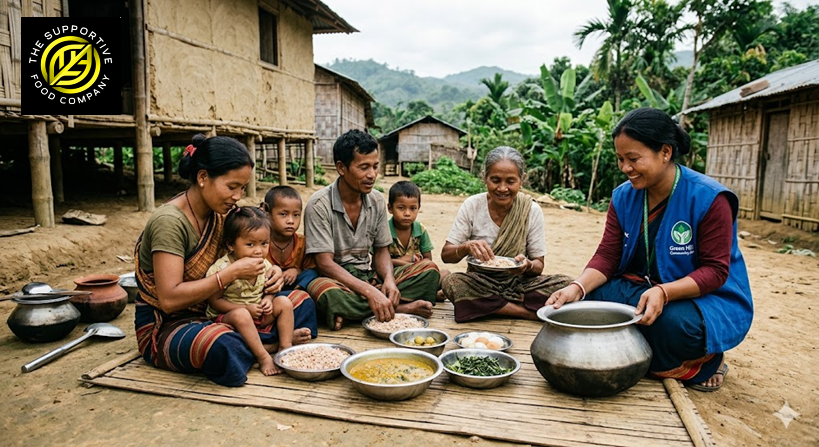
family being fed with nutritious food

A Blueprint for a Zero-Hunger World: How, Why, and What the Experts Say

Anthony Black
Anthony Black & sources

Global hunger is one of the biggest contradictions of our time. Even though the world grows enough food to feed everyone, about one in twelve people—around 673 million—still suffer from starvation and many more with chronic or medium undernourishment.

Solving this crisis isn’t just about compassion; it’s essential for global peace, security, and sustainable progress. This article explores how the world can work together to achieve zero hunger, why it matters, how to reach remote communities, and what leading experts have to say.


1. How It Is Possible: The Multidimensional Solution

Ending world hunger means rethinking how we grow, handle, and share food. It’s not just about making more—it’s about creating smarter, more efficient systems.

Sustainable and Precision Farming

We need to shift away from large-scale export monocultures that often drain the soil of its nutrients. The answer is an integrated approach that blends cutting-edge science with local, grassroots wisdom.

  • Precision Farming: Utilizing AgTech, such as satellite-linked sensors and AI crop models, can increase agricultural yields in a responsible way while minimizing water and input use.

  • Diversified Systems: Small-scale, diversified farms—practices like agroforestry and market gardening—often produce up to five times more food per acre than industrial farms while restoring watersheds and renourishing topsoil.

Drastically Reducing Food Loss and Waste

Shockingly, one third of all food produced globally is currently wasted or lost along the supply chain. Cutting down on this waste is essential. Some ways to tackle it are by boosting rural infrastructure to avoid spoilage after harvest and streamlining consumer-level supply chains in developed countries.

Financial and Social Safety Nets

Hunger often persists not because food isn’t available, but because people cannot afford it.

  • In emergency situations and long-term crises, cash transfers and food vouchers are cheaper and easier to distribute than physical aid, and they support local economies.

  • Long-term social protection programs, such as robust school meal initiatives, are essential to break the cycle of poverty and hunger for future generations.


2. Why It Is Necessary: Hunger as a Tool of War, Food as a Pathway to Peace

The connection between hunger and conflict is undeniable. Seventy percent of the world’s hungry people live in areas afflicted by war.

War Ceasing

Conflict is the single greatest driver of hunger globally.

  • Wars destroy infrastructure, farmland, supply chains, and market functionality. When support networks break down, millions are forced from their homes with nothing to eat.

  • Food insecurity is also a precursor to political instability. The pain or fear of hunger can drive further conflict, creating a vicious cycle that is impossible to break without achieving food security.

Joint Initiatives and Global Stability

Because food is a basic human right, achieving universal food security must be recognized as a core component of global stability.

  • Ending hunger positively impacts global health, education, and equality, unlocking progress across all 17 UN Sustainable Development Goals (SDGs). Sources

  • Global partnerships, like the Global Alliance for Food Security led by the G7 and World Bank, play a key role in sparking a quick, coordinated response to emerging crises. In the long run, political and diplomatic solutions are needed to boost peacebuilding efforts and guarantee safe humanitarian access.
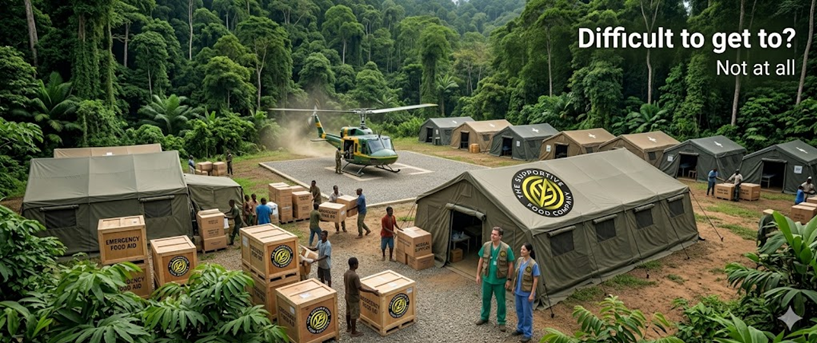

delivery banner main

3. How Any Area Can Be Reached: The Logistics of Lifesaving Aid

In humanitarian crises, delivering aid to the right place at the right time is crucial, especially when dealing with restricted zones, poor infrastructure, or ongoing conflict.

Specialized Humanitarian Logistics

Aid delivery is unlike standard trade logistics. It requires an intricate, adaptive, and tech-enabled network.

  • Dedicated Teams and Safe Routes: Specialized logistics providers and coordinating bodies, such as the UN’s Office for the Coordination of Humanitarian Affairs (OCHA), assess risk and identify safe routes. In high-risk zones, transportation may be escorted by guards.

  • Air Charters and Emergency Response: For areas completely cut off by road, air charters can be arranged for specialized or emergency deliveries, including temperature-controlled medical supplies.

Coordinated United Nations Action

The international community relies on coordinated efforts to manage relief in areas beyond national capacity.

  • The World Food Programme (WFP) is responsible for mobilizing food assistance, reaching more than 80 million people in 80 countries each year.

  • Funding mechanisms like the UN Central Emergency Response Fund (CERF) provide immediate funding for rapid humanitarian action anywhere in the world.


4. What the Experts Are Saying: Urgent Investment Needed
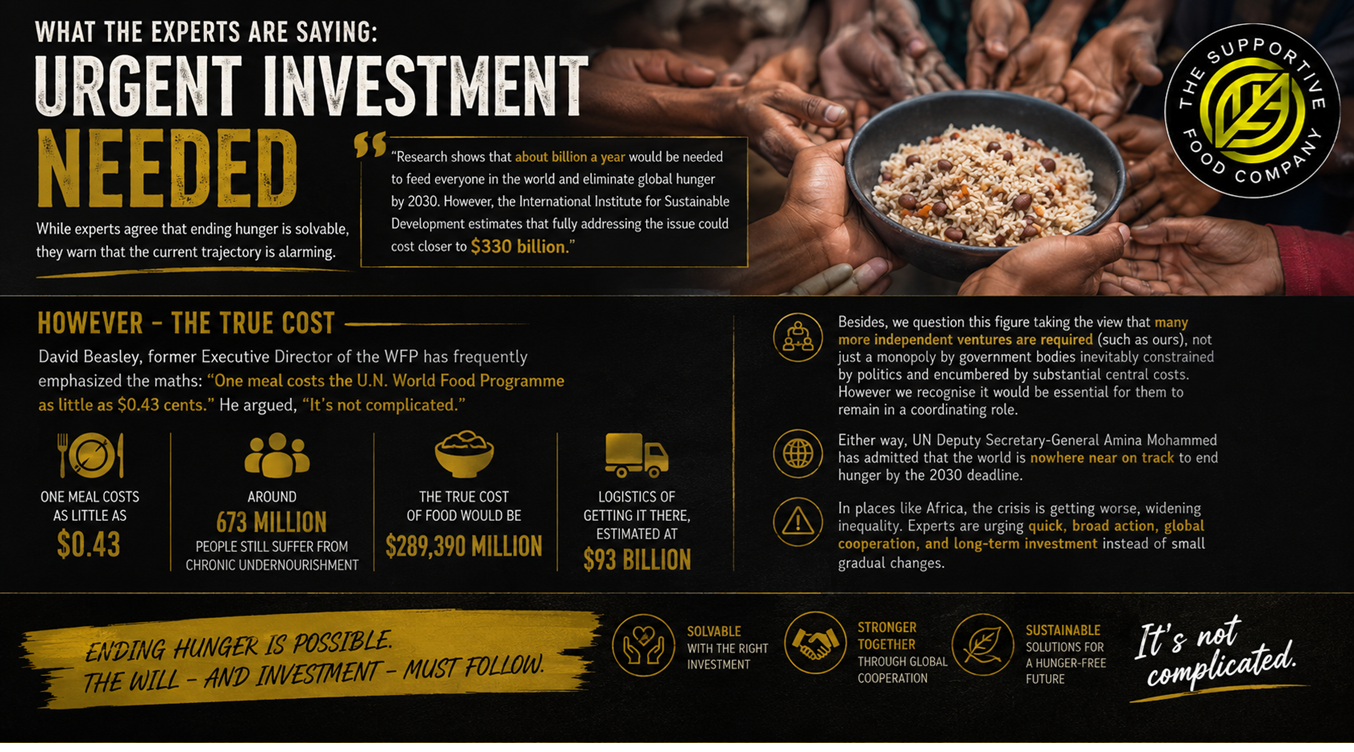
While experts agree that ending hunger is solvable, they warn that the current trajectory is alarming.

“Research shows that about $40 billion a year would be needed to feed everyone in the world and eliminate global hunger by 2030. However, the International Institute for Sustainable Development estimates that fully addressing the issue could cost closer to $330 billion.”

However – The True Cost

David Beasley, former Executive Director of the WFP  has frequently emphasized the maths: “One meal costs the U.N. World Food Programme as little as $0.43 cents.” He argued, “It’s not complicated.” If that is so, and around 673 million people still suffer from chronic undernourishment the true cost would be $289,390 million in food. But that does not take into account the logistics of getting it there, estimated at $93 billion?

Besides, we question this figure taking the view that many more independent ventures are required (such as ours), not just a monopoly by government bodies inevitably constrained by politics and encumbered by substantial central costs. However we recognise it would be essential for them to remain in a coordinating role.

Either way, UN Deputy Secretary-General Amina Mohammed has admitted that the world is nowhere near on track to end hunger by the 2030 deadline. In places like Africa, the crisis is getting worse, widening inequality. Experts are urging quick, broad action, global cooperation, and long-term investment instead of small gradual changes.

Conclusion

Ending world hunger is one of the world’s most solvable problems.

We possess the agricultural knowledge, the logistical capacity, and the resources required. What is lacking is sufficient and sustained political will. Food security is not just a humanitarian concern; it is the cornerstone of sustainable development, economic prosperity, and enduring global peace.

The Breakdown of the “$93 Billion”

This figure, highlighted in the WFP 2026 Global Outlook, represents a “comprehensive systemic” approach rather than just emergency meal delivery. It is divided into three functional pillars:

Category Annual Cost Purpose
Emergency Relief $13–16 Billion Direct life-saving aid for the 318 million people in acute crisis (the “WFP portion”).
Agricultural Infrastructure $33–40 Billion Irrigation, cold storage, and roads to connect smallholder farmers to markets.
Social & Policy Reform $37–44 Billion Social safety nets, climate-resilient crop R&D, and gender-inclusive land rights.

To bridge the annual funding gap (most recently estimated at approximately $93 billion for 2026), global agencies have moved away from traditional charity models toward a “Blended Finance” strategy. This approach uses public funds to “de-risk” private investments in emerging markets.

The private sector is being targeted through several specific frameworks and “high-impact” categories:

This is where we can contribute.

Not simply by fitting into their struggling strategies, but by adding additional supportive methods. New faces and talents, more entrepreneurship, less centralised control – but maintained coordination.

Join with us, and gain benefits for yourselves also.


1. The Zero Hunger Private Sector Pledge

Launched by the IISD and the UN Food Systems Summit, this is their primary vehicle for corporate investment. As of late 2025, over 100 companies (including Bayer, PepsiCo, and Unilever) have pledged approximately $800 million, which is still considered a “fraction” of the total need.

  • Target Areas: Investments must align with at least one of the 10 high-impact areas identified by Ceres2030, such as post-harvest loss reduction, climate-resilient crops, and vocational training for rural youth.

  • The “Accountability Gap”: Recent reports indicate that while 79% of these investments are “long-term systemic,” only a small percentage are reaching the highest-priority “hunger hotspots” in Africa and conflict zones.

2. IFAD’s Private Sector Operational Strategy (2025–2030)

The International Fund for Agricultural Development (IFAD) has shifted its 2026 focus toward Rural MSMEs (Micro, Small, and Medium Enterprises).

  • The “Missing Middle”: The target is to provide finance to local agri-businesses that are too large for micro-finance but too small for traditional banks

Their Goal: To catalyze private finance specifically for food system transformation, (such as ourselves) moving beyond simple crop production to include processing and distribution technology.

3. Their Innovative Financial Instruments

To attract institutional investors (like pension funds and insurance companies), several new targets have been proposed:

  • “Zero Hunger” Bonds: Similar to Green Bonds, these are designed to finance specific public-private agricultural programs with interest payments guaranteed by organizations like the IMF.

  • SDR Allocation: Experts have proposed using 2% of the IMF’s Special Drawing Rights (SDRs) as a guarantee fund to lower the risk for private investors entering volatile markets.

  • Nutritional Financing: Targets for nutrition-specific financing have risen to $10.8 billion annually to address maternal and infant stunting, specifically seeking private sector expertise in food fortification and “specialized nutritious foods” (e.g., partnerships with companies like dsm-firmenich).

4. Direct Investment Value Targets

Research indicates that the economic opportunity for the private sector is massive if the gap is filled:

  • New Business Opportunities: Transitioning to sustainable food systems is estimated to be worth $4.5 trillion per year by 2030.

  • Economic Gains: The societal return on these investments is projected to reach $5.7 trillion per year by 2030 through improved productivity and reduced health costs.

Investment Pillar Proposed Private Sector Focus
Value Chain Resilience Cold storage and “last-mile” logistics to reduce post-harvest waste.
Ag-Tech & Innovation Scaling science-based solutions (digital farming, drought-resistant seeds).
Social Safety Nets Developing digital payment systems for cash transfers to vulnerable populations.

In summary, the private sector is no longer viewed just as a source of “donations,” but as a co-investor in a systemic overhaul. The challenge remains the “Finance Divide”—convincing large-scale capital to move into high-risk, high-hunger regions where the 2030 targets are currently furthest out of reach.


A second opinion from other sources:

Feeding the Whole World Is Possible — and Necessary

We already have the knowledge and resources to end hunger. The tough reality is that today’s hunger problem is less about producing enough food and more about issues like distribution, access, conflict, poverty, waste, and political will. The FAO has long said that feeding a growing global population is possible with the right investments and policies, but production alone isn’t enough without better access, rural development, and safety nets. Recent UN reports echo this, noting that while food production has increased, hundreds of millions of people still go hungry.

1) How it is possible to feed the entire world

The pathway is not mysterious. It is a combination of producing food more sustainably, losing less of it, moving it more efficiently, and making it affordable to the people who need it. FAO’s work on feeding the world has emphasized investment in agriculture, productivity, infrastructure, and policy. At the same time, FAO and other institutions have repeatedly noted that a huge share of food is lost or wasted: roughly one-third of food produced for human consumption globally, according to longstanding FAO estimates. Cutting that waste alone would materially improve global food availability.

A realistic strategy means transforming food systems instead of tackling farming, logistics, nutrition, climate, and poverty in isolation. The UN’s recent food-systems report calls this a whole-system challenge, bringing together governments, humanitarian groups, health organizations, local communities, and private supply chains. That matters because ending hunger isn’t just about producing more food—it’s about creating resilient systems that keep it moving even through droughts, floods, recessions, and conflicts.

2) Why it is necessary

Hunger is preventable suffering, which makes tackling it essential. It’s also crucial because food security is closely linked to peace, health, migration, and political stability. According to the World Food Programme, conflict is the leading cause of hunger in most global food crises. When war displaces people, wipes out livelihoods, or blocks aid, hunger spikes dramatically. In that sense, food policy and peace policy are connected. Ceasefires, humanitarian corridors, and coordinated joint initiatives are not side issues; they are often the difference between access and starvation.

That’s why working together is so important. Ensuring food security means getting agriculture ministries, transport networks, health services, local governments, donors, and global organizations all on the same page. The UN Food Systems process sees transforming agrifood systems as a shared, cross-sector mission, and the WFP makes it clear it can’t end hunger alone—today’s crises demand coordinated action from leaders and institutions worldwide.

There is also a deeper reason. Hunger undermines development everywhere. It weakens children’s health, school attendance, labor productivity, and economic resilience. A world that can produce food but fails to deliver it reliably remains vulnerable to instability. Ending hunger is therefore not only a moral duty but also a peace-building and state-building strategy. That is an inference from the repeated links official sources draw between food insecurity, displacement, conflict, and systems resilience.

3) How any area can be reached

No place is literally effortless to reach, but the modern humanitarian system has proved again and again that extremely hard-to-access places can still be served. WFP’s UN Humanitarian Air Service exists specifically to reach remote and challenging locations where roads are unsafe, impassable, or nonexistent. WFP notes that disasters and conflict can leave air transport as the only viable option.

Air access is only one layer. Humanitarian logistics increasingly use combinations of helicopters, fixed-wing aircraft, boats, all-terrain vehicles, temporary bridges, mobile storage, and local distribution networks. Newer tools are extending that reach even further. WFP says it has been developing drones for emergency preparedness and response since 2017, while UNICEF reports that drones have already been used to deliver vaccines, medicines, blood products, diagnostic samples, and other commodities to hard-to-access areas, including islands and mountainous regions.

So the practical answer is not “every area is easy to reach.” It is that every area can be approached with the right mix of logistics, permissions, security arrangements, and local coordination. In some places that means helicopters. In others it means boats, off-road vehicles, drones, or pre-positioned supplies. The limiting factor is usually not imagination. It is access clearance, safety, funding, and sustained coordination.

4) What the experts are saying

The expert consensus from major institutions is strikingly consistent. FAO’s long-running analysis is that feeding the world is achievable, but only if production gains are matched by policies that improve access and reduce poverty.

The UN and FAO say ending hunger requires a coordinated transformation of agrifood systems that’s effective, timely, and inclusive.

WFP’s current leadership is also blunt about the role of war. In January 2026, Executive Director Cindy McCain said, “WFP can’t end hunger on its own,” and called on world leaders to “end these devastating conflicts which drive hunger and desperation.”

Speaking about access during conflict in August 2025, McCain said that with a ceasefire, humanitarian aid could be rapidly increased to reach vulnerable people and help build “the foundation for peace and stability.”

Taken together, that expert view is clear: the world can feed everyone, but only if countries and institutions treat food as a systems challenge, protect civilian access during conflict, reduce waste, invest in logistics, and act together rather than in fragments.

Compiled from many Sources by Anthony Black.


Home   Facebook

Post navigation

Mental Health Support: causes, when needed, how to find in nutrition
The Most Impoverished Parts of the World

Leave a Reply Cancel reply

Your email address will not be published. Required fields are marked *

contact banner
are you suffering cancer 1
family being fed with nutritious food
A Blueprint for a Zero-Hunger World
road leaving depression beach
join us 2
Join us: assist others, gain much yourself
Mental Health Support
multiple websites
meet our founders
see medical perspective 2
Journey of Recovery front
Recipes for healthy living
Natural herbs and spices
Email contact

Recent Posts

  • Herbs and Spice are not always nice. Do not overdo it.
  • Autism overview: Support, Developments, Food & daily living
  • The Most Impoverished Parts of the World
  • A Blueprint for a Zero-Hunger World
  • Mental Health Support: causes, when needed, how to find in nutrition
  • Heart Disease / Cardiovascular Disease: Symptoms, Risks, Prevention and Treatment Options
  • Chronic Kidney disease
  • Stroke Symptoms, Causes, Treatment, Recovery
  • High blood pressure / hypertension
  • What are the causes of poverty?
  • Which are the richest and poorest nations?
  • Parkinson’s disease: Problems, Solutions, Developments, Food & daily living
  • List of Foods that help specific disease.
  • List of Foods that help specific Cancers
  • Your Website, Their Growth: Choose Your Impact
  • Recipes by Famous Chefs
  • The Shah of Persia Poole
  • Rick Stein Sandbanks Restaurant
  • Your Journey of Recovery from Disease
  • Send us your organic recipes
© 2026 Supportivefood.com. For debate only; not medical/legal advice. In using you agree to our Privacy & Terms linked in the menu above. Press Ctrl + D to bookmark this page!

Powered by
►
Necessary cookies enable essential site features like secure log-ins and consent preference adjustments. They do not store personal data.
None
►
Functional cookies support features like content sharing on social media, collecting feedback, and enabling third-party tools.
None
►
Analytical cookies track visitor interactions, providing insights on metrics like visitor count, bounce rate, and traffic sources.
None
►
Advertisement cookies deliver personalized ads based on your previous visits and analyze the effectiveness of ad campaigns.
None
►
Unclassified cookies are cookies that we are in the process of classifying, together with the providers of individual cookies.
None
Powered by