
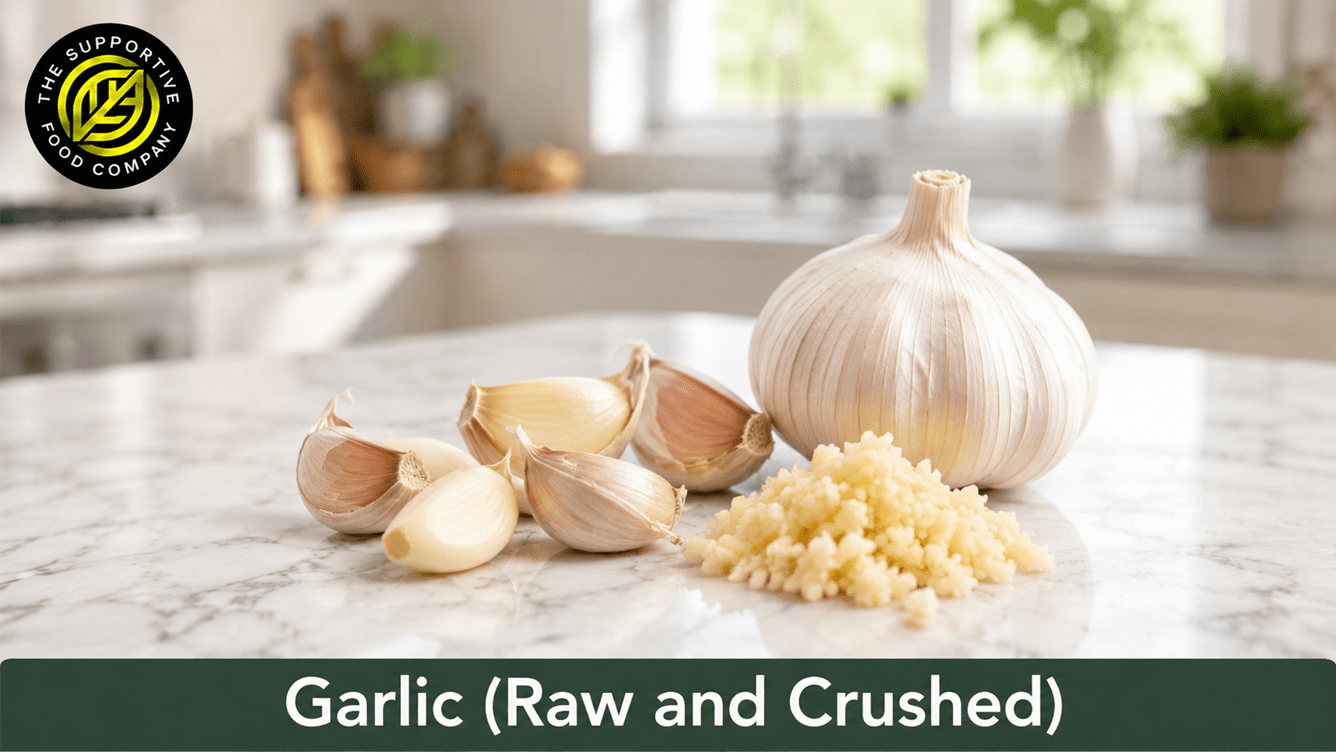
The benefits of garlic
 Garlic is one of the most widely used flavouring foods in the world.
It adds depth to meals and can help make vegetables, pulses, grains, fish, and lean proteins taste satisfying without needing excess salt or heavy sauces.
Garlic contains sulfur compounds that form when cloves are chopped, crushed, or chewed.
This is why freshly crushed garlic has a stronger aroma and flavour than whole cloves. For many people, garlic is a simple way to make healthy meals more enjoyable.
Garlic can interact with some medicines and may not be suitable in large supplemental amounts for everyone, especially before surgery or when taking blood-thinning medicines.
What dishes frequently use garlic?
Garlic is used in Mediterranean, Middle Eastern, Indian, Chinese, Korean, African, Caribbean, and Latin American cooking. It appears in soups, sauces, marinades, stir-fries, roasted vegetables, beans, lentils, dressings, dips, stews, and curries.
 How and why garlic can be a supportive food
Garlic is supportive because it encourages home cooking. A little garlic can transform low-cost ingredients such as beans, lentils, cabbage, tomatoes, rice, and greens.
It helps people prepare satisfying meals from basic whole foods.
Crushing or chopping garlic and letting it rest briefly before cooking can help develop its characteristic compounds and flavour. Raw garlic is stronger and may irritate digestion in some people, so use according to tolerance.
Suggested recipes
Garlic Lentil Soup – Cook lentils with garlic, onion, carrots, celery, and herbs.
Garlic Roasted Broccoli – Toss broccoli with crushed garlic, olive oil, lemon, and roast.
White Bean Garlic Dip – Blend white beans, garlic, lemon juice, olive oil, and parsley.
Garlic Tomato Pasta Sauce – Simmer garlic, tomatoes, basil, and vegetables for a simple sauce.
Garlic Greens – Lightly cook spinach, kale, or cabbage with garlic and olive oil.
Home | Facebook | Other sources | Editors