
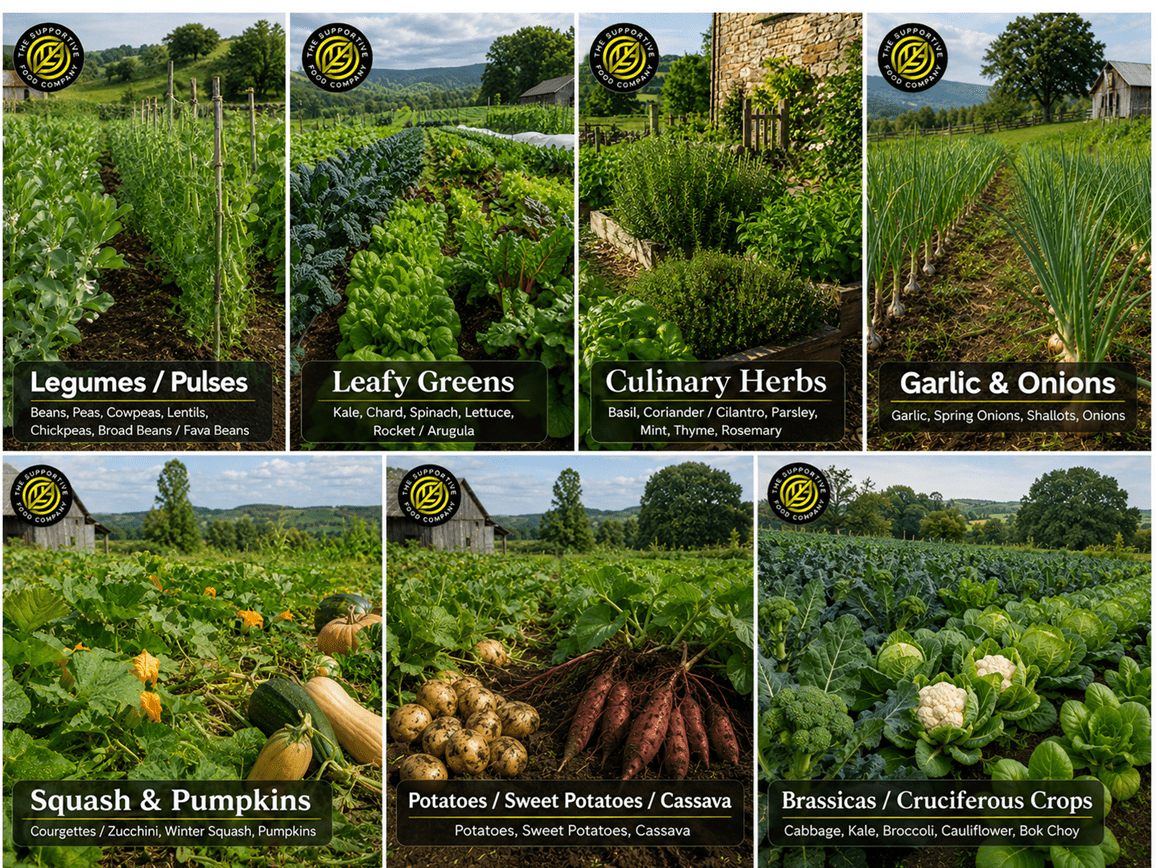
Best examples of organic crops for farmers to grow
For easier, cheaper organic growing, think less in terms of one “miracle crop” and more in terms of a low-input crop mix: some crops that sell well, some that feed people affordably, and some that build soil fertility.
The best starting crops are usually:
| Crop type | Best examples | Why they are good for organic farmers |
|---|---|---|
| Legumes / pulses | Beans, peas, cowpeas, lentils, chickpeas, broad beans/fava beans | Very useful in organic systems because legumes help fix nitrogen and improve soil fertility, reducing dependence on bought-in fertiliser. They also provide affordable protein food. |
| Leafy greens | Kale, chard, spinach, lettuce, rocket/arugula | Quick to grow, repeat harvests, high nutrition, good for local markets. They need water and pest care but do not usually need large machinery. |
| Culinary herbs | Basil, coriander/cilantro, parsley, mint, thyme, rosemary | Herbs can be grown on very small acreages and sold direct to restaurants, farmers’ markets, and specialist shops. |
| Garlic and onions | Garlic, spring onions, shallots, onions | Garlic suits small acreage and can sell well; it stores better than many fresh vegetables, but it needs good drainage and weed control. |
| Squash and pumpkins | Courgettes/zucchini, winter squash, pumpkins | Hardy, useful, familiar to consumers, and some types store well. They need space but can be relatively simple compared with fragile crops. |
| Potatoes / sweet potatoes / cassava by region | Potatoes in temperate climates, sweet potatoes or cassava in warmer areas | Good staple crops, familiar to buyers, and useful for food security. Choose according to climate and local disease pressure. |
| Brassicas / cruciferous crops | Cabbage, kale, broccoli, cauliflower, bok choy | Nutritious and marketable, but pests can be a challenge in organic systems, so they work best with rotation, netting, companion planting, and good timing. |
| Microgreens | Radish, pea shoots, sunflower shoots, broccoli microgreens | Very fast crop cycle and high value in a small space, but they need hygiene, trays, water control, and reliable buyers. |
For a small organic farmer starting cheaply, my strongest recommendation would be:
1. Beans/peas/cowpeas for soil fertility and food value.
2. Kale/chard/spinach for quick, repeat harvests.
3. Garlic for value and storage.
4. Herbs for small-space income.
5. Squash or pumpkins for a tougher field crop.
6. Potatoes or sweet potatoes if the local climate suits them.
The most important thing is rotation. Organic systems rely heavily on soil health, organic matter, crop residues, manures where available, and fertility-building crops rather than synthetic fertilisers. Crop rotation helps improve soil structure, fertility, pest control, weed control, and overall farm resilience.
Avoid starting with crops that are expensive, fragile, or pest-heavy unless there is a guaranteed market: strawberries, greenhouse tomatoes, specialist mushrooms, exotic herbs, or high-value salad crops that need constant labour. They can be profitable, but they are not always “easy and cheap.”
For Supportive Food purposes, the simplest message is:
The best organic crops are those that feed people well, improve the soil, need fewer outside inputs, and have a reliable local market. Legumes, leafy greens, herbs, garlic, squash, and suitable staple roots are often the safest starting point.
Home | Food & Recipes | Facebook | Other sources | About us