
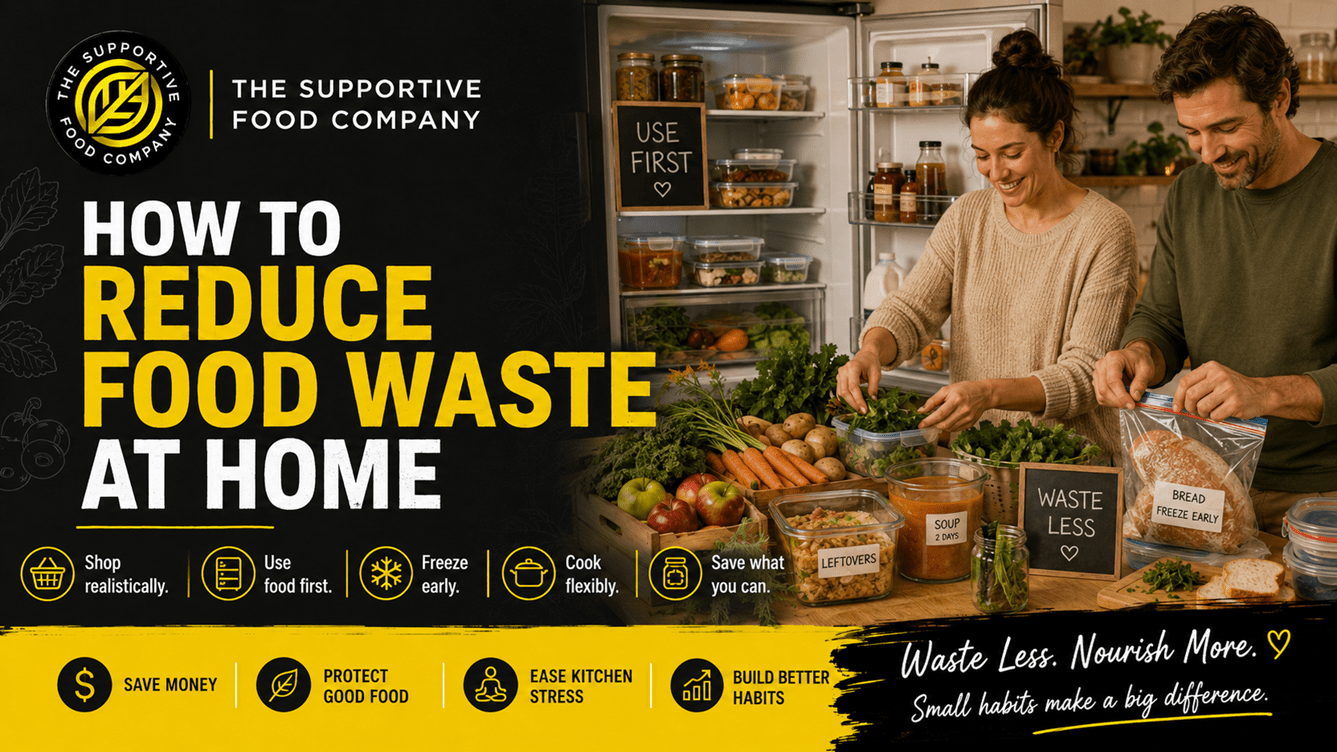
 A bag of salad wilting in the fridge, half a loaf going stale, leftovers no one’s in the mood for – this is how food waste often happens. Not out of carelessness, but because of busy weeks, shifting appetites, illness, fatigue, and the reality that life doesn’t always match the shopping list.
Reducing food waste at home isn’t about perfection; it’s about creating gentler, more realistic habits that protect your budget, your energy, and the value of the food itself.
For many households, this is also a health issue. People living with cancer, diabetes, digestive conditions, dementia, menopause symptoms or reduced appetite often need to shop and cook differently from week to week. Carers face the same challenge: one day a food is fine, the next it’s not. Cutting down on waste at home takes just as much compassion as it does planning.
Why reducing food waste at home matters
Throwing food away isn’t just frustrating—it wastes the money, effort, water, and land that go into every meal. It feels especially wrong in a world where many struggle to afford nutritious food. Wasting less means making the most of what we have and fostering a culture of care instead of excess.
Of course, not every scrap can or should be saved. Sometimes food truly becomes unsafe, or sudden health changes force a change of plans. The goal isn’t guilt, but to notice where waste happens most often at home and make those moments easier to manage.
How to reduce food waste at home by shopping differently
A lot of household waste happens before cooking even begins, often from buying more we can realistically use. Supermarket deals, bulk packs, and ambitious meal plans can tempt us into overbuying, especially when we shop tired, rushed, or worried about shortages.
A better strategy is to shop for the week you’re actually likely to have, not the one you hope for. If you’re low on energy, juggling appointments, or dealing with unpredictable days, buy for fewer meals and allow some flexibility.
Smaller shops often lead to less waste than big weekly hauls. Before heading out, check three things: what needs using up first, what meals you can already make with what’s at home, and which fresh items are truly versatile.
Staples like potatoes, eggs, oats, yoghurt, frozen peas and carrots, tinned beans, and hardy greens work well across multiple meals. Soft fruit, bagged leaves, and specialty ingredients can be great, but only if you have a clear plan for them.
If you live alone or in a small household, large packs are not always better value once waste is counted. The cheaper option on the shelf may cost more in practice if a third of it ends up in the bin.
Make your fridge work harder
Knowing how to reduce food waste at home often comes down to visibility. If food is hidden, it is forgotten. If it is forgotten, it spoils.
Try arranging the fridge so that food needing to be used soon is at eye level. Cooked leftovers, open yoghurt pots, herbs, ripe fruit and part-used vegetables should be easy to see the moment the door opens. Items with a longer life can sit lower down or further back.
A simple use-first section can make a big difference. It doesn’t need fancy storage—a small tray, box, or single shelf mentally labeled as “eat this next” is plenty. In homes where appetites vary or multiple people help with meals, that visual cue cuts down on confusion and avoids doubling up on cooking.
Storage matters, but not every tip works for every household. Some people like clear containers so they can easily see what’s inside, while others prefer keeping items in their original packaging with the date visible. The best system is the one that helps you spot food before it goes bad.
Understand dates without taking risks
Date labels are a common source of avoidable waste. Use by and best before do not mean the same thing.
“Use by” refers to safety and is found on more perishable foods, so it should be taken seriously. “Best before” is about quality; food might lose some crispness or fragrance after that date but can still be perfectly fine if stored properly and showing no signs of spoilage.
Trusting your senses, along with a bit of common sense, goes a long way. Bread can be toasted, slightly soft peppers are great for cooking, and yogurt near its date might still be fine if unopened and kept chilled. Fresh fish or cooked meat past its use-by date, however, is another story. Reducing waste should never come at the expense of food safety., especially for people who are immunocompromised, pregnant, elderly or unwell.
Cook with flexibility, not rigidity
Strict meal plans often fall apart when life gets in the way. A more relaxed approach is to think in terms of ingredients and formats instead of fixed recipes. With onions, carrots, potatoes, and greens, you’ve got the start of soup, a traybake, stew, frittata, or a simple side.
Leftover cooked rice can turn into a quick lunch, add bulk to soup, or become fried rice the next day—just make sure it’s cooled and stored safely. This kind of flexible cooking is especially helpful for carers or households managing illness, when you might not know until the day what will feel appealing or doable.
Ingredients that can shift between meals help cut waste and ease the pressure. And leftovers shouldn’t be treated as second-best—they can be tomorrow’s easiest meal. Cooking once and setting aside a couple of portions for later feels far better than facing a random pile of food later in the week.
Freeze earlier than you think you need to
Many people freeze food too late, when it’s already close to spoiling. Freezing works best as a planned pause, not a last-minute save.
Bread, grated cheese, soup portions, cooked beans, sliced bananas, stewed fruit, and plenty of home-cooked meals freeze well. If you know you won’t use something in time, freeze it while it’s still fresh. Label it clearly if busyness or forgetfulness might turn it into a mystery container.
Of course, there are trade-offs. Some foods lose texture after freezing, and not everyone has the freezer space. Still, keeping a few reliable staples in the freezer can greatly reduce waste, especially in smaller or more medically complex households where plans change fast.
Use the whole ingredient where practical
Root-to-stem and nose-to-tail cooking are not new ideas. They come from traditions that respect food because food mattered too much to waste.
This doesn’t mean you have to keep every peel, but rather notice what often gets tossed without a good reason. Broccoli stalks can be sliced into stir-fries or soups, slightly wilted herbs can be blended into dressings, potato skins can be roasted if they’re clean and fresh, and soft apples can be turned into compote or a porridge topping.
The important phrase here is where practical. If peeling carrots is what makes vegetables manageable on a difficult day, peel them. Waste reduction has to fit real lives, real bodies and real limits.
Share, portion and speak openly at home
Food waste is often a communication problem. One person buys duplicates, another cooks too much, someone else saves leftovers that no one then claims.
A brief household check-in helps more than an elaborate system. Ask what needs using, who will be home, and whether leftovers are wanted. If appetite is unpredictable, serve smaller portions first and offer seconds. This is particularly useful with children, older relatives and anyone dealing with nausea, treatment side effects or reduced appetite.
In community-minded homes, sharing surplus with neighbours, relatives or friends can also prevent waste. A spare portion of soup or extra fruit does not need to become rubbish simply because one household cannot get through it in time.
A fairer food culture starts in ordinary kitchens
Learning how to reduce food waste at home is not about running your kitchen like a military operation. It is about paying closer attention to what food asks of us: planning, care, adaptability and respect. Every tub of leftovers eaten, every loaf frozen in time, every smaller and wiser shop is a quiet act of stewardship.
Supportive Food Directory exists in the belief that food is never just fuel or commerce. It is health, dignity, labour and connection. When we waste less at home, we are not solving the whole food system, but we are practising the values a fairer system requires.
Start with one pressure point this week. The fridge shelf you forget, the veg drawer that overfills, the leftovers that go untouched. Change that one thing first. Better habits grow more reliably from honesty than from ambition.
Food Waste Solutions That Actually Help

Home | Food | Facebook | Other sources | Editors