
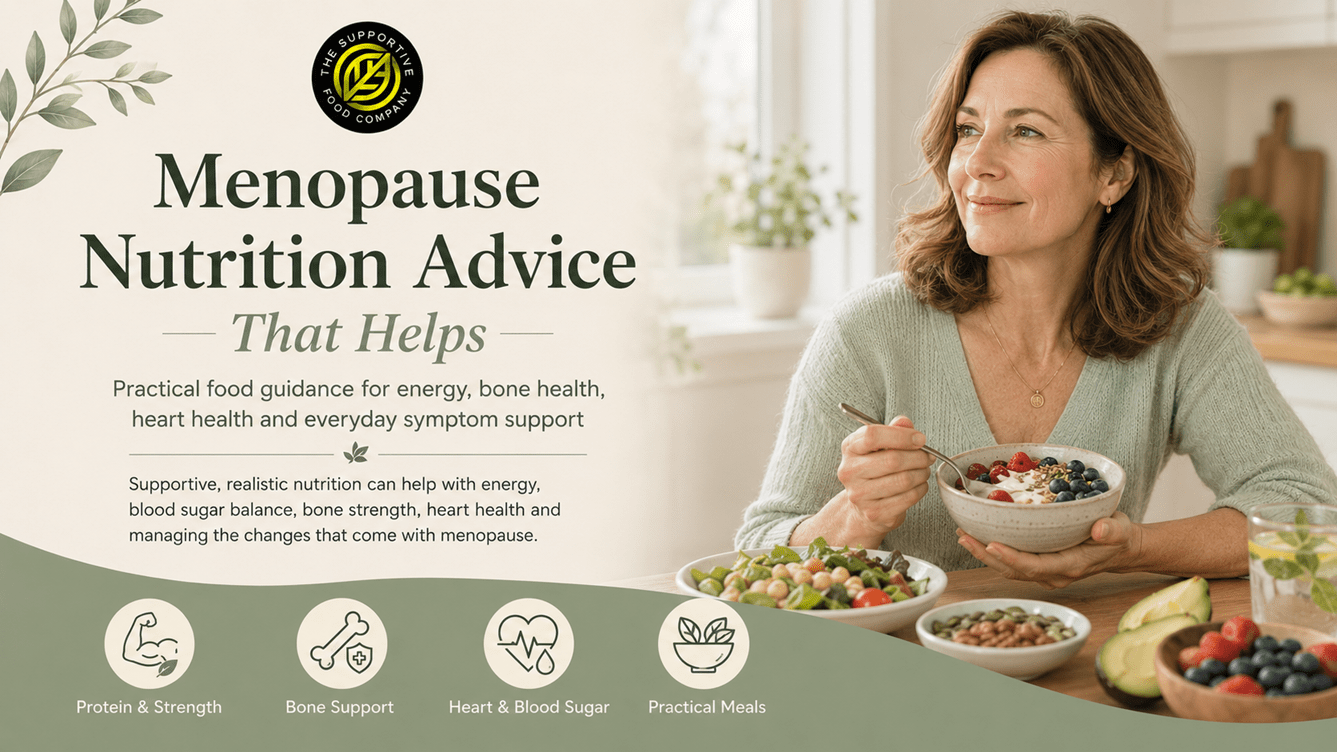
Hot flushes in the middle of the night, a waistline shifting without warning, dips in energy, restless sleep, and the growing feeling that standard eating advice no longer fits
This is where sensible menopause nutrition guidance should begin. Not with blame or unrealistic promises, but with an honest look at how hormonal changes can affect appetite, body composition, cholesterol, bone health, blood sugar, mood, and confidence all at once.
Menopause isn’t a personal shortcoming to be handled in isolation. It’s a natural stage of life that calls for clear information, fair access to nourishing food, and support that takes into account everyday pressures like cost, caring responsibilities, and time. Food may not erase every symptom, but it can make a real difference in helping you feel steady, strong, and well.
What changes in menopause, and why food matters
As oestrogen levels drop, the body tends to be less forgiving. Muscle mass can decline more easily, fat may be stored in new ways, and insulin sensitivity can change. This can lead to more cravings, less steady energy, and a greater tendency to gain weight around the middle, even if eating habits haven’t changed much in recent years.
The years around menopause are also key for long-term health, with higher risks for osteoporosis, heart disease, and type 2 diabetes. That’s why nutrition advice for menopause shouldn’t just focus on weight. The bigger goal is to maintain muscle, protect bones, support heart health, ease symptoms where possible, and keep food enjoyable rather than restrictive.
There’s also the reality of daily life. Many midlife women are cooking for families, caring for older relatives, working through fatigue, and stretching tight food budgets. Advice that relies on pricey supplements, specialty products, or hours of meal prep just isn’t practical for most.
Menopause nutrition advice that is actually useful
A steady approach is usually more effective than a dramatic one. You don’t need a cleanse, crash diet, or performative “healthy lifestyle reset” – just meals that leave you feeling satisfied, balanced, and strong.
Protein is more important than many realize, especially during and after menopause, when maintaining muscle becomes harder and impacts strength, metabolism, and healthy aging. Centering meals around beans, lentils, eggs, yogurt, fish, tofu, chicken, nuts, or seeds can boost energy and keep you full. For some, spreading protein throughout the day works better than saving it all for dinner.
Fibre is an unsung hero, aiding digestion, supporting healthy cholesterol, helping balance blood sugar, and keeping you feeling full for longer. You can get it from oats, pulses, veggies, fruit, nuts, seeds, and wholegrains. If you’re not getting much now, add it in gradually and drink plenty of fluids to avoid stomach discomfort.
Calcium and vitamin D also deserve attention. Bone loss can speed up after menopause, and it’s easy for calcium intake to drop without noticing. Dairy products help, but so do fortified plant milks, calcium-set tofu, sardines with bones, sesame, almonds, and some leafy greens. Vitamin D is trickier to get from food alone—especially in the UK—so think about your levels and consider regular support, particularly during the darker months.
Healthy fats also matter, particularly for heart health. Oily fish, olive oil, walnuts, chia and flaxseed can all earn a place at the table. They are not a cure for hot flushes, but they support a pattern of eating that is more protective overall.
How to build meals when symptoms are all over the place
Menopause symptoms vary widely. One person might struggle with sleep and irritability, another with bloating and headaches, and another with heavy peri-menopausal bleeding and fatigue. That’s why nutrition advice during this time often comes with an “it depends” — the goal is to notice what works for your body rather than sticking to strict rules.
If energy dips are an issue, meals that balance protein, fibre-rich carbs, and healthy fats can be more sustaining than sugary snacks or skipping meals and overeating later. Simple options like porridge with seeds and yoghurt, wholegrain toast with eggs, lentil soup with bread, or a baked potato with beans and salad are everyday choices that can make a real difference.
If sleep isn’t great, it can help to ease up on alcohol, heavy evening meals, and late caffeine. Alcohol often becomes tricky during menopause as tolerance can change—a drink that once felt relaxing might now lead to night sweats, restless sleep, or a low mood the next day. That doesn’t mean total abstinence, but being honest with yourself is key.
If bloating or digestive discomfort shows up, it’s worth paying attention to eating pace, stress levels, fizzy drinks, and whether certain foods are causing issues. Some women find spicy foods make flushes worse, while others notice high-sugar foods leave them jittery or hungry soon after. The goal isn’t to fear food, but to notice patterns with curiosity.
Weight gain in menopause is real, but shame helps no one
Many women are advised to just eat less and exercise more, but that advice lacks both scientific depth and compassion. Menopause can shift appetite cues, disrupt sleep, raise stress, and change how and where the body stores weight. Throw in the pressures of work, caregiving, and financial worries, and it’s clear the situation is far more complicated.
If weight management is part of your goal, severe restriction usually backfires. It can lead to increased hunger, lower energy, and make it harder to maintain muscle. A smarter approach is to have meals that are more filling and regular, cut back on ultra-processed foods that are easy to overeat, and watch portion sizes of healthy yet calorie-dense options like cheese, pastries, crisps, and takeaways. This isn’t about moral perfection—it’s about creating an eating style your body can truly stick with.
Strength-supporting movement and enough protein are especially important here because they help protect muscle. The scale does not tell the full story if you are becoming stronger and more stable.
Foods people often ask about
Soya foods often come up in discussions about menopause. For many women, moderate amounts of tofu, edamame, or unsweetened soya yoghurt can be a helpful part of the diet, offering protein and compounds called isoflavones. Some notice relief from symptoms, though results vary and aren’t guaranteed. Whole or minimally processed soya foods tend to be more beneficial than heavily promoted supplements.
Flaxseed is another food of interest, thanks to its fibre and plant compounds that may support overall health. Ground flaxseed is easy to sprinkle into porridge or yoghurt. Think of it as supportive rather than a miracle cure.
Sugar often gets blamed for everything, which is an oversimplification. However, big swings in blood sugar can make some women feel worse, especially if they’re already dealing with fatigue or mood changes. The practical approach is to avoid panic, focus on meals based on whole foods, and keep sweeter treats in balance.
When access, cost and care responsibilities shape the plate
Good health advice must reckon with the food system people actually live in. Fresh fish, berries, nuts and supplements are not equally accessible to every household. If your budget is tight, menopause nutrition advice should still be possible.
Tinned beans, frozen vegetables, oats, eggs, milk or fortified alternatives, tinned fish, brown rice, wholemeal bread and seasonal produce can go a long way. A simple lentil chilli, vegetable omelette, porridge with seeds, or sardines on toast can support health without performing wealth.
This matters because menopause does not happen outside wider inequality. Women already carrying the burden of poor housing, food insecurity, long waiting lists or unpaid care should not be left with advice that assumes endless time and disposable income. Fair health information has to meet people where they are.
 When to get individual support
While food can help support menopause, some situations call for more than general tips. If you’re dealing with heavy bleeding, unexpected weight loss, a history of eating disorders, high cholesterol, diabetes, coeliac disease, serious digestive issues, or concerns related to cancer treatment or surgical menopause, getting personalised advice is important.
It is also worth seeking support if tiredness is extreme or persistent. Not every symptom in midlife is “just menopause”. Low iron, thyroid issues, poor sleep, medication effects and other conditions can overlap. Respecting menopause means taking women’s symptoms seriously, not waving them away.
Supportive Food Directory exists because nutrition should never be reserved for the few who can pay privately or decode jargon. Practical knowledge belongs in communities as much as in clinics.
A nourishing menopause diet is rarely perfect and never needs to be. It is built meal by meal, around real appetites, real budgets and real lives. If one change is possible this week, let it be this: make your next meal a little more supportive than the last, and allow that to count.
Be sure to check with your doctor if you are going to make changes, especially if you are one medication.
Home | Facebook | Other sources | Editors