
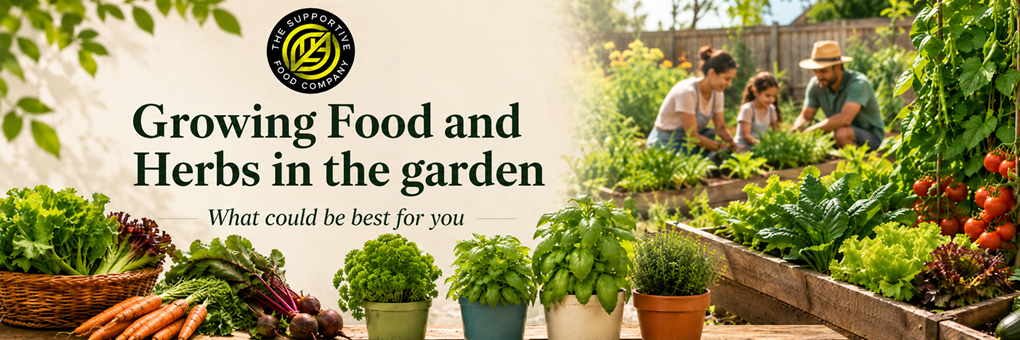
Organic Foods and Herbs to Grow in Your Garden
A few pots of parsley, basil or salad leaves can do more than make a meal look fresh. For many households, growing food at home is a small but powerful act of care. It can make everyday meals more affordable, more appealing and more connected to the seasons.
Growing organic foods and herbs in your garden is not about perfection. It is about choosing a few useful crops, looking after the soil, reducing unnecessary chemicals where possible, and making fresh food easier to reach. A balcony, a windowsill, a small yard, a raised bed, a shared garden or a few containers by the door can all become part of a healthier food routine.
This matters even more when health is fragile. If someone is managing diabetes, recovering from illness, living with cancer, trying to support heart health, or simply aiming to eat more nourishing meals, fresh produce close to home can help. It does not replace medical advice or a balanced shop, but it can make good food feel more practical and less distant.
Home growing also connects closely with healthy eating on a budget. A small harvest of herbs, greens, tomatoes or beans will not replace every grocery bill, but it can reduce waste, improve flavour, encourage cooking from scratch and make simple meals feel more satisfying.
Why grow your own organic foods and herbs?
 Growing food at home gives you more control over what goes into your meals. You can choose compost, avoid unnecessary synthetic pesticides, harvest when food is fresh, and pick only what you need. Even small amounts can make a difference: a handful of chives in eggs, basil with tomatoes, mint in water, parsley in soup, or salad leaves added to a sandwich.
There is also a deeper reason. Food should not be treated as a luxury, especially when it supports health, energy and recovery. Growing a little of your own food helps push back against the idea that nourishing meals are only for people with extra money, space or time. It can build confidence, dignity and practical know-how.
Home growing also teaches patience and resilience. Not every crop will succeed. Some leaves will be eaten by pests. Some seeds will fail. That is normal. The aim is not to create a perfect garden; it is to create a useful one. A few reliable crops that your household actually eats are better than an ambitious plan that becomes too expensive or tiring.
This is also where food connects with fairness. The wider conversation around food justice campaigns reminds us that access to fresh, nourishing food is not equal for everyone. Growing at home is not the whole answer, but it can be one practical way to reclaim a little food security, especially when combined with community gardens, local growers and shared knowledge.
The best organic foods and herbs to grow in your garden
 The best crops are not always the most impressive. They are the ones that are forgiving, productive and easy to use in ordinary meals. Start with foods you already enjoy eating. There is little point growing something just because it looks good in a gardening magazine if nobody in the house wants to cook with it.
Leafy greens for steady harvests
Spinach, chard, rocket, kale and loose-leaf lettuce are among the most useful crops for small spaces. Many grow well in raised beds, containers or troughs, and they can often be harvested a few leaves at a time. This cut-and-come-again approach helps stretch the harvest over several weeks instead of leaving you with one large crop to use all at once.
Leafy greens are practical because they fit into so many meals. They can be added to soups, stews, omelettes, pasta dishes, sandwiches, wraps and grain bowls. When appetite is low, tender leaves can feel easier to manage than a heavy side dish.
Greens such as kale, rocket and cabbage also connect with the wider family of cruciferous vegetables, which are useful because they are versatile, filling and easy to include in everyday cooking.
Herbs that lift meals without much space
Herbs are one of the best places to begin because they give a lot of value for very little space. Parsley, mint, chives, thyme, sage, rosemary, coriander and basil can all make simple meals more enjoyable.
Fresh herbs add flavour without relying too heavily on salt, sugar or processed sauces. That makes them helpful for people trying to build more balanced meals, including those interested in heart healthy food swaps.
Parsley is often underrated but very useful. It can be added to potatoes, soups, salads, grains, beans and sauces. Mint is refreshing in drinks, salads and yoghurt-based dips, though it is best kept in a pot because it can spread quickly. Thyme, rosemary and sage are hardy choices that suit soups, beans, roasted vegetables and slow-cooked meals.
Basil is more sensitive than some herbs, but it rewards a warm, sunny position. It is especially useful with tomatoes, pasta sauces, salads and simple vegetable dishes.
If your household enjoys herbs and spices for their flavour and variety, you may also want to connect readers to anti-inflammatory herbs and spices for more food-focused reading.
Tomatoes for flavour and motivation
Tomatoes are often the crop that persuades beginners to keep going. A ripe tomato picked from a sunny plant has a flavour that can make simple food feel special.
Tomatoes can be grown in large pots, grow bags, borders or raised beds. Smaller bush varieties are often easier for beginners because they need less training. They do need regular watering, feeding and a sunny position, so they are not the lowest-effort crop, but the reward can be generous.
A bowl of home-grown tomatoes can quickly become lunch, sauce, soup, salad or a topping for toast. Pairing tomatoes with basil, garlic and leafy greens can turn very simple ingredients into satisfying meals. For more ideas around everyday flavour, the page on garlic uses and benefits is a useful internal link.
Beetroot, carrots and other roots for everyday cooking
Root vegetables are practical because they store reasonably well, suit many basic meals and can be used in several ways. Beetroot gives both edible leaves and roots. Carrots can work well in deep containers if the soil is heavy, stony or limited.
These crops are not glamorous, but they are useful. They can be roasted, grated into salads, added to soups, blended into softer meals, or used as part of simple batch cooking. For households trying to eat well without overspending, these ordinary vegetables can be more valuable than fashionable ingredients.
Courgettes, squash and beans when space allows
If you have more room, courgettes, squash and climbing beans can be productive choices. Courgettes can give a surprisingly large harvest from just one or two plants. Beans make good use of vertical space and can be grown up canes, frames or supports.
The challenge is volume. A productive plant can give more than one household can use at once. This is where sharing becomes part of the garden. Extra courgettes, beans or herbs can be passed to neighbours, family, community kitchens or local food projects.
If you want to connect this household-level growing with wider food systems, linking to how to support local farmers directly can help readers see the relationship between home growing, local producers and community food resilience.
Garlic, onions and flavour builders
If you have the right conditions, garlic and spring onions can be good additions to a small organic garden. They do not usually need constant attention, and they help build flavour in low-cost meals.
Garlic is especially helpful because it can make beans, lentils, vegetables, tomatoes, soups and grains taste more satisfying. When food tastes good, people are more likely to cook and eat it. That matters for households trying to reduce reliance on processed meals.
How to start without overspending
 One of the biggest mistakes new gardeners make is trying to grow too much in the first year. It becomes expensive, tiring and discouraging. Start small. Choose four or five crops you know you will use.
A simple beginning might include:
- one pot of parsley
- one pot of mint or chives
- a tray of salad leaves
- one tomato plant
- one container of spinach or chard
You do not need a shed full of tools. A few containers, decent compost, seeds or seedlings, a watering can and a sunny spot are enough to begin. Reused containers can work if they are clean, safe and have drainage holes.
Seeds are usually cheaper than mature plants, but seedlings can be worth buying if you are short on confidence, energy or time. There is no prize for making the process harder than it needs to be.
If mobility is limited, keep containers close to the kitchen door, balcony entrance or a place you pass often. A garden that is easy to reach is more likely to be used. This is not laziness; it is sensible design.
Composting can also help reduce costs over time. Small-scale composting turns suitable kitchen scraps and garden waste into soil nourishment. It also links naturally with how to reduce food waste at home, because growing and wasting less are closely connected.
Keeping it organic in a realistic way
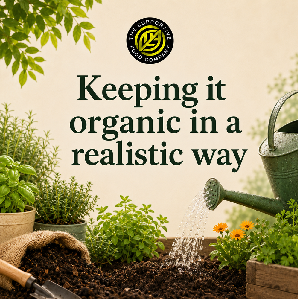 Organic growing does not mean pretending pests do not exist. It means starting with prevention and working with nature as much as possible.
Healthy soil is the foundation. Compost, leaf mould, mulch and natural organic matter help soil hold moisture, support beneficial organisms and feed plants gradually. Strong plants are often better able to cope with stress.
Good spacing also matters. Plants packed too tightly can become weak, damp and more prone to disease. Watering at the base of the plant helps keep leaves drier. Rotating crops, even in a small space, can reduce repeated pest and disease problems.
Companion planting can help, but it should not be oversold. Strong-smelling herbs may confuse some pests, and flowers can attract pollinators and beneficial insects. However, no single plant combination solves every problem.
Practical organic growing may include netting, hand-picking pests, using barriers, encouraging birds and beneficial insects, mulching, watering consistently and accepting a small amount of damage. A few chewed leaves do not mean failure.
There is also no shame in changing your plan. If a crop fails repeatedly in your space, try something else. Gardening should support health, not become a battle. Organic growing is not about moral purity. It is about building a healthier, more affordable and more sustainable food routine over time.
Readers who want a wider farming view can also explore best examples of organic crops for farmers to grow, which looks at organic crops from a broader producer perspective.
Growing for health, not just yield
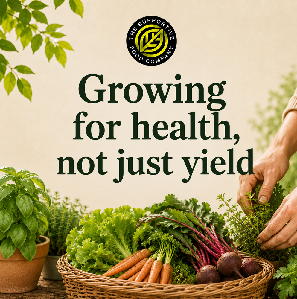 The most useful garden is not always the one with the biggest harvest. It is the one that regularly contributes to meals.
A small garden can support everyday eating in quiet ways: parsley stirred into soup, spinach added to pasta, thyme cooked with beans, mint added to water, lettuce picked for lunch, tomatoes chopped into a quick sauce. These are small changes, but they can improve the quality and appeal of ordinary food.
For people dealing with illness, recovery or low energy, this consistency matters. Fresh herbs can make plain food more tempting when taste changes or appetite loss are a problem. Leafy greens and colourful vegetables can add variety, fibre and plant compounds to meals. Gentle gardening can also offer routine, fresh air, movement and a sense of agency.
This should always be framed sensibly. Garden produce is supportive, not a cure. Anyone with a medical condition, treatment plan or special dietary need should follow personalised advice from qualified professionals. But within that wider care, food grown with intention can still play a meaningful role.
At The Supportive Food Company, food is part of care, community and fairness. A garden, however small, can reflect the same principle. It can be a place where nourishment is grown, shared and valued.
If you are deciding where to begin, start with what your household will use this week. A pot of parsley, a tray of salad leaves or one tomato plant in a sunny corner is enough. From there, you can build slowly, learn what works, waste less, share more and grow something hopeful one meal at a time.
Home | Food | Facebook | Other sources | Editors