
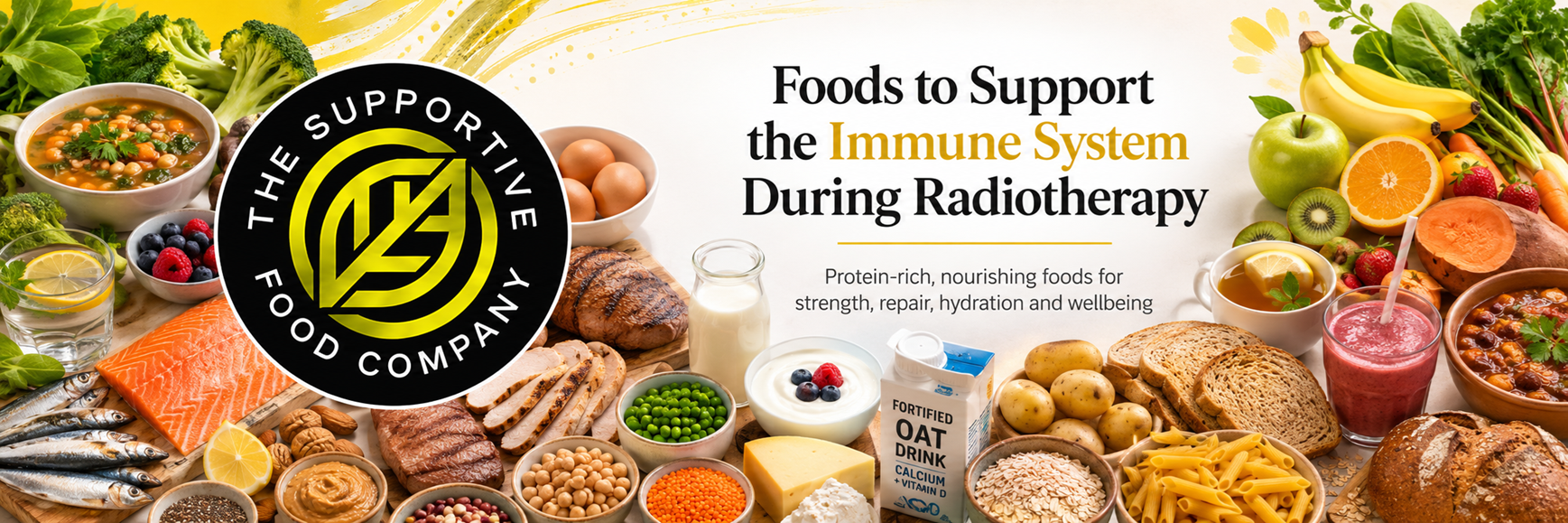
During radiotherapy, the aim is not to “boost” the immune system with one magic food, but to support normal immune function, wound repair, energy, hydration and weight stability. Cancer Research UK advises against dieting during radiotherapy and recommends high-energy, high-protein foods like meat, fish, eggs, cheese, full-fat milk, and pulses, especially if eating becomes challenging.
| Food | Why it helps during radiotherapy | Easy ways to use it |
|---|---|---|
| Eggs | Excellent protein for tissue repair and maintaining muscle. They also provide B vitamins and minerals that support normal immune function. | Scrambled eggs, omelette, egg mayo, boiled eggs. Cook thoroughly. |
| Fish, especially salmon, sardines, trout or mackerel | Provides protein plus omega-3 fats, which may help support an anti-inflammatory eating pattern. Oily fish also gives vitamin D. | Soft baked fish, fish pie, sardines on toast, salmon with rice or potatoes. |
| Chicken, turkey or lean meat | High-quality protein, iron, zinc and B12. Protein is especially important because radiotherapy can increase the body’s need for repair. | Soups, casseroles, minced meat, shredded chicken, soft stews. |
| Beans, lentils, chickpeas and peas | Plant protein plus fibre, folate and minerals. They are useful if you eat little meat and help support a varied, balanced diet. | Lentil soup, dhal, hummus, beans on toast. Reduce temporarily if pelvic radiotherapy causes gas or diarrhoea. |
| Greek yoghurt, milk, cheese or fortified dairy alternatives | Protein, calories, calcium and fluids. Helpful when appetite is low because they are easy to eat and can add nourishment without large portions. | Greek yoghurt with fruit, milkshakes, cheese in mashed potato, fortified soya milk. Choose pasteurised products. |
| Nuts, seeds and nut butters | Small portions give a lot of energy, protein, zinc, selenium and vitamin E. This is useful if you are losing weight or struggling with appetite. | Peanut butter on toast, tahini, ground seeds in porridge, nut butter in smoothies. |
| Oats, rice, potatoes, pasta, bread and other starchy foods | Main energy source. Keeping energy intake up helps reduce unwanted weight loss and supports recovery. Macmillan recommends carbohydrate-rich foods as a major part of a balanced diet. | Porridge, rice pudding, baked potato, pasta, toast, noodles. Use white rice/toast temporarily if diarrhoea occurs. |
| Berries, citrus, kiwi, apples and other fruit | Provide vitamin C, polyphenols and fluid. These nutrients are best obtained from foods rather than high-dose supplements during treatment. | Smoothies, stewed fruit, yoghurt with berries, sliced banana. Avoid sharp citrus if your mouth or throat is sore. |
| Leafy greens and broccoli | Provide folate, vitamin C, vitamin K, carotenoids and fibre. These support general health and help cover micronutrient needs. | Cooked spinach, broccoli soup, soft greens in stews. Cook until soft if swallowing or digestion is difficult. |
| Carrots, sweet potato, squash and pumpkin | Rich in beta-carotene, which the body can use to make vitamin A, important for skin and lining tissues such as the mouth and gut. | Mashed sweet potato, roasted squash, carrot soup, soft cooked vegetables. |
| Soups and stews | Good when tired, nauseous or sore. They combine fluid, protein, vegetables and calories in a soft form. | Chicken soup, lentil soup, fish chowder, blended vegetable soup with cream or olive oil. |
| Water, milk, smoothies and other non-alcoholic fluids | Hydration matters during radiotherapy. MD Anderson notes that staying hydrated can make side effects less severe and lower the chance of treatment delays; Cancer Research UK suggests aiming for about 2 litres daily if possible. | Sip regularly, use milkshakes, soups, smoothies, herbal tea or diluted juice. |
A few important cautions:
Avoid high-dose antioxidant supplements unless your oncology team approves them. This includes high doses of vitamins A, C, or E, selenium, CoQ10, turmeric/curcumin, and similar products. According to Cancer Research UK, some supplements can interfere with cancer treatment, and MD Anderson advises against antioxidant supplements during radiation therapy, as they might protect cancer cells.
Food safety matters if your white blood cell count is low. Cancer treatment can weaken the immune system, making foodborne germs more dangerous. It’s important to wash your hands and produce thoroughly, steer clear of raw or undercooked meat, fish, and eggs, and skip unpasteurised dairy. Memorial Sloan Kettering also recommends paying extra attention to food safety and avoiding high-risk items like raw fish, undercooked eggs, unpasteurised products, salad bars, and buffets if you’re neutropenic.
Adapt foods to the radiotherapy area. If you’re having head or neck radiotherapy, soft, moist, and mild foods can be easier to manage. For pelvic or abdominal radiotherapy, foods like beans, broccoli, onions, high-fibre items, or very fatty dishes might make gas or diarrhoea worse, so you may need to adjust your diet for a while. Cancer Research UK recommends checking in with your radiotherapy team or dietitian if you have any eating difficulties.
Home | Food | Facebook | Other sources | Editors