
Caring often turns meals into an afterthought.
You can spend all day helping someone else eat, drink, manage medicines, attend appointments and cope with symptoms, then realise at 8pm that you have had tea, toast and very little else. That is why good nutrition resources for carers matter so much – not as a lifestyle extra, but as part of staying well enough to continue caring with dignity, stamina and clarity.
For many carers, food is tied up with far more than shopping and cooking. It can involve weight loss, poor appetite, treatment side effects, swallowing difficulties, dementia-related changes, diabetes management, fatigue, low income and the emotional strain of seeing someone struggle to eat. The right support needs to be practical, trustworthy and realistic about what caring life is actually like.
 Why nutrition support for carers is often overlooked
Carers are regularly expected to absorb clinical information, household tasks and emotional labour without being given the same level of structured support that patients receive. Nutrition falls into that gap. You may be told to encourage fluids, increase protein or offer small frequent meals, but not be shown how to do that on a tight budget, with limited time, in a home where appetite is unpredictable.
There is also a hidden assumption that carers can simply keep going. In reality, poor nutrition affects concentration, mood, immunity and energy. If the carer becomes run down, everybody in the household feels it. Looking after your own meals is not selfish. It is part of safeguarding the whole caring arrangement.
 Carers are not just female
When people picture a carer, they often imagine a woman. That picture is incomplete.
Women do a huge amount of caring work, both paid and unpaid, and that should never be overlooked. But carers are not just female. Men care too. Sons care for parents. Husbands care for wives and partners. Brothers support siblings. Male friends, neighbours, volunteers and professional carers help people eat, drink, recover, attend appointments and live with dignity.
A man caring for his partner may not be asked how he is coping. A son supporting an older parent may not be offered the same guidance or emotional support. A male carer may feel pressure to “just get on with it” rather than admit that meals, medication routines, fatigue, money worries or emotional strain are becoming difficult.
 The most useful nutrition resources for carers
Not every resource will suit every household. Some carers need condition-specific guidance. Others need basic meal ideas that can be made in ten minutes. What matters is finding support that reduces pressure rather than adding another pile of reading.
Condition-specific nutrition guidance
This is often the most valuable place to start. General healthy eating advice does not always help when the person you support has cancer, dementia, diabetes, heart disease or another long-term condition. Appetite changes, medication effects, nausea, altered taste, constipation, diarrhoea and swallowing problems can all shift what is realistic.
A good condition-specific resource explains what may happen, which food approaches are commonly recommended, and when to ask for specialist help. It should also be honest about trade-offs. For example, a person with severe weight loss may need calorie-dense foods before they need textbook healthy eating. Someone with swallowing problems may need texture changes that make meals look less familiar. Someone living with dementia may eat better little and often rather than at set mealtimes.
NHS and local health service materials
Practical printed guidance still matters. Many carers prefer something they can keep in a drawer, take to appointments or hand to another family member. Hospital teams, GP surgeries, community dietitians, speech and language therapists and specialist nurses often provide leaflets on hydration, food fortification, diabetes-friendly eating, bowel issues and texture-modified diets.
The quality can vary, and some materials are more general than others, but local guidance has one big advantage: it reflects the services available in your area. If a leaflet mentions referral to a dietitian, oral nutrition support or dysphagia review, it usually points you towards a real route for help rather than abstract advice.
 Carer organisations and community support
Some of the best nutrition resources for carers are not framed as nutrition resources at all. They come through carer groups, food charities, community kitchens, local support hubs, lunch clubs and social prescribing services. These can help with practical access to meals, affordable food, company at mealtimes or simply relief from doing everything alone.
This is especially important where caring and poverty overlap. Food insecurity is not a personal failure. It is a structural problem, and carers are often exposed to it because paid work reduces, bills increase and time disappears. Compassionate support must include affordable food access, not just advice about what an ideal plate looks like.
Simple meal-planning tools
When days are unpredictable, complicated plans tend to fail. Better resources focus on flexible basics: easy breakfasts, freezer-friendly meals, snack ideas, hydration prompts and a short list of cupboard staples that can become several different meals.
The most helpful meal-planning tools do not demand perfection. They recognise that there will be evenings when a fortified soup, scrambled eggs or yoghurt with fruit is enough. Carers need food systems that bend under pressure, not rigid plans that create guilt.
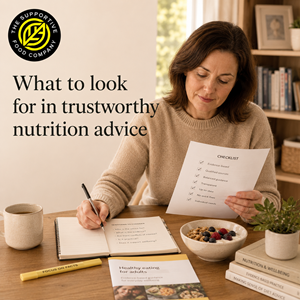
What to look for in trustworthy nutrition advice
Nutrition advice can become muddled very quickly, especially online. Carers may come across strong claims about sugar, supplements, fasting, dairy, seed oils or miracle foods for serious illness. Some of this advice is oversimplified. Some of it is commercially driven. Some of it can be harmful.
Trustworthy guidance tends to be clear about its limits. It does not promise cures. It recognises medical complexity. It considers medication, symptoms, stage of illness, cultural food preferences and quality of life. It also makes room for reality. If the person you care for will only eat three foods this week, the next step is not moral judgement. It is finding the best possible support within that situation.
A useful test is whether the resource helps you make a decision today. Can you tell what to offer if someone has a sore mouth? Does it explain how to boost protein without large portions? Does it say when unintentional weight loss needs urgent attention? Good advice should reduce confusion, not deepen it.
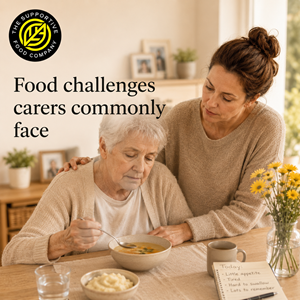
Food challenges carers commonly face
Poor appetite and unintentional weight loss
This is common in cancer, frailty, recovery from illness and many chronic conditions. In these situations, small portions of nourishing food often work better than large meals. Fortifying familiar foods can help – adding full-fat dairy, nut butter, grated cheese, olive oil or powdered milk where appropriate. The goal is not dietary perfection. It is getting enough energy and protein in a manageable way.
Swallowing difficulties
Swallowing issues need proper assessment. Carers should not be left to guess. If someone coughs during meals, avoids certain textures, takes a long time to swallow or has repeated chest infections, specialist advice is important. Texture modification can improve safety, but it must be done correctly, and hydration needs attention too.
Fatigue and lack of time
Many carers are exhausted before food preparation even begins. In that case, the best resource may be one that gives permission to simplify. Batch cooking, meal sharing with relatives, using frozen vegetables, keeping nourishing convenience foods in the house and accepting community meal support are all sensible responses. The test is whether the approach protects energy, not whether it looks impressive.
Budget pressure
Healthy eating advice that ignores cost can feel insulting. Affordable nutrition support should include low-cost proteins, tins and pulses, seasonal produce, simple soups, porridge, eggs, frozen fish, yoghurt and ways to reduce waste. It should also recognise that the cheapest option on paper may still be impossible if you are too tired to cook from scratch every day.
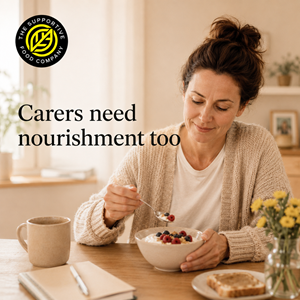 Carers need nourishment too
There is a pattern many carers know well: preparing careful meals for someone else, then surviving on biscuits, skipped lunches and cold leftovers. Over time that erodes resilience. Your body does not stop needing protein, fibre, fluids and regular meals because somebody else needs you.
It helps to think in terms of minimum support rather than ideal routines. Could you keep a few dependable options ready for yourself – overnight oats, soup, boiled eggs, cheese on toast, nuts, fruit, hummus, yoghurt? Could you eat when the person you support eats, rather than waiting until everything else is done? Small changes are often more sustainable than ambitious resets.
Supportive Food Directory exists because nutrition should not be treated as a privilege for the well-resourced. Carers, patients and communities all deserve practical information that respects the realities of illness, income and unequal access.
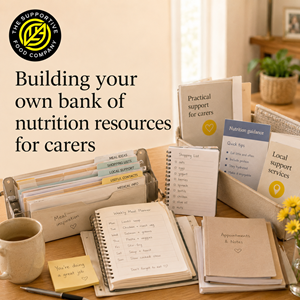 Building your own bank of nutrition resources for carers
The strongest support usually comes from a mix of sources rather than a single perfect guide. One household may need a dietitian handout for swallowing issues, a GP conversation about weight loss, a local carers’ group for practical relief, and a simple weekly shopping framework to make meals less stressful. Another may need culturally relevant recipes for diabetes, advice on hydration for an older parent and emergency food support during a difficult month.
That mix will change over time. What works during treatment may not work during recovery. What suits early-stage dementia may not suit later stages. Carers should not feel they have failed because food needs change. Adapting is part of caring.
If you are supporting someone through illness while trying to hold your own health together, start with the next useful thing. Ask for printed advice. Request referral when symptoms affect eating. Keep meals simple. Accept help. Question any nutrition claim that sounds absolute. And remember that food support is never only about nutrients. It is also about energy, comfort, safety, culture, fairness and the right of every household to eat with dignity.