
The Richest and Poorest Nations | Causes of Poverty
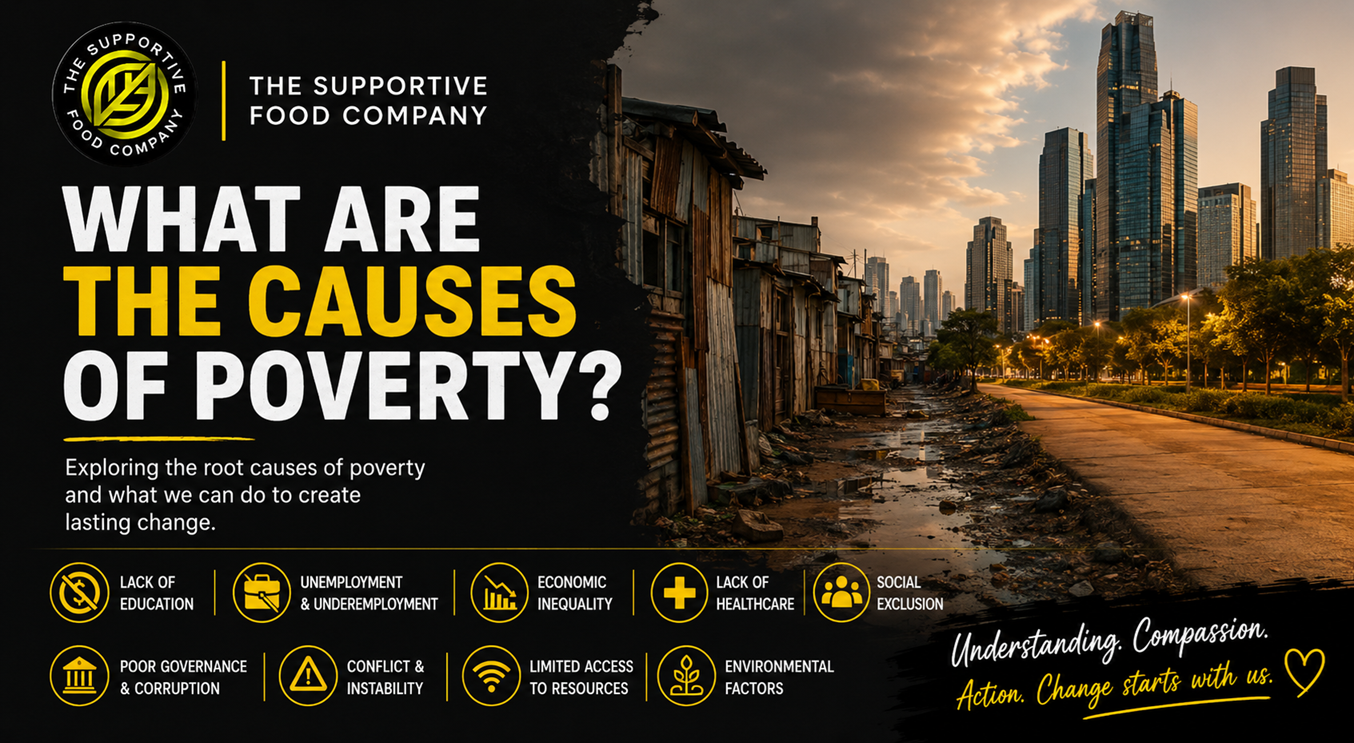
What are the causes of poverty?
Poverty usually has multiple causes at once, not just one. The main ones are:
-
Lack of jobs or low wages: People may work but still not earn enough to cover basics.
-
Limited education: Poor access to schooling or training makes it harder to get stable, better-paid work.
-
Inequality: Wealth, land, and opportunities can be concentrated in a small group.
-
Poor health and healthcare: Illness can prevent work and create heavy costs.
-
High living costs: Housing, food, transport, and energy can rise faster than incomes.
-
Conflict and instability: War, violence, and political disorder destroy jobs, homes, and services.
-
Discrimination: Groups may face barriers because of race, caste, gender, disability, migration status, or ethnicity.
-
Weak government services: Poor schools, infrastructure, sanitation, and safety nets make it harder to escape poverty.
-
Debt: Personal or national debt can trap people and families for years.
-
Natural disasters and climate change: Floods, droughts, and crop failures can wipe out livelihoods.
-
Family circumstances: Growing up in a poor household often means fewer opportunities from the start.
A useful way to think about it: poverty is often caused by a mix of low income, low opportunity, and high vulnerability.
Here’s a simple way to break it down.
Individual level
These are factors that affect one person or household directly.
-
Having limited education or skills can narrow job opportunities and lower wages. Unemployment or unstable work can lead to unpredictable income.
-
Poor health or disabilities can make it harder to work and often increase expenses.
-
Debt can trap families when much of their income goes toward repayments.
-
Large families or caregiving responsibilities can stretch finances thin.
-
Addiction, trauma, or mental health challenges can also make it tougher to hold a job or manage money.
Community level
These are conditions in the local area people live in.
-
Few job opportunities in the area.
-
Weak schools and training programs.
-
Poor healthcare access.
-
Lack of transport to get to work or services.
-
Unsafe neighborhoods or crime that discourage business and investment.
-
Poor infrastructure such as bad roads, unreliable electricity, or limited internet.
-
Discrimination or social exclusion against certain groups in the community.
National level
These are wider systems and policies that shape poverty across a whole nation.
-
Slow economic growth or recessions, uneven distribution of wealth and land, and corruption or weak governance can all lead to serious challenges.
-
War, political unrest, and conflict disrupt everyday life, while fragile social safety nets leave people exposed without help for unemployment, food, housing, or healthcare.
-
Inflation and higher prices cut into purchasing power, while climate shocks or natural disasters can wreak havoc on farms, homes, and jobs.
-
Past issues like colonialism and long-standing discrimination continue to limit opportunities for some groups.
How they connect
These levels often build on and strengthen each other. For instance:
A person with limited education, living in an area with few job opportunities and poor transportation, in a country with high inequality and weak public services, faces a much higher risk of falling into poverty.
Poverty usually doesn’t stem from just one bad choice or event, but from a combination of personal challenges, local conditions, and larger economic or political factors.
Next
Home | Food | Facebook | Other sources | Investors | Editors | Contact