
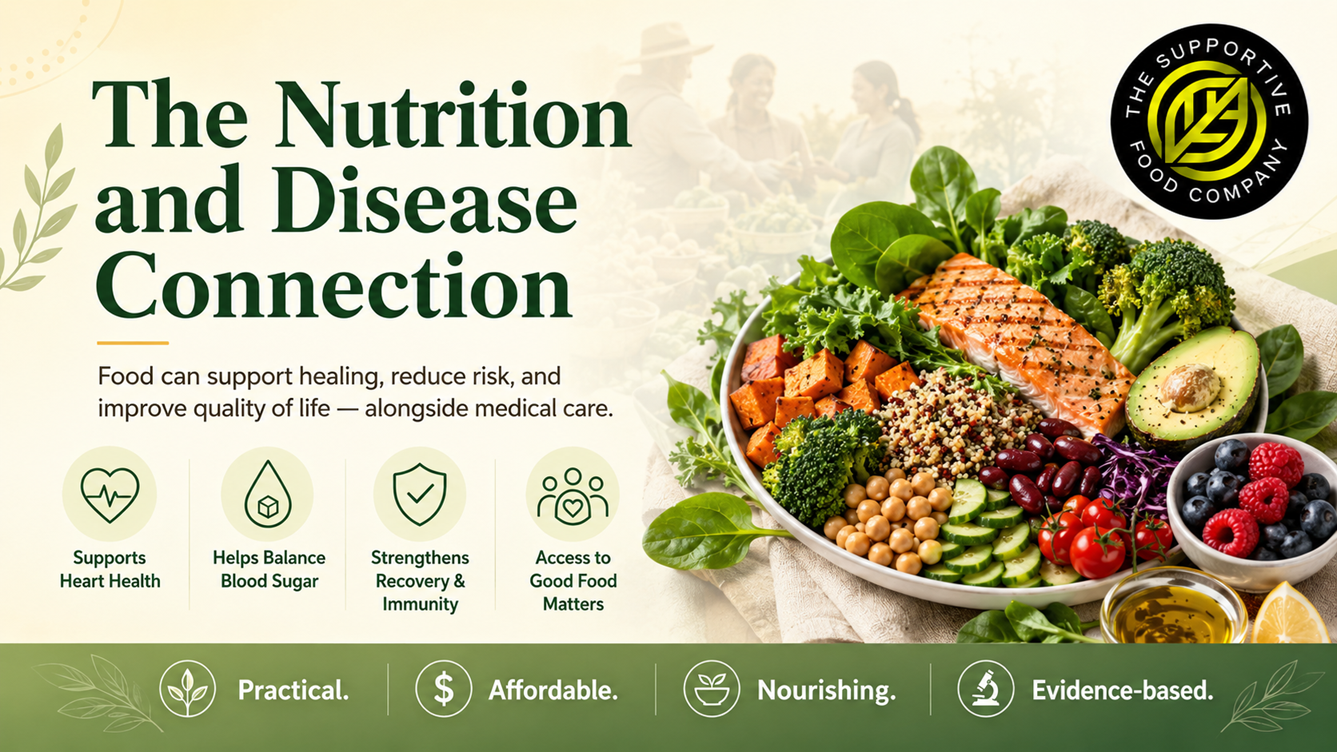
The Nutrition and Disease Connection
Getting a diagnosis can completely change how people see food. A meal stops being just breakfast, tea, or a quick way to fuel up for a busy day—it becomes part of managing symptoms, staying energized, finding comfort, reducing risks, and, for many families, stressing over cost and access. That’s why the link between nutrition and disease matters so much.
It’s right where personal health, healthcare, farming, inequality, and the daily reality of what’s actually doable all come together.
For years, nutrition was treated as background noise in many conversations about illness. Medicines, procedures and tests took centre stage, while food was too often reduced to a leaflet, a few generic warnings, or advice that assumed everyone had the same budget, kitchen, appetite and support.
That approach misses something fundamental. Food does not replace medical treatment, but it does shape the conditions in which health either holds steady or begins to struggle.
Why the nutrition and disease connection matters

The relationship between diet and disease is not a fringe idea or a lifestyle trend. It is woven through some of the biggest health challenges facing people across Britain and beyond, including heart disease, type 2 diabetes, obesity, some cancers, digestive disorders and poor long-term recovery from illness. Nutrition can influence inflammation, blood sugar control, blood pressure, cholesterol, immune function, weight stability and gut health. Those are not abstract markers. They affect how people feel, what symptoms they live with, and how much resilience they have day to day.
At the same time, the nutrition and disease connection is not as simple as blaming individuals for what they eat. Health is shaped by income, disability, transport, housing, stress, caring pressures, food prices and the quality of local food access. If fresh, nourishing food is unaffordable or difficult to reach, advice alone will not fix the problem. That is one reason this conversation must stay humane as well as evidence-based.
Nutrition and disease connection across common conditions
Different situations call for different nutritional needs. There’s no one-size-fits-all diet, and anyone who says otherwise is usually selling a false sense of certainty that real life just doesn’t deliver.
Heart disease and high blood pressure
When it comes to heart health, long-term eating habits matter more than occasional superfoods. Diets full of vegetables, beans, pulses, fruit, whole grains, nuts, and seeds are linked to better cardiovascular outcomes, especially when they help cut back on excess salt, heavily processed foods, and regular consumption of foods high in saturated fat.
Oily fish can be a good option for some, but the advice depends on context. For someone living alone on a tight budget, affordable staples like tinned beans, frozen vegetables, and porridge can be far more practical than pricey fresh ingredients marketed as wellness must-haves.
Type 2 diabetes and insulin resistance (new tab)
Managing blood sugar is often where people notice the effects of food most quickly. Meals that mix fibre, protein, and slow-release carbs can help avoid sharp spikes and dips. That could mean choosing wholegrain toast with eggs instead of sugary cereal, or adding lentils to soups and stews to boost fullness and steady glucose levels. Still, diabetes advice can sometimes feel too strict. Cultural dishes, family traditions, and medications all play a role, so support should focus on adapting meals rather than giving up one’s food identity.
Cancer and recovery
 Nutrition during cancer is especially nuanced. Some people need support to maintain weight and strength because treatment affects appetite, taste, swallowing or digestion. Others may be dealing with fatigue so severe that cooking becomes unrealistic. In those moments, nourishment is not about perfection. It may be about small, frequent meals, easy protein sources, soft foods, hydration and practical help from carers or community networks. There is also strong public interest in food and cancer prevention, but prevention and treatment are different conversations and should not be confused.
List of Foods that help specific Cancers (new tab)
Digestive conditions and inflammation
For those dealing with bowel conditions, reflux, coeliac disease, or ongoing digestive issues, food can feel both essential and unpredictable. Fibre might ease symptoms for one person but make them worse for another, depending on the condition and any flare-ups. Fermented foods, dairy, gluten, spicy dishes, and high-fat meals can all affect people in different ways. That’s why paying attention to your own reactions, getting guidance from a dietitian if possible, and steering clear of one-size-fits-all internet advice is so important.
Food patterns matter more than food fads
The market loves extremes because they are easy to package. Real health is rarely that tidy. Most of the evidence points towards dietary patterns rather than miracle ingredients. A generally nourishing eating pattern tends to include a wide range of minimally processed foods, enough protein, plenty of plant foods, useful fibre, healthy fats and sufficient fluid. It also leaves room for culture, appetite, pleasure and practicality.
That may sound modest, but modest does not mean weak. Consistent habits often do more for long-term health than short bursts of strict eating followed by exhaustion, guilt or rebound. If a way of eating increases stress, social isolation or financial strain, it may not be sustainable even if it looks impressive on paper.
The role of inequality in nutrition and disease
This is the part that too many health articles skip. People do not make food choices in a vacuum. They make them in a food system shaped by pricing, advertising, land use, wages and postcode inequality. It is much harder to follow health advice when you are choosing between heating and groceries, caring for someone full-time, living with disability, or relying on shops that stock mostly ultra-processed options.
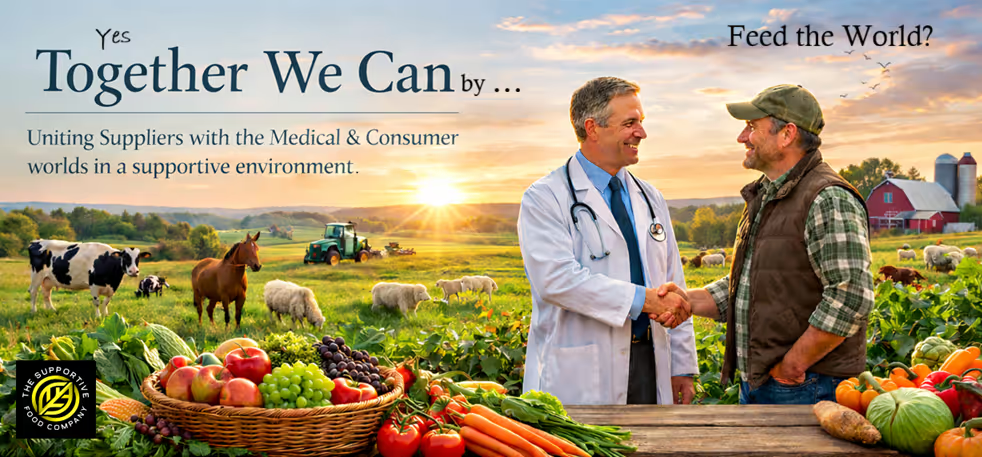
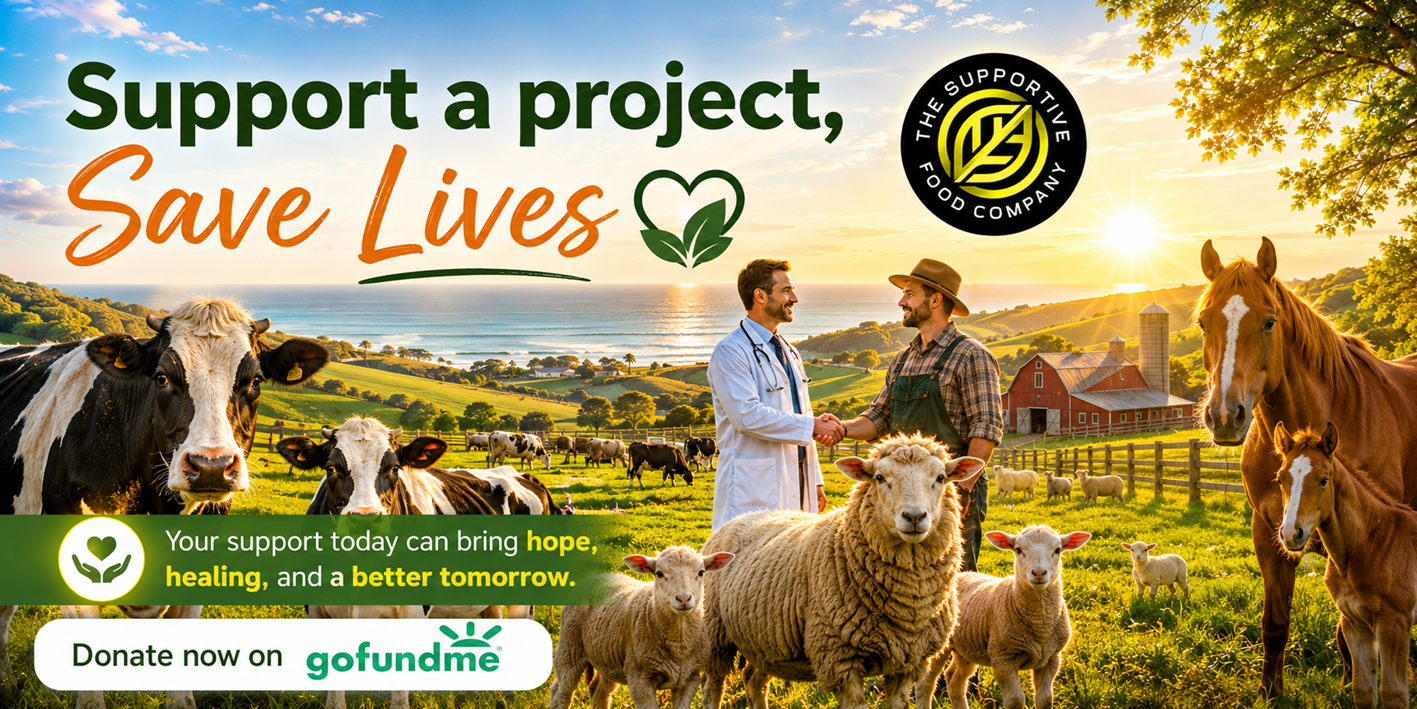
Any honest discussion about disease prevention and recovery has to include food justice. Access to healthy, nourishing food shouldn’t be a matter of luck, money, or mobility. Farmers and ethical producers are part of the equation too, since community health is deeply connected to the strength of local food systems. When production focuses on quantity over quality, and small producers are driven out, we all lose—flavor, local jobs, resilience, and ultimately public health.
That is why mission-led platforms such as Supportive Food Directory matter. They help connect the dots between growers, producers, patients, carers and health-conscious communities, rather than treating these groups as if they exist in separate worlds.
What good nutrition support should look like
People need more than slogans such as eat better or cut out sugar. Useful support is practical, affordable and respectful. It should explain why a change may help, where flexibility is possible, and how to work around common barriers such as fatigue, chewing problems, low appetite, limited cooking confidence or restricted income.
Good nutrition support should also acknowledge trade-offs. Fresh food is valuable, but frozen and tinned options can be excellent tools. Home cooking is helpful, but not everyone can cook from scratch every day. Plant-rich eating has broad benefits, but some people need animal-based foods for convenience, preference or medical reasons. Nuance is not weakness. It is what makes advice usable.
How to act on the nutrition and disease connection
For most people, progress starts with the next realistic step rather than a total overhaul. That may mean adding one extra portion of vegetables a day, choosing higher-fibre staples, including protein more consistently, drinking more water, or reducing reliance on heavily processed snacks that leave energy levels unstable. For someone recovering from illness, the right step may simply be finding easy foods they can tolerate and eat regularly.
If you are supporting a family member with a chronic condition, think in terms of patterns rather than policing. Shared meals, stocked cupboards, soft encouragement and reduced judgement often achieve more than strict monitoring. If you are a producer or grower, there is a role here too. Food grown and made with care is part of a wider public-health story, especially when it is made visible and accessible to the communities who need it.
Healthcare professionals, community groups and local food initiatives all have a place in this work. Disease prevention and recovery should not be left to individuals carrying the burden alone. Better health is built collectively – in clinics, kitchens, farms, schools, shops and neighbourhood projects.
A more honest way forward
The nutrition and disease connection is powerful, but it is not a morality tale. People do not deserve illness because their diet was imperfect, and no one should be sold false hope through restrictive plans dressed up as cures. Food can support healing, reduce risk and improve quality of life, but it works best when it is part of a bigger picture that includes medical care, rest, movement, social support and fair access.
If there is one place to begin, it is here. Treat food as part of health, not an afterthought, and make room for dignity in every recommendation. People are far more likely to eat well when the system around them makes that possible.
Home | Food | Facebook | Other sources | Investors | Editors | Contact