
Choosing food should not feel like a test.
Yet for many people, standing in front of shelves full of labels, claims and certifications can feel confusing. Words such as natural, sustainable, artisan and responsible may sound reassuring, but they do not always tell the full story.
Finding ethical producers is not about choosing the nicest packaging or the most fashionable brand. It is about looking for producers who treat people fairly, care for land and animals responsibly, source honestly, and understand that food choices affect health, dignity, community and the wider environment.
For households managing long-term health conditions, carers shopping on tight budgets, farmers working under pressure, or anyone trying to make more thoughtful food choices, ethics cannot be reduced to a slogan. Ethical food should support people as well as principles. For practical support around affordability, see our guide to healthy eating on a budget.
What ethical production really means
Ethical food production is about more than one label or one issue. It is wider than organic status, wider than local sourcing, and wider than recyclable packaging.
A truly ethical producer will usually show care across several areas, including:
- fair treatment of workers
- responsible environmental practices
- good animal welfare where relevant
- honest sourcing and supply chains
- transparent pricing
- nutritious, accessible food
- positive community impact
No producer is perfect. Weather, energy costs, transport, imported ingredients and market pressures all create real-world compromises. The aim is not to find moral purity. The aim is to identify producers who are making serious, visible efforts and who are honest about the trade-offs.
Look for evidence, not just marketing
The easiest mistake is to treat branding as proof. A product can look ethical without being transparent. It can use warm colours, farm imagery and reassuring language while giving very little detail about how the food is actually produced.
A better starting point is evidence.
Look for producers who explain where their ingredients come from, how they choose suppliers, how they treat workers, how they manage waste, and what standards guide their decisions. Specific information is usually a good sign. Vague claims should make you pause.
A producer that is doing the work can normally explain it clearly. They do not need perfect language or a glossy report, but they should be able to show how their values are put into practice.
Transparency matters
Transparency is one of the strongest signs that a producer is taking ethics seriously. It does not guarantee perfection, but it does show a willingness to be questioned.
Good producers are usually open about where food is grown, how it is processed, whether ingredients are imported, how animals are raised, and what challenges they face. Smaller producers may not have large compliance teams or formal reports, but many are deeply values-led and willing to explain their choices honestly.
When a producer is transparent about what they can and cannot do, that honesty often says more than a polished claim.
Questions to ask ethical producers
When possible, ask simple, respectful questions. You do not need to interrogate anyone. You are simply trying to understand how the producer works.
Useful questions include:
- Where do your ingredients come from?
- How do you choose your suppliers?
- What do you do to support worker welfare?
- How do you reduce waste?
- How are animals raised, if animal products are involved?
- What happens when cheaper sourcing conflicts with your values?
- Do you support any local or community group food projects?
You are not looking for a perfect script. You are looking for openness, detail and honesty. Ethical producers usually answer with context and humility. Greenwashing often sounds polished but thin.
Certifications can help, but they are not everything
Certifications can be useful. They may show that a producer meets certain standards for farming methods, animal welfare, fair trade or environmental care.
However, certification is not the whole story. Some excellent producers are too small to afford the fees or administration involved. Others may meet a basic standard but still fall short in areas that matter to you.
Treat certifications as one piece of evidence, not the final answer. A local grower using careful ecological methods and fair labour practices may be more aligned with your values than a larger brand with a recognised badge but weaker social impact.
Price is part of the story
Fair food often costs more to produce. Paying workers properly, caring for soil, using higher-welfare farming methods and operating on a smaller scale can all increase costs.
But price alone does not prove ethics.
Some producers charge more because their practices genuinely cost more. Others charge more because ethical branding allows them to. At the same time, some ethical producers work hard to keep food accessible because they believe good food should not be reserved only for people with higher incomes.
A helpful question is: does the producer explain why the product costs what it does?
Look for honesty around seasonality, fair pay, farming methods, supply costs and accessibility. Ethical food should not become a luxury identity. A fairer food system must also think about affordability, dignity and access.
Do not forget labour
Food ethics often focuses on land, packaging and carbon impact. These things matter, but people matter more.
If the people who grow, pick, pack, process, cook or deliver food are underpaid, unsafe or treated as disposable, the product cannot meaningfully be called ethical.
Look for producers who mention employment practices, training, worker welfare, supplier relationships and fair payment. For imported ingredients, ask whether the producer knows anything about the growers, farms or communities involved.
Consumers cannot verify everything alone, but silence around labour is worth noticing.
Local can be good, but it is not automatically ethical
Buying local can be a powerful way to support regional economies, shorten supply chains and build stronger food communities. Local producers may also be easier to contact, visit and understand. If this matters to you, our guide on how to support local farmers directly offers practical ways to build those relationships.
But local does not automatically mean ethical. A nearby business can still exploit workers, overuse chemicals or neglect animal welfare. Equally, some imported foods are produced through long-term, fairer partnerships that support livelihoods in other parts of the world.
The better question is not only “Where is this from?” but “How was it produced, who benefits, and who may be harmed?”
Watch out for greenwashing
Greenwashing is not always obvious. It often appears through selective storytelling.
A producer may highlight one positive feature, such as recyclable packaging, while saying nothing about labour, sourcing, animal welfare, pesticides or processing methods. They may use lifestyle language without providing real accountability.
Be cautious when claims are broad but unsupported. Be wary of brands that present criticism as unfair negativity rather than engaging with genuine concerns. And be careful with any message suggesting that buying one premium product is enough to solve deeper food system problems.
Ethical food choices matter, but they do not replace the need for fair wages, better regulation, food access, land care and stronger local systems.
How directories and communities can help
Trying to investigate every producer alone can be exhausting. Trusted directories, food networks and community recommendations can make the process easier.
A well-curated directory can help people find producers who are already being looked at through the lens of transparency, values and community benefit. This is especially useful for people who are already carrying a lot, including patients, carers, families on restricted incomes and people trying to make healthier choices under pressure.
The Supportive Food Directory exists in this space between food, health and fairness. It is not only about what we eat. It is also about the kind of food system our choices support.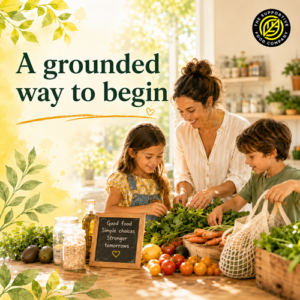
A grounded way to begin
You do not need to get every decision right. Start with one or two values that matter most to you. That might be fair labour, lower-impact farming, animal welfare, local resilience, affordable nutrition or community benefit.
Then look for producers who can show their workings.
The most ethical choice is not always the most expensive or the most beautifully packaged. Often, it is the producer willing to answer difficult questions, admit limitations, and keep working for people, land, animals and community at the same time.
That is a good place to begin.