
 Organic Farming (this page) | Organic Practices | Food System | Advantages & challenges | Benefits | A Message to Farmers
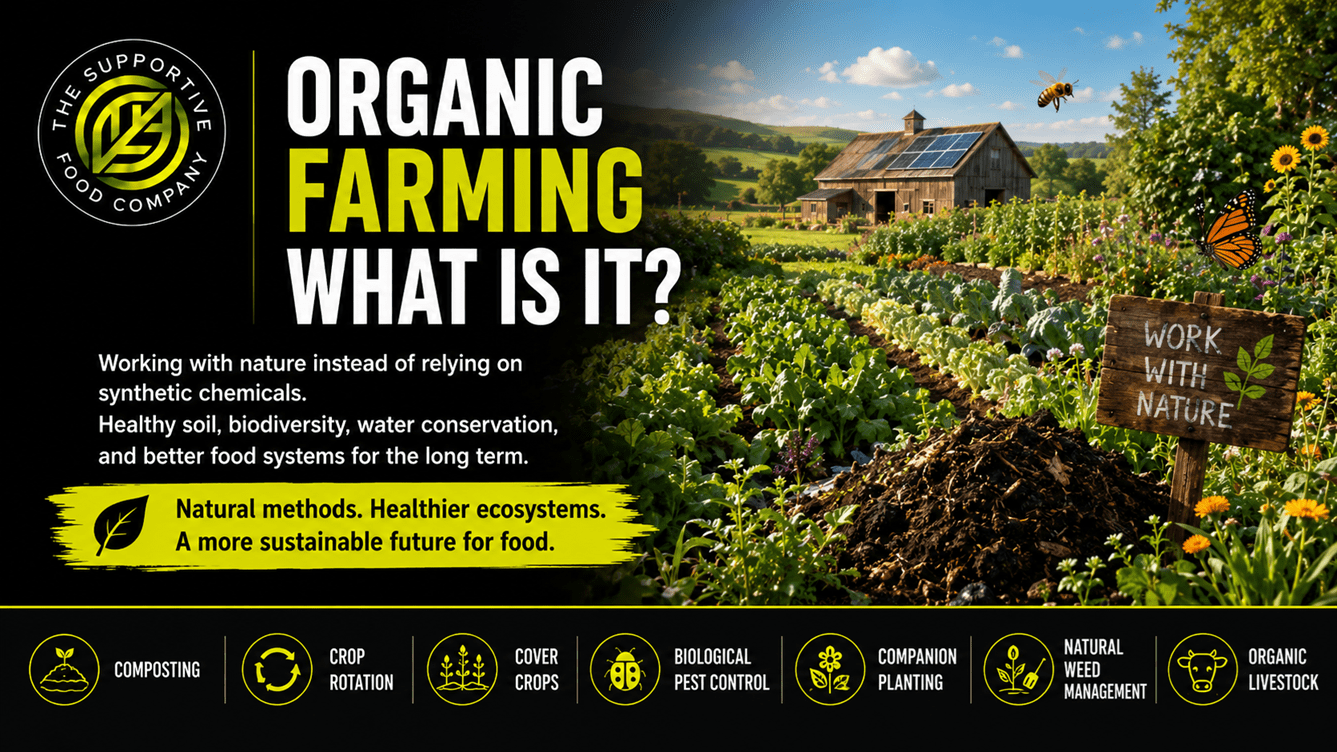
Organic farming is all about working with nature instead of relying on synthetic chemicals.
It’s not just about the change to organic fertilizers or pesticides, it is also focused on building healthy soil, protecting biodiversity, conserving water, and growing food in ways that keep people, animals, and the planet healthy for the long run.
Rather than using synthetic pesticides, chemical fertilizers, GMOs, routine antibiotics, or growth hormones, organic farmers turn to natural methods like composting, crop rotation, biological pest control, green manures, and mindful livestock care.
At its core, organic farming is about sustainability—producing food today without harming the resources future generations will depend on.
A Brief History of Organic Farming
Organic farming has its roots in traditional agriculture, where for thousands of years farmers used natural fertilizers, diverse crops, animal manure, compost, and local know-how to keep soil healthy and grow food. In the early 20th century, it started taking modern shape as a reaction to the rise of synthetic fertilizers and chemical pesticides.
Concerned about soil health, biodiversity loss, and the break from natural cycles, farmers, scientists, and environmentalists began promoting methods to improve soil naturally, cut back on chemicals, and farm more ecologically. By the mid-20th century, the movement became more organized, and organic certification systems emerged to set standards and help shoppers find truly organic products.
Today, organic farming is practiced around the world, from small family plots to large-scale operations, and keeps growing as more people care about sustainability, the environment, animal welfare, and healthier farming.
 Organic Farming – what is it? (This page) | Benefits | Common Practices | Food System | Advantages & Challenges | A Message to Farmers
Main Methods of Organic Farming
Organic farming relies on various methods aimed at safeguarding soil, crops, animals, and the surrounding ecosystems.
1. Composting
Composting is all about transforming organic waste like plant trimmings, food scraps, straw, leaves, and animal manure into rich, nutrient-packed compost. This compost boosts soil fertility, improves its structure, and helps it hold moisture. Good compost also nourishes soil life, adds natural nutrients, and cuts down on the need for synthetic fertilizers.
2. Crop Rotation
Crop rotation is the practice of planting different crops in the same field across various seasons or years. It helps keep pests and diseases in check, boosts soil fertility, and prevents nutrients from being drained.
For instance, a farmer might plant nitrogen-rich legumes like beans or peas one season, then follow with a crop that thrives on nitrogen, such as corn or leafy greens.
3. Green Manure and Cover Crops
Green manure crops are planted to boost soil health instead of being harvested. Cover crops like clover, rye, vetch, or mustard help prevent erosion, suppress weeds, add organic matter, and attract beneficial insects. When cut and worked into the soil, they naturally enhance its fertility.
4. Biological Pest Control
Organic farmers handle pests by promoting natural predators and maintaining ecological balance. Ladybirds, birds, frogs, spiders, and other helpful insects play a big role in keeping pests under control. They might also use barriers, traps, companion planting, and approved natural pest control products when necessary.
5. Companion Planting
Companion planting is all about growing certain plants together so they can benefit one another. Some plants repel pests, attract pollinators, improve soil health, or provide shade and support. For example, planting flowers near vegetables can invite bees and other beneficial insects.
6. Natural Weed Management
Organic farmers manage weeds without using synthetic herbicides, relying instead on techniques like mulching, hand weeding, mechanical cultivation, crop rotation, cover crops, and dense planting. Mulch also helps keep the soil moist and maintain a steady temperature.
7. Organic Livestock Management
Organic livestock farming emphasizes animal welfare, natural diets, outdoor access, and minimal use of routine medications. Animals are typically given organic feed and cared for in ways that encourage natural behaviors. Maintaining good hygiene, providing proper nutrition, keeping lower stocking densities, and focusing on preventive care are key aspects of this approach.
Organic Farming and the Future of Food
Organic farming is an important part of the global conversation about sustainable agriculture. It offers practical ways to protect soil, reduce pollution, support biodiversity, and produce food with greater respect for ethical natural systems.
However, organic farming is not a single solution to every food system challenge. It works best when combined with good science, local knowledge, fair markets, responsible consumption, and supportive policies.
As climate change, soil degradation, water scarcity, and biodiversity loss become more serious, organic farming provides valuable lessons for the future. Healthy soil matters, biodiversity matters, and farming must work with nature rather than against it.
Conclusion
Organic farming is a sustainable approach to agriculture that focuses on soil health, ecological balance, animal welfare, and reduced chemical use. Its methods include composting, crop rotation, cover cropping, natural pest control, and responsible livestock management.
The benefits of organic farming include healthier soils, cleaner water, greater biodiversity, improved pollinator protection, and long-term environmental resilience. At the same time, organic farming faces challenges such as lower yields in some cases, higher labour needs, certification costs, and pest management difficulties.
Overall, organic farming plays a vital role in building a more sustainable, balanced, and environmentally responsible food system for the future.
Next: Common Organic Farming Practices ⇒
Home | Food | Facebook | Other sources | Editors