
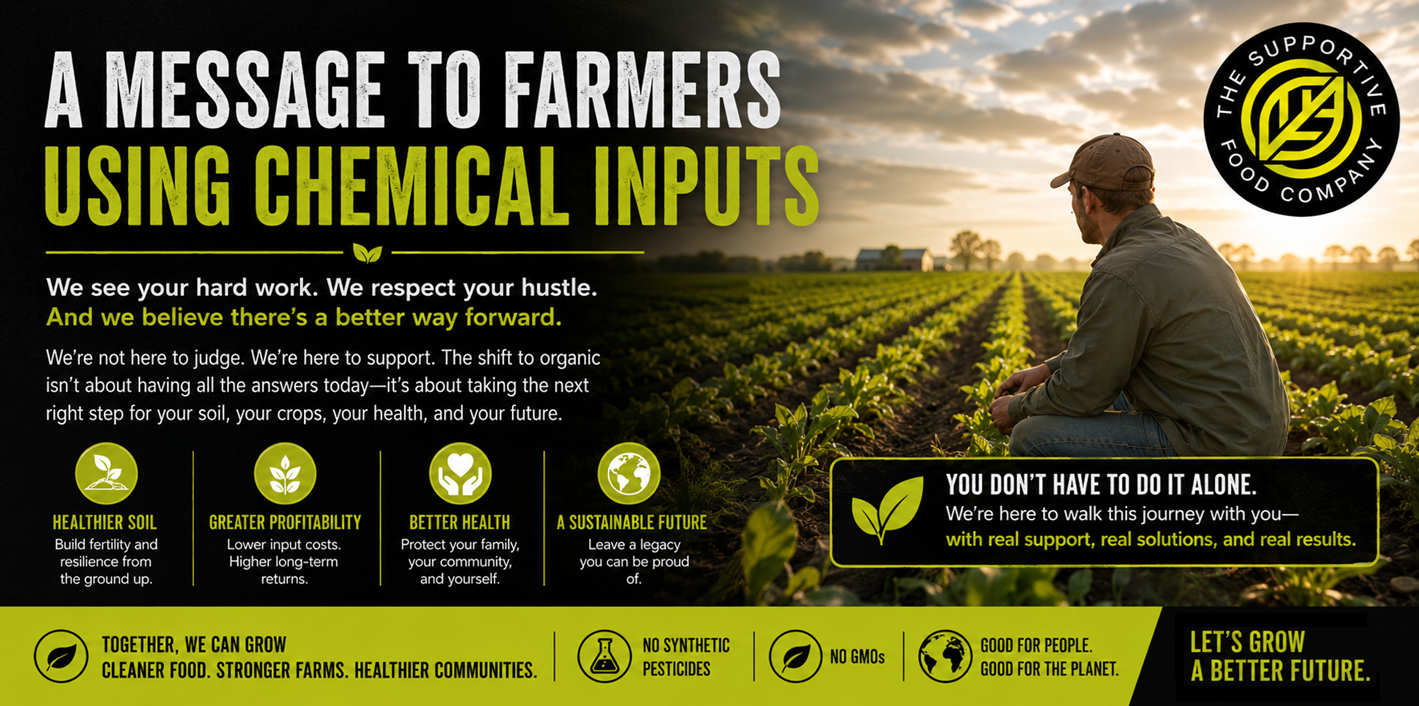
 Organic Farming | Farming Practices | Food System | Advantages & challenges | Farming benefits | We will help you for free
For those who depend on synthetic fertilizers, pesticides, herbicides, or other chemical inputs, your work is important. Feeding people is no small task, and every farmer knows the challenges of weather, costs, pests, markets, uncertainty, and recently the pandemic – which is what destroyed our founder’s own farm, and many others. For what comes next we must prepare.
Organic Farming isn’t about pointing fingers—it’s about providing a better long-term path for the land, the farmer, the customer, and the generations to come. We do not judge you, we know full well the advantage and challenges, and want to help you for FREE, especially if you have a heart for transition – even if only partially to begin with.

Switching to organic can seem like a big leap, but it’s something you can ease into. You might start by building up soil organic matter, planting cover crops, cutting back on pesticides, rotating crops more intentionally, composting farm waste, or creating areas for pollinators. Each small change can make the farm stronger.
Healthy soil is your most valuable resource. As it improves, crops grow more resilient, water is used more efficiently, and the farm becomes less reliant on expensive outside inputs.
Organic farming isn’t always simple—it takes planning, patience, and support. Yet farmers around the world are proving it’s possible to grow quality food while caring for the environment and securing the farm’s future.
Going organic isn’t a step backward—it’s a move toward farming with deeper understanding, greater self-reliance, and stronger respect for the natural systems that make agriculture thrive.
Best examples of organic crops for farmers to grow ⇒ 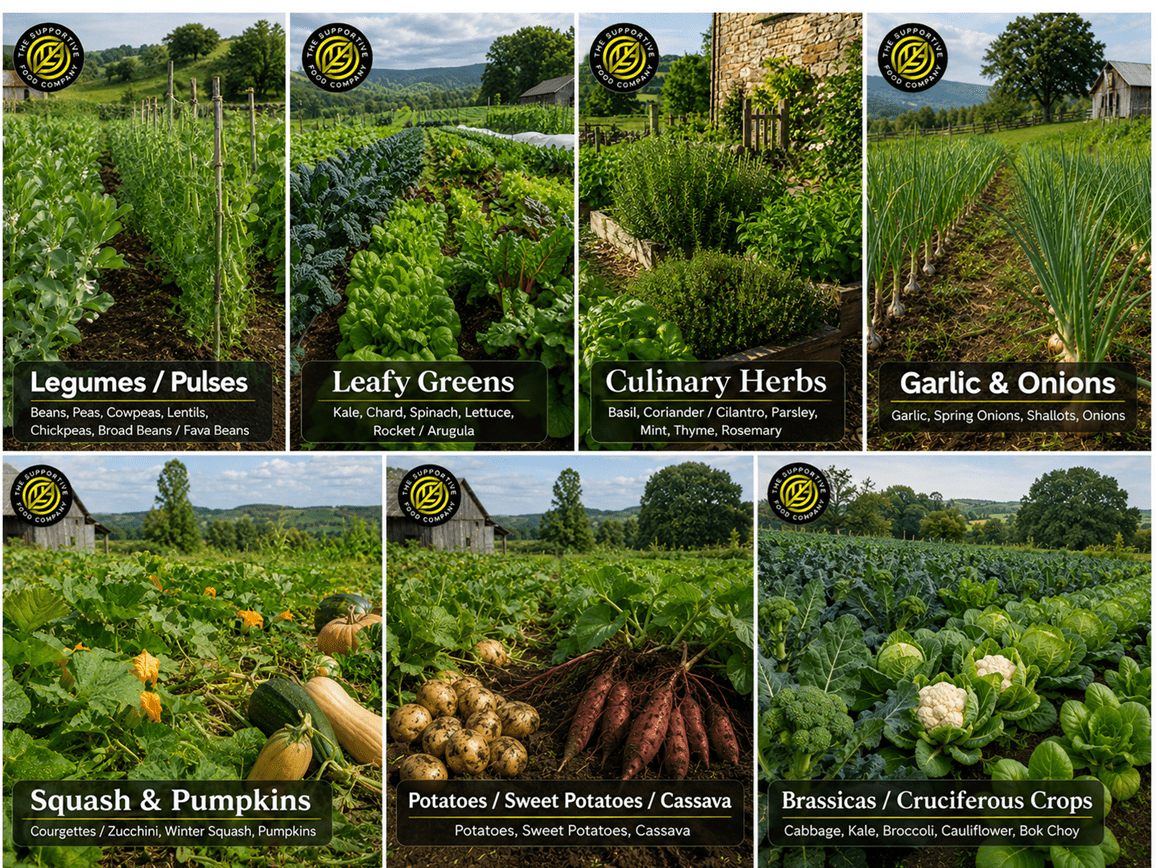
The Future Is Growing Naturally
Organic farmers today are doing much more than growing food. They’re creating healthier soils, cleaner water, safer habitats for wildlife, better conditions for animals, and more sustainable options for consumers.
They’re proving that farming can be productive, practical, and environmentally friendly all at once. As more farmers turn to organic methods, the future of agriculture. It can become more resilient and more diverse, and more in tune with nature.
Big or small, every step toward healthier soil and fewer harmful chemicals is a win. Organic farming isn’t just a passing trend. It’s a way of caring for the land while continuing the vital work of feeding the world.
Next: Organic Farming in todays food system ⇒
In this section
- Organic Farming – what is it?
- Common Organic Farming Practices
- Organic Farming in Today’s Food System
- Advantages & challenges of Organic Farming
- A Message to Farmers Using Chemical Inputs (this page)
Home | Food & Recipes | Facebook | Other sources | About us