
Skip to content
Skip to content
Menu
1 supportive food logo top
  • Search
    • Cancer
    • Dementia
    • Depression
    • Diabetes
    • Heart
    • Kidney
    • Leukemia
    • Menopause
    • Mental Health
    • Obesity
    • Parkinson’s
    • Stroke
  • Food & Health
    • When all else has failed
    • Organic: Better Choice or Myth?
    • Food Waste Solutions
    • Whole Foods Versus Processed
  • Farming
    • Why a Regenerative Farming Future Matters
    • Advantages & challenges of Organic Farming
    • Organic Farming Benefits That Matter
  • Investors
    • Our Mission
    • Small Scale Local Appeals
  • Contact
    • About us
    • Medical Sources
    • Nutritional Sources
  • JOIN (Free)
    • The main benefits of joining
1 supportive food logo top

Zeaxanthin: uses & benefits

By team2 on 22 May 20264 June 2026

Zeaxanthin

The benefits of Zeaxanthin
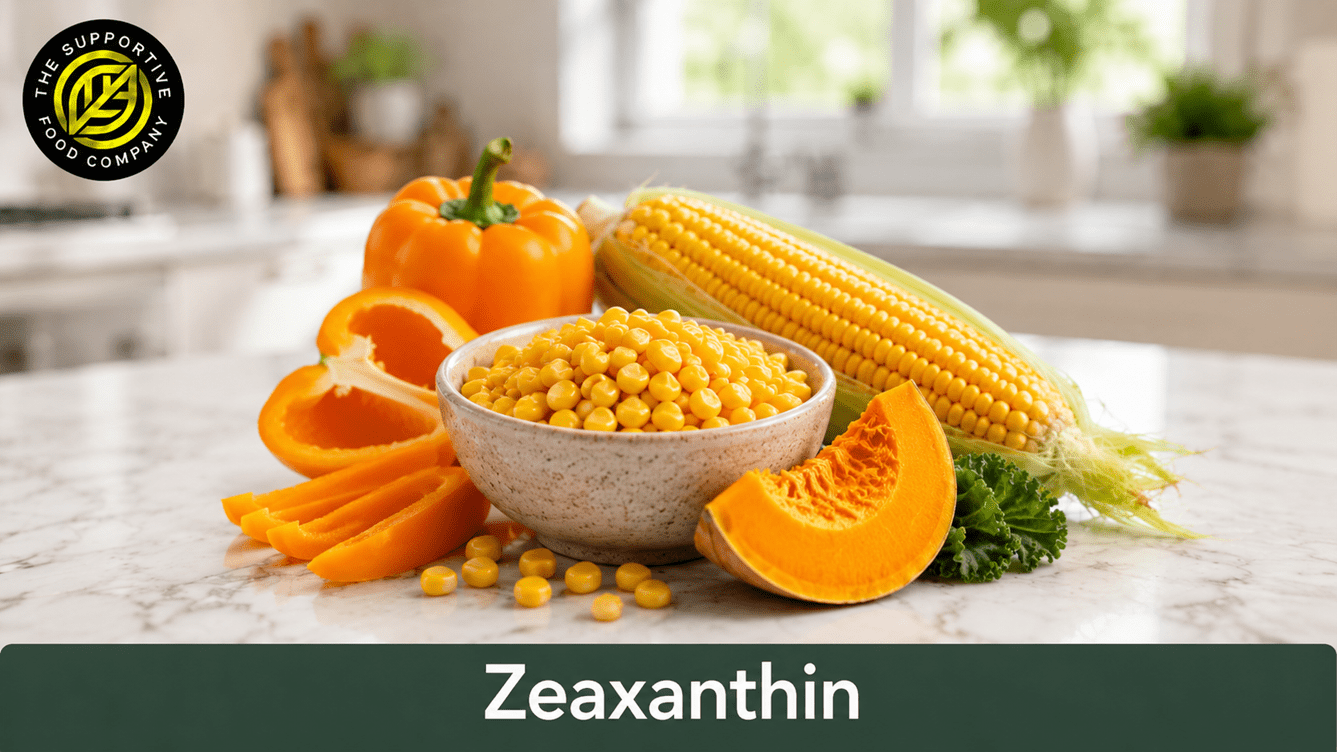
Recipes with Zeaxanthin 1 Zeaxanthin isn’t a food in its own right, it’s a yellow-orange carotenoid found in things like yellow and orange peppers, corn, egg yolks, squash, leafy greens, and some orange-colored fruits and veggies. Alongside lutein, it’s known for supporting eye health since it’s present in the macula of the eye.

In simple terms, it is a good reason to enjoy a colorful plate, especially with deep green, yellow, and orange foods. These often pack in fibre, vitamin C, potassium, folate, and other plant compounds along with carotenoids.

What dishes frequently use zeaxanthin-rich foods?

Zeaxanthin-rich foods can be enjoyed in salads, stir-fries, omelettes, soups, roasted veggies, sweetcorn dishes, pasta sauces, grain bowls, and veggie curries. Tasty examples include corn chowder, pepper stir-fry, spinach omelette, roasted squash, kale salad, and vegetable frittata.

How and why zeaxanthin can be a supportive food focus
Recipes with Zeaxanthin 2It plays a role in overall wellbeing as part of a colorful diet. Since it’s fat-soluble, pairing it with a bit of healthy fat—like olive oil, avocado, nuts, seeds, or eggs—can boost absorption.

As a Supportive Food, it highlights how plate color often reflects nutritional variety. Adding more yellow, orange, and dark green foods can guide people toward more protective, plant-rich meals.

Suggested recipes
Sweetcorn and Red Pepper Salad – Mix corn, red or orange pepper, herbs, olive oil, and lemon.
Spinach and Pepper Omelette – Cook spinach, peppers, and eggs with black pepper and herbs.
Roasted Squash Bowl – Serve roasted squash with greens, lentils, seeds, and olive oil dressing.
Kale and Corn Soup – Simmer sweetcorn, kale, onion, garlic, and vegetable stock.
Golden Vegetable Frittata – Use eggs, corn, peppers, squash, and leafy greens.


Home | Facebook | Other sources | Editors

Post navigation

Goji Berries: uses and benefits
Cruciferous Vegetables

Leave a Reply

Your email address will not be published. Required fields are marked *

search banner
the nutrition and disease connection
Ivermectin and Cancer What Does the Research Say
richest poorest nations 2
dandelion banner
zero hunger community projects that work
about founders an team
superfoods what exactly are they
depression causes symptoms supportive food
menopause symptoms
Mental Health Support
organic farming benefits that matter
full site index
1 how why the provision of clean water

Recent Posts

  • The Future of Food as Medicine Is Collective
  • Why Community Meals for Vulnerable Adults Matter
  • What Is Food as Medicine and Who Can It Help?
  • Fresh Produce Versus Supplements: What Helps?
  • Carer Meal Prep Ideas for Easier, Better Weeks
  • 12 Best Nutrient Dense Pantry Staples to Keep
  • Which Foods Support Immunity? A Practical Guide
  • A Guide to Food Insecurity and Fairer Access
  • Budget Meals for Fatigue That Keep You Going
  • Organic Versus Regenerative Farming Explained
  • What Foods Support Heart Health? A Practical Guide
  • Ivermectin and Cancer: What Does the Research Say?
  • Dandelion Root and Cancer: What Does the Research Actually Say?
  • Food Support After Hospital Discharge That Works
  • Nutrition Therapy Versus Medication: When Each Helps
  • Can Nutrition Support Recovery After Illness?
  • Best Foods for Immune Resilience Each Day
  • Meal Planning for Carers Made More Manageable
  • Can Nutrition Help Treatment Side Effects Safely?
  • Why the Farmers and Consumers Connection Matters
© 2026 SupportiveFood.com. All rights reserved. Supportive Food provides general educational information informed by healthcare, nutrition, food systems and lived professional experience. It is not a substitute for personalised medical, nutritional or professional advice.

Powered by
►
Necessary cookies enable essential site features like secure log-ins and consent preference adjustments. They do not store personal data.
None
►
Functional cookies support features like content sharing on social media, collecting feedback, and enabling third-party tools.
None
►
Analytical cookies track visitor interactions, providing insights on metrics like visitor count, bounce rate, and traffic sources.
None
►
Advertisement cookies deliver personalized ads based on your previous visits and analyze the effectiveness of ad campaigns.
None
►
Unclassified cookies are cookies that we are in the process of classifying, together with the providers of individual cookies.
None
Powered by