
Healthy Eating on a Budget That Works
The weekly food shop can feel like a quiet negotiation between health, energy and money. For many households, healthy eating on a budget is not a lifestyle trend. It is a necessity shaped by rising prices, caring responsibilities, long-term health concerns and the simple need to put decent food on the table without constant stress.
That reality deserves more than glib advice. Telling people to “just cook from scratch” ignores time poverty, fatigue, disability, transport limits and the fact that cheaper food options are often the least nourishing. Still, there are practical ways to eat well for less, and they matter because good nutrition supports energy, immune function, blood sugar balance, heart health and recovery. It should not be treated as a luxury.
Why healthy eating on a budget is harder than it should be
 Food costs do not exist in isolation. If you are living with cancer, diabetes, menopause symptoms, dementia in the family, or another chronic condition, food choices can carry real medical and emotional weight. The cheapest calories are not always the best value when they leave someone undernourished, hungrier sooner, or struggling to manage symptoms.
There is also a structural problem. Areas with fewer independent shops and poorer transport links often offer less fresh produce and more highly processed convenience foods. People working irregular hours may rely on what is open late.
Carers may shop quickly and choose what can be prepared fast. So while budgeting skills help, fairness in the food system matters too. Access to nourishing food is a public health issue, not simply a personal budgeting test.
Start with nourishment, not perfection
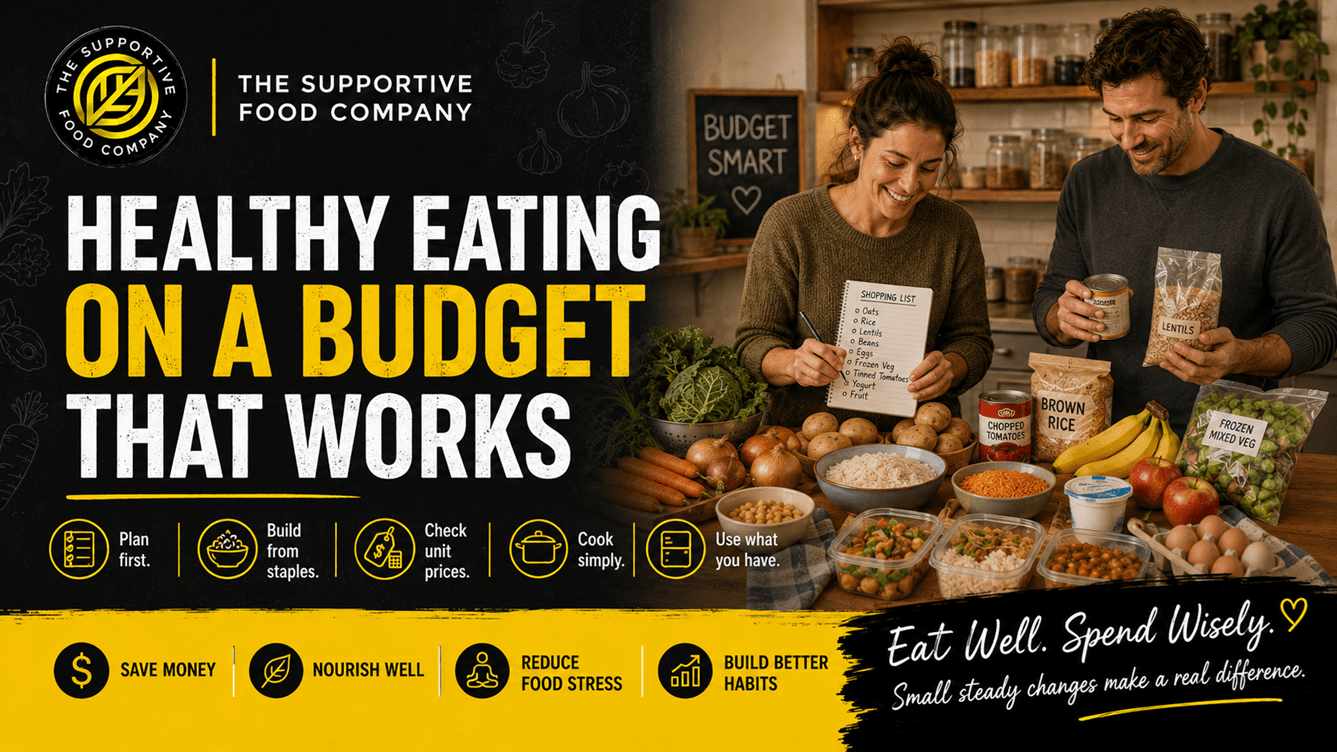
 A healthy budget shop does not need to look like a wellness magazine spread. It needs to cover the basics reliably. That usually means building meals around affordable staples such as oats, potatoes, rice, pasta, lentils, beans, eggs, tinned fish, yoghurt, frozen vegetables and seasonal fruit and veg.
These foods are often cost-effective because they are versatile, filling and nutritionally useful. Oats can support heart health and keep breakfast inexpensive. Beans and lentils provide fibre and protein. Eggs are one of the more affordable protein sources for many households. Frozen vegetables are usually picked at a good stage of freshness and can reduce waste because you only use what you need.
Perfection can become expensive very quickly. If a fully organic, specialist or branded basket means buying less food overall, it may not be the best option for your household. It depends on your budget, your health needs and local availability. A realistic, repeatable routine is better than an idealised plan that collapses after one week.
How to shop for healthy eating on a budget
 The strongest savings usually come before you reach the till. A short plan based on what you already have can change the whole week. Check cupboards, fridge and freezer first, then build a few meals around ingredients that need using. This helps avoid buying duplicates and wasting fresh food.
It also helps to think in ingredients rather than isolated products. A bag of potatoes can become baked potatoes, soup, mash and a traybake. A large pot of plain yoghurt can work for breakfast, lunch toppings and simple sauces. One cooked chicken, if you eat meat, may stretch across several meals when paired with pulses, grains or vegetables instead of being used all at once.
Own-brand basics are often sensible choices, especially for staples like oats, tinned tomatoes, beans, rice and frozen produce. Nutrition is not automatically better because packaging is more polished. In some cases, branded items may have a better taste or texture that suits your family, but for many cupboard basics the difference is modest.
Unit pricing matters more than headline offers. Multi-buys only save money if you will genuinely use the food. Fresh produce on promotion is poor value if half of it spoils before the weekend. The cheaper option is the one you eat, not the one that looks good in theory.
Budget-friendly foods with real nutritional value
 When money is tight, it helps to know which foods consistently give a good return in both nourishment and cost. Porridge oats, wholemeal bread, brown or white rice, pasta, potatoes and lentils are dependable foundations. Tinned tomatoes, chickpeas and beans can become soups, stews, curries and pasta sauces with very little effort.
For protein, eggs remain useful for many people, as do milk, natural yoghurt, peanut butter, tinned sardines, mackerel or pilchards, and baked beans with a lower sugar and salt profile if available. For households managing heart health, oily fish can be a practical way to include omega-3 fats without paying for fresh fillets.
Vegetables do not need to be expensive to count. Carrots, cabbage, onions, frozen peas, spinach and mixed vegetables often go a long way. Seasonal produce can help, but frozen and tinned options are often the steadier choice when budgets are tight. Fruit such as bananas, apples and satsumas is often more affordable than berries and pre-prepared fruit pots.
If you are managing a medical condition, your needs may vary. Someone with swallowing difficulties, reduced appetite or treatment-related nausea may need softer, higher-energy or simpler foods. In those cases, the “best” budget food plan may look different, and that is not failure. It is responding to real health needs.
Cooking in ways that save money, time and energy
 Cooking from scratch can reduce costs, but only if it fits your life. A person juggling work, caring and appointments may not have the capacity for elaborate batch cooking. Keep the method as manageable as possible.
One-pot meals are often the most useful. Soups, stews, dhal, chilli, bean casseroles and traybakes can stretch ingredients, use up leftovers and freeze well. These meals also make it easier to increase vegetables and pulses without raising costs too sharply. If a meal can be eaten again the next day, it saves both money and effort.
Waste reduction is one of the quietest ways to protect a food budget. Slightly tired vegetables can be turned into soup or pasta sauce. Stale bread can become toast, breadcrumbs or bread pudding. Leftover rice, used safely and cooled quickly, can become a quick fried rice. Small portions of leftover veg can be folded into omelettes or jacket potato fillings.
Energy costs matter too. Slow cookers, pressure cookers, microwaves and air fryers can help some households reduce cooking costs, but only if buying them is realistic. There is no moral virtue in owning specific kit. Use what you have, and choose methods that are practical for your energy level and routine.
The trade-offs people rarely say out loud
 Healthy eating on a budget is often presented as if everyone has equal access to time, storage, cooking facilities and nearby shops. They do not. Someone in temporary accommodation or a shared kitchen may rely more on shelf-stable foods. Someone with chronic fatigue may need convenience options. Someone without a freezer cannot batch cook in the same way.
That is why compassion matters. A bagged salad, a tin of soup, a microwave pouch of grains or pre-chopped vegetables may cost more per portion, but they can still be the right decision if they make eating possible. The cheapest route is not always the most humane or sustainable one.
There is also a wider responsibility here. Communities, producers, health professionals and policy makers all have a role in making nourishing food more accessible. Supportive Food Directory exists in that spirit, recognising that food justice, farming resilience and public health are connected.
A steadier way forward
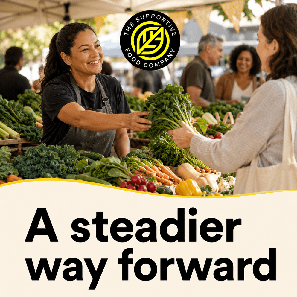 If you want to improve your food budget without sacrificing health, start small and repeatable. Choose three affordable breakfasts, three lunches and four evening meals that your household will genuinely eat. Build from staples, keep a few freezer and cupboard standbys, and aim for progress rather than purity.
Good food should not be reserved for those with spare money, spare time and a well-stocked local deli. It should be ordinary, reachable and dignified.
A budget may shape what is possible this week, but with practical planning and a fairer view of what health really requires, nourishing meals can still have a place at the table.
Home | Food | Facebook | Other sources | Editors