Notes for Community Counsellors and those they help.
A view from both sides:
- What services to provide.
- What help to expect.
- The essential need for open honesty
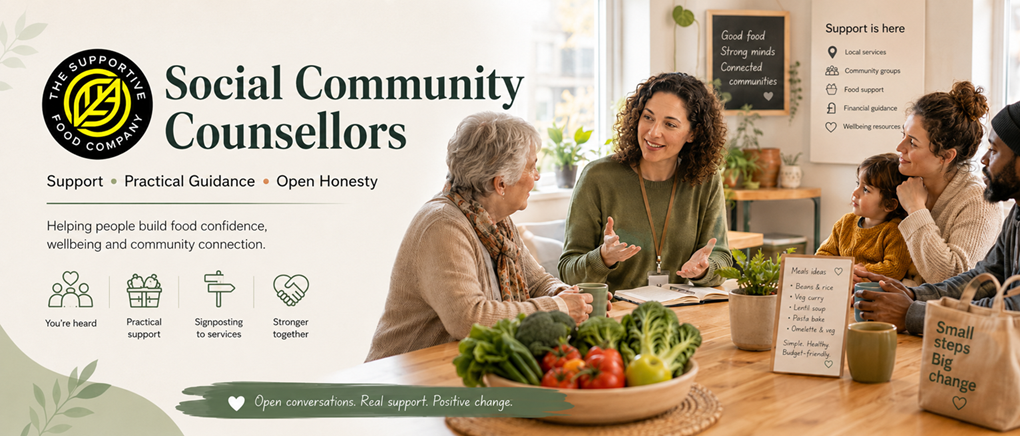
A Social Community Counselling service offer supportive non-judgemental conversations about food, wellbeing and everyday barriers to healthy living. They help people build confidence, understand reliable health information, set realistic goals and connect with appropriate community or professional support.
Scope statement
A Social Community Counselling service does not diagnose, treat medical conditions, prescribe diets or supplements, or replace advice from a doctor, registered dietitian, registered nutritionist, mental health professional or other qualified clinicians. Where a concern appears to need specialist support, they will encourage referral to an appropriate professional service.
Confidentiality statement
They respect your privacy and handle personal information carefully. There are limits to confidentiality where there is a serious risk of harm, abuse, neglect, safeguarding concern or legal requirement to share information.
Anti-shame statement
Good Counsellors do not use shame, fear or blame. Food choices are affected by money, culture, stress, health, family, access, time and confidence. Their aim is to support realistic steps that fit real life.
- One-to-one food confidence sessions.
- Community “eat well on a budget” workshops.
- Healthy cooking demonstrations with allergen awareness.
- Food label reading sessions.
- Community meals with social connection.
- Support groups for carers, older adults or isolated people.
- Myth-busting sessions on detoxes, fad diets and supplement claims.
- Referral support for people needing dietetic, medical or mental health help.
- Directory of local food banks, community kitchens, growing projects and social groups.
- Health literacy pages using trusted public health sources.
Their role can reduce isolation, improve food confidence, support behaviour change, challenge misinformation, connect people to services and make health support more accessible. Done badly, it can mislead people, delay medical care, increase shame, breach privacy or create legal risk.
The safest standard is simple: kind, evidence-informed, stay within scope, protect people
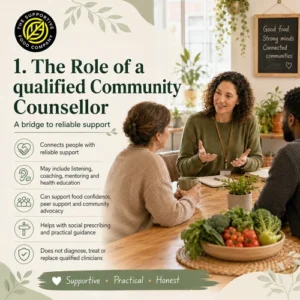 1. The Role of a qualified Community Counsellor
This role is best viewed as a bridge between people and reliable support. It may include elements of informal counselling, coaching, mentoring, health education, social prescribing, food confidence, peer support and community advocacy.
However, unless the person is appropriately qualified and registered, it should not be presented as clinical counselling, psychotherapy, dietetics, medical nutrition therapy, diagnosis or treatment.
 2. The safest and most useful version of this role is:
- Person-centred: listening to what matters to the individual rather than forcing a fixed diet or lifestyle plan.
- Evidence-informed: sharing reliable public health information and clearly separating evidence from personal opinion.
- Community-focused: helping people access food, social support, cooking skills, local services and trusted professionals.
- Non-clinical unless qualified: avoiding diagnosis, treatment, prescribing, clinical diet plans or claims to cure disease.
- Ethical and transparent: working within competence, respecting confidentiality, safeguarding vulnerable people and avoiding conflicts of interest.
2.1 Improve health literacy
Many people are confused by conflicting messages about food, supplements, weight loss, fasting, “detoxing”, ultra-processed foods, gut health, blood sugar, inflammation and “miracle” diets. A good Social Community Counsellor can help people understand the basics of balanced eating, reliable sources, food labels and realistic lifestyle change.
2.2 Reduce isolation and build social connection
Food and health are deeply social. People may struggle with loneliness, grief, family pressure, low confidence, cultural disconnection, poverty, shame or stigma. A community counsellor can create safe spaces where people feel heard, respected and less alone.
2.3 Help people turn advice into real-life action
Many people already know they “should eat better”, but face barriers such as cost, time, cooking skills, disability, caring responsibilities, low mood, housing issues, shift work or lack of support. A community counsellor can help people set small, realistic goals, plan next steps and build confidence.
2.4 Connect people to the right services
A major benefit of the role is signposting. This can include referral or encouragement to contact a GP, registered dietitian, registered nutritionist, mental health professional, social prescribing link worker, food bank, cooking class, welfare advice service, debt advice service, community garden, exercise group or safeguarding service.
2.5 Promote prevention and early support
Community-level support can help people act earlier, before problems become more serious. This may include supporting general healthy eating, confidence with cooking, awareness of food insecurity, community meals, family food routines, hydration, sleep habits and social support.
2.6 Make health and nutrition support more inclusive
Good community work recognises that people do not all have the same resources, culture, body type, health history, income, language, cooking facilities or access to shops. A strong service avoids judgement and adapts support to the person’s real life.
- Listening sessions: offering a confidential, respectful space for people to talk about food, health worries, motivation, habits, family patterns or barriers to change.
- Basic food and wellbeing education: explaining general healthy eating principles using trusted public health guidance.
- Behaviour-change support: helping people set realistic goals, make action plans, review progress and adjust gently.
- Food confidence support: helping with shopping lists, simple recipes, batch cooking, budgeting, food storage and reducing food waste.
- Community navigation: helping people find local services, activities, groups and professionals.
- Group sessions: facilitating peer support groups, cooking confidence groups, community meals, wellbeing circles or myth-busting workshops.
- Advocacy and inclusion: helping services understand community barriers such as food poverty, language, disability, transport, culture or digital exclusion.
- Referral and escalation: recognising when a person needs a qualified health, nutrition, mental health, safeguarding or emergency professional.
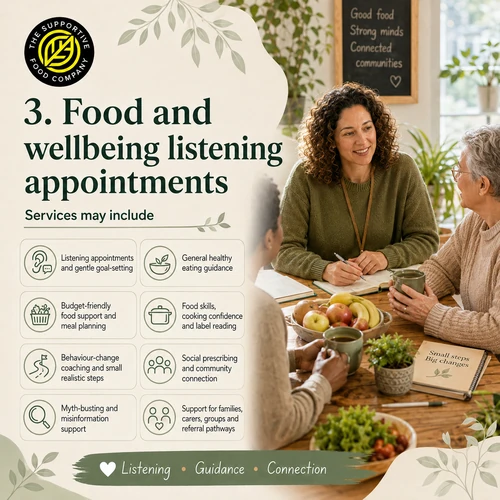 3. Food and wellbeing listening appointments
A structured but gentle conversation about the person’s current situation, goals, worries and barriers. The counsellor should avoid diagnosing or creating clinical treatment plans. The aim is to understand what matters to the person and agree safe next steps.
3.2 General healthy eating guidance
This may include general education on fruit and vegetables, fibre, protein, hydration, balanced meals, reducing excess salt, sugar or saturated fat, and choosing affordable nourishing foods. Advice should be general and based on recognised public health guidance.
3.3 Budget-friendly food support
Many people need practical food support more than abstract nutrition theory. Useful services include low-cost meal ideas, shopping on a budget, using frozen and tinned foods, cooking with limited equipment, planning meals around food bank parcels, and reducing waste.
3.4 Food skills and cooking confidence
Workshops can cover basic cooking, safe food storage, simple family meals, batch cooking, using leftovers, reading labels and preparing balanced meals without shame or perfectionism.
3.5 Behaviour-change coaching
Safe behaviour-change support may include goal-setting, identifying obstacles, planning small steps, building routines, reviewing progress and celebrating realistic improvements. This should be collaborative rather than controlling.
3.6 Social prescribing and community connection
The counsellor can help people access community gardens, walking groups, befriending services, welfare advice, local charities, faith/community groups, food co-ops, exercise groups or mental health support services.
3.7 Myth-busting and misinformation support
A valuable service is helping people question exaggerated claims about detoxes, “superfoods”, miracle cures, extreme diets, supplement promises, anti-medical content or fear-based nutrition messaging.
3.8 Support for families and carers
Community counsellors can support families with meal routines, lunchbox ideas, cooking together, reducing mealtime conflict, supporting older relatives and helping carers look after their own wellbeing.
3.9 Group support and peer circles
Groups can reduce shame and isolation. Examples include “Cooking on a Budget”, “Food and Mood Support Circle”, “Healthy Eating After Diagnosis: Where to Find Qualified Help”, “Community Lunch and Learn”, or “Food Confidence for Carers”.
3.10 Referral pathway support
One of the most important services is knowing when to refer. The counsellor can help someone prepare questions for a GP, dietitian, nutritionist or mental health professional, but should not replace those professionals.
| Area | Usually Suitable for a Social Community Counsellor | Refer to a Qualified Professional |
|---|---|---|
| General healthy eating | Sharing public health guidance, simple balanced meal ideas, food confidence and budgeting support. | Complex nutrition needs, medical conditions, pregnancy complications, allergies, eating disorders or clinical diets. |
| Weight concerns | Non-judgemental support around habits, wellbeing, confidence, movement, sleep, food environment and stigma. | Rapid weight loss, unexplained weight change, obesity-related complications, weight-loss medication, surgery, eating disorder risk or child weight concerns. |
| Food and mood | Encouraging routine, hydration, regular meals, social connection and referral to mental health support. | Depression, anxiety, trauma, self-harm, suicidal thoughts, medication issues or severe distress. |
| Long-term conditions | Helping people find reliable information and prepare for appointments. | Diabetes, kidney disease, heart disease, cancer, gastrointestinal disease, liver disease, eating disorders or any condition needing medical nutrition therapy. |
| Supplements | Encouraging people to check evidence, safety and interactions with a pharmacist, GP or dietitian. | Recommending doses, treating deficiency, managing interactions, pregnancy supplementation, children’s supplements or disease-related supplement use. |
| Community support | Connecting people to food banks, cooking classes, social groups, benefits advice and local services. | Safeguarding concerns, abuse, neglect, crisis, homelessness risk, serious mental health concerns or urgent medical need. |
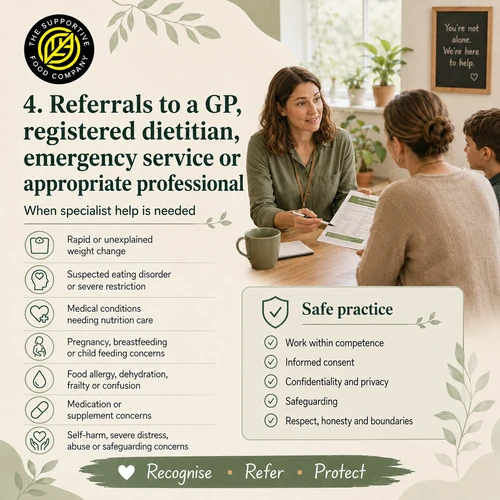 4. Referrals to a GP, registered dietitian, emergency service or appropriate professional if someone reports:
- Unexplained or rapid weight loss or weight gain.
- Suspected eating disorder, bingeing, purging, severe restriction, fear of eating, compulsive exercise or body-image distress.
- Diabetes, kidney disease, liver disease, cancer, heart disease, inflammatory bowel disease, coeliac disease, swallowing problems or other medical conditions requiring nutrition care.
- Pregnancy, breastfeeding or infant/child feeding concerns needing specialist advice.
- Food allergy, anaphylaxis risk or suspected intolerance requiring proper assessment.
- Signs of malnutrition, dehydration, frailty, dizziness, fainting or confusion.
- Medication concerns, supplement interactions or stopping prescribed treatment.
- Self-harm, suicidal thoughts, severe anxiety, psychosis, trauma crisis or abuse.
- Safeguarding concerns involving children, adults at risk, domestic abuse, neglect or exploitation.
- Do not diagnose. Avoid saying someone has a disease, deficiency, mental health condition, allergy, intolerance or eating disorder unless you are qualified and authorised to assess this.
- Do not treat medical conditions. Avoid claiming to treat diabetes, obesity, cancer, arthritis, depression, anxiety, IBS, autoimmune disease, hormone problems or any other condition.
- Do not provide medical nutrition therapy unless qualified. Therapeutic diets for medical conditions should be handled by registered dietitians or appropriately qualified clinicians.
- Do not prescribe supplements. Avoid recommending supplement doses, especially for children, pregnancy, older adults, people taking medication or people with medical conditions.
- Do not make miracle claims. Avoid “cure”, “reverse”, “detox”, “guaranteed”, “clinically proven” or “rapid weight loss” claims unless they are legally permitted, evidence-based and properly substantiated.
- Do not shame people. Avoid moral language such as “good foods”, “bad foods”, “clean eating”, “cheat meals” or blaming people for health conditions.
- Do not create dependency. The aim is to build confidence and self-efficacy, not make people reliant on one adviser.
- Do not blur personal and professional boundaries. Avoid dual relationships, inappropriate contact, pressure to disclose, favouritism or emotional over-involvement.
- Do not exploit trust for sales. Be extremely cautious with affiliate links, supplement sales, paid product recommendations, MLM schemes or commissions.
- Do not ignore safeguarding. Confidentiality has limits where there is risk of serious harm, abuse, neglect or danger to children or adults at risk.
4.1 Work within competence
Be honest about training, qualifications, registration, experience and limitations. Do not use titles that imply a protected or regulated role unless entitled to do so.
4.2 Informed consent
Before support begins, explain what the service is, what it is not, how records are kept, what confidentiality means, when information may need to be shared, any fees, and how people can complain or stop using the service.
4.3 Confidentiality and privacy
People may share sensitive information about health, food insecurity, trauma, finances, disability, family conflict or mental health. Records should be minimal, secure, accurate and only shared where there is a lawful and ethical reason.
4.4 Safeguarding
Anyone working with children, young people or adults at risk should have safeguarding training, safer recruitment checks where required, a written safeguarding policy, a named safeguarding lead or adviser, and a clear process for reporting concerns.
4.5 Respect and non-discrimination
Food is connected to culture, religion, disability, income, migration, family, body image and identity. A respectful service adapts advice to the person and avoids one-size-fits-all assumptions.
4.6 Evidence and honesty
Share reliable sources and admit uncertainty. Avoid overstating research, cherry-picking studies, promoting personal theories as fact, or using fear to motivate change.
4.7 Professional boundaries
Set clear session times, communication routes, cancellation policies, crisis limits and referral routes. Avoid informal “always available” support that can become unsafe for both the client and the counsellor.
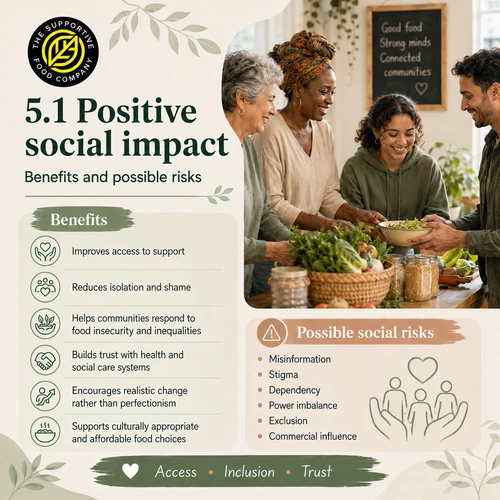
5.1 Positive social impact
- Improves access to support for people who may not easily use formal services.
- Reduces isolation and shame around food, body image and health.
- Helps communities respond to food insecurity and health inequalities.
- Builds trust between communities and health/social care systems.
- Encourages practical, realistic changes rather than perfectionism.
- Supports culturally appropriate and affordable food choices.
5.2 Possible social risks
- Misinformation: poor advice can spread quickly in communities and online.
- Stigma: careless language can increase shame about weight, poverty, disability, culture or illness.
- Dependency: people may rely on unqualified support instead of getting clinical help.
- Power imbalance: vulnerable people may feel pressured to follow advice, buy products or disclose personal information.
- Exclusion: services may unintentionally ignore people with disabilities, language needs, neurodivergence, cultural differences or low digital access.
- Commercial influence: supplement sales, affiliate marketing and paid endorsements can undermine trust.
 6. Professional titles and scope of practice
Titles and legal rules vary by country. In the UK, “dietitian” is a legally regulated/protected professional title, while nutrition and counselling titles can involve voluntary registers and professional bodies depending on the role. A Social Community Counsellor should not imply they are a dietitian, therapist, psychologist, doctor, nurse or registered nutritionist unless they genuinely hold the relevant qualification, registration and insurance.
6.2 Medical advice and liability
If a counsellor gives advice that appears to diagnose, treat or manage a health condition, they may create legal risk, especially if harm results. Clear disclaimers help, but disclaimers do not protect unsafe practice. The safest approach is to keep support general, document boundaries, and refer clinical matters to qualified professionals.
6.3 Advertising and health claims
Health, nutrition, supplement and weight-loss claims are regulated in many jurisdictions. Claims should be truthful, not misleading and supported by appropriate evidence. Avoid claims such as “cures inflammation”, “reverses diabetes”, “balances hormones”, “detoxes the liver”, “guaranteed fat loss” or “treats anxiety naturally” unless legally permitted and properly substantiated.
6.4 Data protection and confidentiality
Information about health is often treated as highly sensitive personal data. Services should have a privacy notice, secure record-keeping, data minimisation, retention limits, consent processes and clear rules about when information may be shared.
6.5 Safeguarding and duty of care
Services working with children, young people, families or adults at risk need safeguarding procedures. This includes recognising abuse or neglect, knowing when confidentiality must be broken, keeping safe records, and reporting concerns to the correct authority or safeguarding lead.
6.6 Insurance and complaints
Practitioners should have appropriate professional indemnity/public liability insurance for the exact services offered. A simple complaints process should be available so people can raise concerns safely.
6.7 Online and cross-border work
Online support can cross legal borders. A counsellor in one country may be speaking to someone in another country with different rules on counselling, nutrition, telehealth, data protection, safeguarding and liability. Online services should define where they operate and what support they can and cannot provide.
6.8 Food handling and events
If the service provides meals, cooking demonstrations or food samples, food hygiene, allergen information, venue safety and insurance requirements may apply.
- Define the role clearly: “community wellbeing and food support”, not medical nutrition therapy unless qualified.
- Create a scope-of-practice document: list what is offered, what is not offered, and when referral is required.
- Use an intake form: collect only necessary information and include consent, privacy and emergency contact information where appropriate.
- Use a referral directory: GP, dietitian, registered nutritionist, mental health support, crisis lines, social prescribing, food banks, safeguarding, debt advice and local charities.
- Keep records safely: brief, factual, secure and proportionate.
- Have supervision: regular supervision or mentoring helps maintain boundaries and quality.
- Train in safeguarding: especially when working with children, families, older adults, disabled people or vulnerable groups.
- Review all website claims: remove unsupported health, disease, supplement or weight-loss claims.
- Declare conflicts of interest: especially product sales, sponsorships, affiliate links or paid referrals.
- Evaluate outcomes: track safe measures such as confidence, knowledge, social connection, service access and goal progress, rather than promising clinical outcomes.
⇒ Link to nutrition resources for carers