
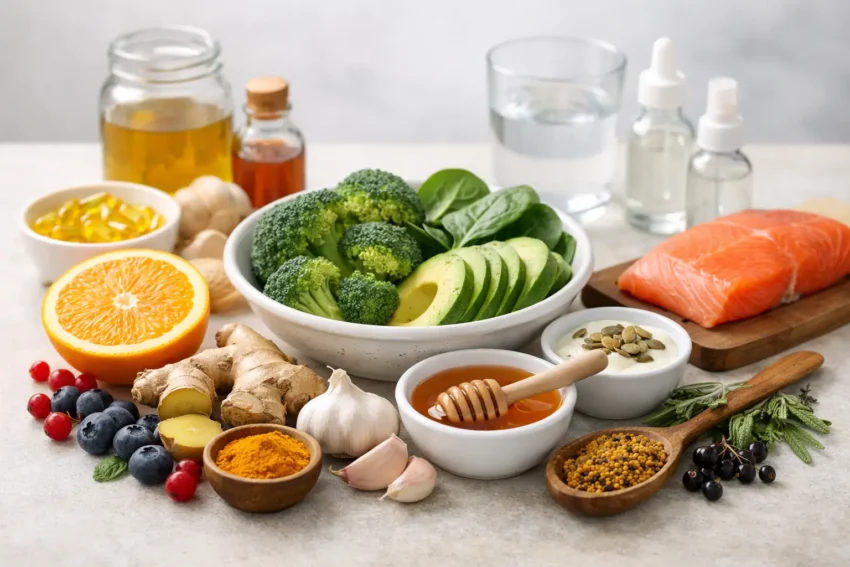
A punnet of berries or a bag of oranges cannot make someone immune to illness. Yet asking which foods support immunity is still worthwhile, particularly when budgets are tight, caring responsibilities are heavy, or illness has changed the way eating feels. Food gives the immune system the energy, protein, vitamins and minerals it needs to do its everyday work. The aim is not a miracle ingredient. It is regular, nourishing food that is accessible, enjoyable and suited to the person in front of you.
For people living with cancer, diabetes, heart disease or another long-term condition, individual needs may differ. Treatment, medication, swallowing difficulties, appetite changes and kidney problems can all affect food choices. This guidance is a practical starting point, not a substitute for advice from a GP, registered dietitian or specialist clinical team.
Which foods support immunity best?
Immune cells are constantly being made, repaired and directed around the body. That requires enough overall food, not simply a high-dose vitamin. Restrictive diets, skipped meals and long periods without enough protein or energy can leave the body with fewer resources for recovery.
The strongest pattern is a varied diet built around vegetables and fruit, beans and pulses, wholegrains, protein-rich foods and unsaturated fats. It is less glamorous than a supplement advert, but it is also more realistic. Different foods bring different nutrients, and eating a range over the week matters more than eating the same fashionable food every day.
Colourful vegetables and fruit
Vegetables and fruit provide vitamin C, folate, carotenoids and plant compounds that support normal cell function. Vitamin C contributes to normal immune-system function, but more is not always better: the body does not store unlimited amounts, and mega-dose supplements can cause side effects.
Peppers, broccoli, cabbage, kale, tomatoes, peas, carrots, oranges, kiwi fruit, berries and blackcurrants are all useful choices. Fresh is not the only option. Frozen vegetables and fruit are often good value, last longer and reduce waste. Tinned tomatoes, tinned fruit in juice, and lower-salt vegetable soups can also help when preparation is difficult.
Try adding a handful of frozen spinach to pasta sauce, keeping easy-peel fruit within reach, or building a meal around a hearty vegetable soup with bread and beans. Small, repeatable habits usually serve health better than ambitious plans that are impossible to sustain.
Beans, lentils and other protein foods
Protein is essential for making antibodies and immune cells. Many people think first of meat, but beans, lentils, chickpeas and peas are affordable sources of protein as well as fibre, iron, zinc and folate. They can stretch a meal, support gut health and make food budgets go further.
Eggs, yoghurt, milk, fish, poultry, tofu, nuts and seeds can also play a valuable part. Oily fish such as sardines, mackerel and salmon provides protein and omega-3 fats, while fortified plant alternatives can be helpful for people avoiding dairy. Check the label for calcium, iodine and vitamin B12 where relevant.
If appetite is low, eating little and often may be more manageable than facing a large plate. A yoghurt with oats, scrambled egg on toast, hummus with pitta, or lentil soup can offer more nourishment than tea and biscuits alone. For anyone losing weight without trying, especially during treatment or recovery, seeking clinical advice early is important.
Wholegrains, nuts and seeds
Wholemeal bread, porridge oats, brown rice, wholewheat pasta and high-fibre cereals provide energy and fibre. Fibre feeds the diverse community of microbes in the gut, which has a close relationship with immune function. It is not necessary to chase a perfect gut microbiome. The practical message is to include a range of fibre-rich plant foods when tolerated.
Nuts and seeds contribute zinc, vitamin E, selenium, healthy fats and protein. A small handful of unsalted nuts, or a spoonful of seeds scattered over porridge or yoghurt, can be a simple addition. They are energy-dense, so portions matter for some people, but they can be especially useful when someone needs more nourishment in a small volume of food.
Brazil nuts are often promoted for selenium. They do contain a great deal, which is precisely why handfuls are not needed. One or two occasionally is plenty for most people. Variety is safer than relying heavily on one food.
Fermented foods and everyday gut support
Live yoghurt, kefir, some cheeses and fermented vegetables may help support a healthy gut environment, although research is still developing and products vary greatly. They are not required for good immunity, and they are not suitable for everyone. People with severely weakened immune systems should ask their clinical team before using probiotic supplements or unpasteurised fermented foods.
A more dependable foundation is ordinary fibre from beans, vegetables, fruit and wholegrains, alongside enough fluids. Constipation, diarrhoea and bloating are common concerns during illness and treatment, so increase fibre gradually and seek personalised support if symptoms persist.
Vitamin D, sunlight and food realities
Vitamin D helps regulate immune function, but it is difficult to obtain enough from food alone in the UK. Oily fish, eggs, fortified spreads, fortified breakfast cereals and fortified milks contribute some, but sunlight remains a major source for many people.
During autumn and winter, UK public-health advice commonly recommends that adults and children over one consider a daily vitamin D supplement. Some people may need one year-round, including those who spend little time outdoors, cover most of their skin outside, have darker skin, or live in care settings. A pharmacist, GP or dietitian can help with the right approach, particularly if there is a medical condition or medication to consider.
This is a useful example of why food-first advice needs honesty. Good food is powerful, but it cannot solve every nutritional gap created by geography, poverty, disability, treatment or limited access to daylight.
Food safety matters when immunity is low
For someone whose immunity is suppressed by chemotherapy, a transplant, high-dose steroids or certain conditions, food safety can be as important as food quality. Advice varies by treatment and hospital, so follow the instructions from the clinical team.
Common precautions include washing hands, keeping raw and ready-to-eat foods separate, cooking food thoroughly, chilling leftovers promptly and respecting use-by dates. Avoiding unpasteurised milk and cheeses made from it, raw or lightly cooked eggs where safety is uncertain, and undercooked meat or shellfish may be advised for some people. This is not about fear. It is about reducing avoidable risk when the body has less capacity to fight infection.
Immunity is also shaped by access and routine
The question of which foods support immunity cannot be separated from who can afford, find, store and cook them. Advice that assumes everyone has a well-stocked kitchen, spare time and a nearby supermarket leaves too many people behind. Food insecurity itself places strain on health, and no one should be blamed for making the best choices they can within impossible circumstances.
A supportive cupboard can begin with oats, tinned beans, lentils, tinned fish, peanut butter, wholemeal bread, long-life milk or fortified alternatives, tinned tomatoes and frozen vegetables. Community fridges, food co-operatives, local growers, food banks and mutual-aid groups can be lifelines, not signs of failure. We need systems that make nourishing food ordinary and affordable, from fair support for farmers to dignified local food access.
Supplements can have a place when a deficiency is diagnosed or a professional recommends them. They should not be marketed as a replacement for meals, medication or medical care. Be particularly cautious with high-dose products and herbal remedies during cancer treatment, pregnancy or when taking prescribed medicines, as interactions are possible.
A bowl of porridge, a tin of beans turned into supper, fruit shared with a neighbour, or a warm meal prepared for a carer can all be acts of practical health. Feeding ourselves and one another well is not a cure-all. It is a steady, collective way of giving bodies and communities more of what they need to cope.