
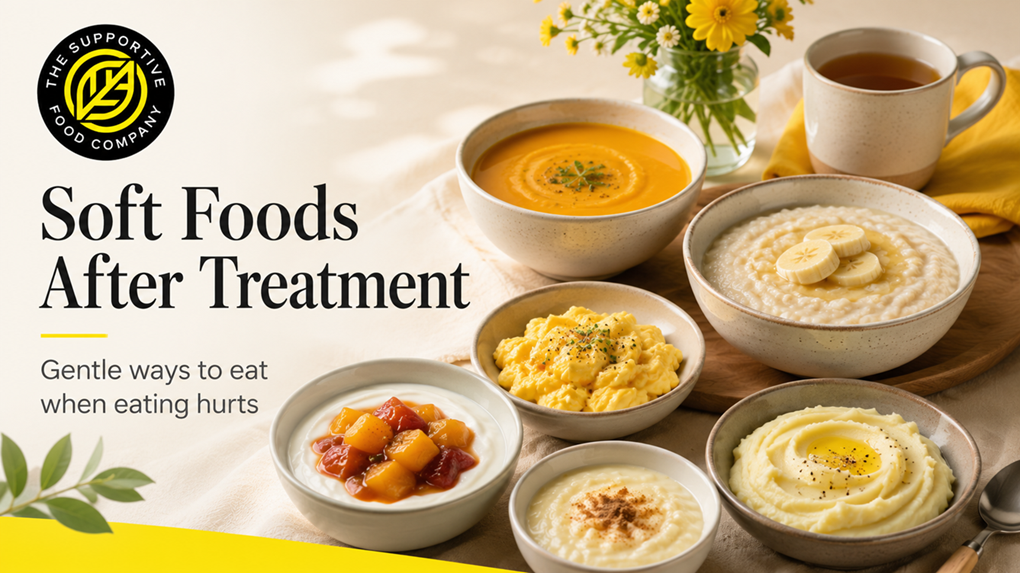
Soft Foods After Treatment: Gentle Ways to Eat When Eating Hurts
When eating hurts, food can stop feeling comforting and start feeling like something you simply have to get through. That can be upsetting, especially when meals used to bring pleasure, routine or connection.
The right soft foods after treatment can make a real difference. They can help make eating feel gentler, support your strength, and bring back a small sense of normality at a time when your body may be asking for extra care.
This is not about perfect meals. It is not about forcing down large portions when your mouth is sore, your throat feels tight, or your appetite has disappeared. It is about making nourishment more manageable, one small meal or snack at a time.
For many people recovering from cancer treatment, dental procedures, surgery or other medical care, softer textures can be one of the safest and kindest places to begin.
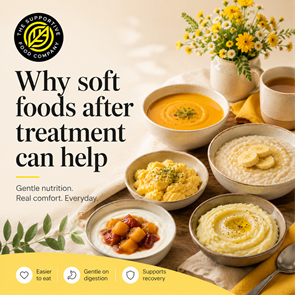
Why soft foods after treatment can help
Treatment can affect eating in many different ways. You may be dealing with mouth ulcers, dry mouth, tender gums, jaw pain, swallowing difficulty, nausea, taste changes or tiredness that makes chewing feel like hard work.
Soft foods can help because they ask less of the mouth and throat. They are usually easier to chew, easier to swallow and less likely to scrape or irritate sore areas.
They can also help you keep eating when tougher textures feel like too much. This matters because when eating becomes difficult, it is very easy to eat less overall. Over time, that can lead to weight loss, weakness and slower recovery.
The aim is not just to choose food that is soft. It is to choose food that gives you enough nourishment in a form your body can tolerate.
Everyone is different. A cool yoghurt may feel soothing for one person and uncomfortable for another. Someone recovering from surgery may need soft foods that are also rich in protein. Someone with a sore mouth may find acidic fruit difficult, even when it is blended.
If you have been given advice by a doctor, dietitian, dentist, speech and language therapist or hospital team, always follow that guidance first.
What makes a food genuinely soft?
A genuinely soft food should need very little chewing. It should move easily around the mouth and should not scrape, crumble, stick or feel dry.
Moisture matters just as much as texture. Some foods sound soft but can still be difficult. Dry mashed potato, overcooked meat, crumbly biscuits or soft bread that clumps in the mouth may be uncomfortable when your mouth or throat is sensitive.
The most helpful soft foods are often:
- smooth
- moist
- mild in flavour
- easy to swallow
- simple to adjust with extra liquid or sauce
Good examples include porridge loosened with milk, scrambled eggs cooked until just set, blended soups, stewed fruit, yoghurt, rice pudding, lentil dhal, cottage pie with plenty of gravy, and flaky fish with a soft sauce.
You can often make food easier by adding a little extra moisture. Milk, stock, gravy, custard, yoghurt, cream, olive oil or a smooth sauce can all help soften the texture.
Temperature can also make a difference. Some people find cool foods soothing, especially with mouth ulcers or inflammation. Others prefer warm foods because cold foods trigger sensitivity.
There is no need to push through discomfort. If a food is technically soft but still causes pain, it may simply not be right for you today.
Building soft meals that support comfort and strength
A helpful way to think about soft meals is to focus on three things:
Protein for repair.
Energy for recovery.
Fluids for hydration.
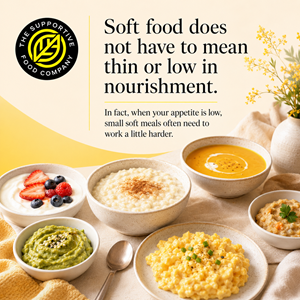 Soft food does not have to mean thin or low in nourishment.
In fact, when your appetite is low, small soft meals often need to work a little harder.
Protein can come from foods such as scrambled or poached eggs, Greek yoghurt, soft cheese, hummus, lentils, beans, tofu, flaky fish, minced meat in sauce, egg custard or milky puddings.
If you eat meat, slow-cooked dishes may be easier because the texture is softer and less dry. If you prefer plant-based foods, well-cooked pulses, smooth bean dishes and silken tofu may be gentler than dry meat substitutes.
Energy also matters, especially if you are losing weight or struggling to finish meals. Full-fat yoghurt, mashed potato with butter or olive oil, creamy porridge, smooth avocado, nut butter stirred into oats, and soups enriched with lentils or cream can all help.
This does not mean every meal has to feel heavy. It simply means trying to avoid a pattern where food is so light, plain or difficult that you do not get enough.
Fluids are important too. Dry mouth, medication and tiredness can all make dehydration more likely. Swallowing may also feel harder when your mouth is dry.
Sips of water, milk, herbal teas, broths and smooth soups may help, depending on what you can manage. If thin drinks make you cough, choke or feel unsafe, ask for professional advice rather than trying to manage that alone.
Soft breakfast ideas
Breakfast can feel easier when it is simple and gentle.
You might try:
- porridge made soft with milk or a milk alternative
- Weetabix or similar cereal soaked until very soft
- yoghurt with stewed fruit
- soft scrambled eggs
- semolina
- rice pudding
- a smoothie that is smooth, mild and not too acidic
If mornings are difficult, even a few spoonfuls count. You do not have to manage a full bowl for it to be worthwhile.
Soft lunch and supper ideas
For lunch or supper, softer meals can still feel warm, filling and comforting.
You might try:
- blended vegetable soup
- lentil soup
- dhal with well-cooked rice
- mashed potato with soft fish
- cauliflower cheese
- macaroni cheese
- minced chicken or meat in sauce
- cottage pie with extra gravy
- a soft omelette
- well-cooked pasta with a smooth sauce
Some people find it easier to eat smaller amounts every two or three hours rather than facing three larger meals. This can take some pressure off and make eating feel less overwhelming.
Soft snacks that can help
Snacks can be very useful during recovery. They can add nourishment without the pressure of a full meal.
Gentle options include:
- yoghurt
- mousse
- custard
- soft cheese
- mashed banana with peanut butter
- avocado mashed smooth
- smoothies
- milky drinks
- hummus
- soft egg mayonnaise
- smooth soup in a mug
If sweet foods start to taste too strong or unpleasant, try a savoury option instead. Taste changes are common after treatment, and it is okay if your usual favourites do not appeal for a while.
Soft desserts are not “just treats”
Desserts can be practical during recovery. They can bring comfort, calories and a sense of pleasure when appetite is low.
You might try rice pudding, custard, trifle without sharp or crunchy layers, soft poached pears, smooth fruit compote, mousse or full-fat yoghurt.
Food is not only fuel. It can also offer reassurance, routine and care. A soft dessert that you enjoy may be genuinely helpful.
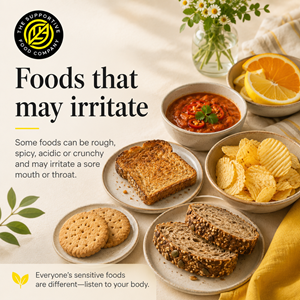
Foods that may irritate
Some foods are more likely to sting, scratch or feel difficult, especially when your mouth or throat is sore.
You may need to be careful with:
- spicy foods
- citrus fruits
- tomatoes or sharp tomato sauces
- vinegar-based foods
- rough toast
- crisps
- seeded bread
- dry pastry
- hard biscuits
- crunchy cereals
- sticky foods eaten on their own, such as thick peanut butter
Some foods can be soft but still troublesome. Mashed potato may feel gluey if it is too thick. Bread can clump in the mouth. Stringy melted cheese may be hard to manage. Smoothies may irritate if they contain acidic berries.
This does not mean you have to avoid these foods forever. It simply means they may not be the kindest choice while your mouth, throat or digestion is sensitive.
When food tastes different
Taste changes are common after treatment, especially after some cancer therapies. Foods you normally enjoy may taste metallic, bitter, bland or simply wrong.
This can be frustrating and emotional. It can feel like another loss at a time when you are already dealing with a lot.
On difficult days, it may help to aim for “acceptable” rather than ideal. A plain bowl of porridge that you can manage is more useful than a carefully planned meal that turns your stomach.
Your appetite and taste may change from day to day. Try to stay flexible. What does not work today may work again another time.
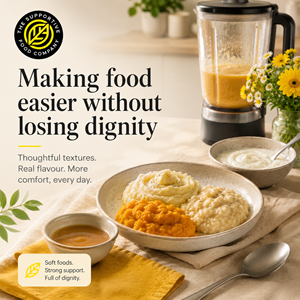
Making food easier without losing dignity
Advice about eating during recovery can sound simple from the outside.
“Eat little and often.”
“Add more calories.”
“Try a supplement.”
“Just have soup.”
But eating when you are in pain, exhausted, frightened or grieving the loss of your normal appetite is not simple at all.
Small, practical changes can help. Serve smaller portions on smaller plates. Keep foods moist with gravy, sauce, custard or yoghurt. Use a blender if needed, but remember that not every meal has to become a purée.
Many people can manage soft, fork-mashable foods more comfortably than fully blended meals. Blended food can be useful, but it can also become monotonous quickly.
Convenience foods can also have a place. Tinned soups, supermarket custards, ready-made rice pudding, soft frozen meals and prepared mashed vegetables can all support recovery when cooking feels like too much.
There is no shame in choosing easier options. Food support should be realistic. Not everyone has the time, money, energy or help to cook from scratch every day.
If you are caring for someone else
If you are preparing food for someone recovering after treatment, ask what feels manageable before making a large meal.
Symptoms can change quickly. A food that worked yesterday may feel impossible today. A meal that smells comforting one day may feel overwhelming the next.
Gentle flexibility is often more helpful than routine. Offer choices where possible, keep portions small, and remember that a few spoonfuls may still be a meaningful success.
When soft foods are not enough
Sometimes eating difficulties need more support than soft foods can provide.
Please seek professional advice if you or someone you care for has:
- coughing or choking when eating or drinking
- a wet or gurgly-sounding voice after swallowing
- food feeling stuck
- repeated chest infections
- severe mouth pain
- ongoing vomiting
- signs of dehydration
- significant or rapid weight loss
- fear of swallowing
- difficulty managing fluids
Swallowing problems can affect safety as well as comfort. If you have been advised to follow a texture-modified diet or use thickened fluids, follow that guidance carefully.
Soft foods can be a helpful part of recovery, but they are not a substitute for clinical assessment when symptoms are severe or worrying.
A gentle reminder
Food is personal. It is social, cultural, emotional and often tied to memories, family and identity. When eating becomes difficult, it can feel isolating.
That is why compassionate, practical support matters. At Supportive Food Directory, we believe food support should protect dignity as well as health.
Recovery rarely moves in a straight line. Some days a warm bowl of soup may feel possible. On other days, only a few spoonfuls of yoghurt may be enough.
That still counts as care.
That still counts as nourishment.
And it still counts as progress.