
Farm Shops vs Supermarkets: What Really Matters?
A punnet of strawberries picked yesterday and sold close to where it was grown can feel and taste very different from one that has travelled through a large supply chain. But that does not mean one way of shopping is “good” and the other is “bad”.
For most people, food shopping is a mix of practical choices. We think about price, freshness, convenience, health, time, transport, family needs, and what is actually available nearby. Farm shops and supermarkets both have strengths. They also both have limitations.
So rather than turning this into a competition, it is more useful to ask: what does each one do well, where can each fall short, and how can we make choices that work in real life?
 Farm shops & supermarkets: what is the real difference?
At first glance, the difference seems simple. Farm shops are usually smaller, more local, and often more seasonal. Supermarkets are larger, more centralised, and built to serve lots of people at scale.
That scale is one of the main reasons supermarkets are so useful. They can offer a wide range of food and household items in one place, often with longer opening hours, home delivery, and regular promotions. For many households, that convenience is not a luxury — it is essential.
Farm shops often work in a different way. They may sell food grown on their own farm or sourced from nearby producers. That can mean shorter supply chains, clearer sourcing, and a closer connection between the person growing or making the food and the person buying it.
This can be a real strength. Many people value being able to ask where something came from, how it was grown, or how the animals were raised. Farm shops can also help keep money moving in the local economy and support smaller producers who might otherwise struggle to compete.
But it is important to be fair. Local food is not always affordable for everyone, and supermarkets are not automatically poor quality. Some supermarkets offer excellent basics, good frozen and tinned options, strong labelling, and useful choices for people with dietary needs. Some farm shops, meanwhile, can be expensive or more focused on premium treats than everyday essentials.
The honest answer is that both can be helpful, depending on the person, the place, and the situation.
 Price, value and everyday reality
Price is often the biggest factor in food shopping. That is completely understandable. When food, energy, rent, and other costs are rising, people have to make decisions based on what they can afford.
Supermarkets usually have the advantage on headline price, especially for pantry staples, household basics, frozen food, and multi-buy offers. Their buying power allows them to keep many products cheaper than smaller shops can. For someone doing one weekly shop, shopping on a tight budget, managing fatigue, caring responsibilities, disability, or limited transport, supermarkets can make life much easier.
Farm shops can sometimes look more expensive at first glance. But value is not always just about the lowest price on the shelf. A fresher loaf that gets fully eaten may be better value than a cheaper one that goes stale. Vegetables that last longer in the fridge may reduce waste. Eggs, meat, fruit, or seasonal produce from a good local source may feel worth paying a little more for when the budget allows.
That said, no one should feel guilty for choosing the cheaper or more convenient option. Food choices happen within real-life limits. A fair food system should not expect people to choose between feeding their family affordably and supporting better conditions for farmers and producers.
The bigger question is not “where should everyone shop?” but “how do we make good food more accessible to more people?”
Nutrition, freshness and everyday health
For people living with cancer, diabetes, heart disease, digestive problems, reduced appetite, or other health concerns, food quality can matter in very personal ways. It can affect energy, recovery, comfort, digestion, and day-to-day wellbeing.
Farm shops often shine when it comes to fresh seasonal produce, eggs, meat, dairy, and foods with a clear story behind them. Shorter supply chains can mean food spends less time in transport and storage. That can improve taste, texture, and freshness. For many people, the biggest benefit is simple: fresh food that tastes good is more enjoyable to eat.
Supermarkets also have an important role in healthy eating. They often provide clear labels, specialist ranges, gluten-free products, dairy-free alternatives, low-salt options, easy-prep meals, frozen fruit and vegetables, tinned pulses, plain yoghurt, and other useful everyday foods. For people managing medical needs, limited energy, or specific diets, that reliability can be very helpful.
This is why rigid rules do not work. Eating well is not only about where food comes from. It is also about whether the food is affordable, suitable, easy enough to prepare, and realistic for the person eating it.
A locally grown cabbage may be wonderful, but not if someone is too tired to cook it and ends up skipping a meal. A supermarket soup, frozen vegetable mix, or simple ready meal may be the more supportive choice on a difficult day.
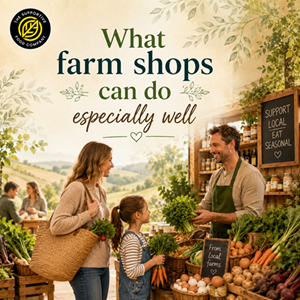 What farm shops can do especially well
A good farm shop can offer more than food. It can help support local producers, protect traditional skills, keep money in the local area, and build stronger links between farms and communities.
That matters. Long supply chains can be affected by weather, fuel costs, labour shortages, global events, and transport disruption. Local food networks are not a complete replacement for supermarkets, but they can add resilience and variety to the wider food system.
Farm shops can also offer trust in a very human way. You may be able to ask where the meat came from, what is in a jar of chutney, how the vegetables were grown, or which foods are in season this week. For people trying to avoid certain additives, eat more simply, support gut health, or make careful choices during illness, that direct conversation can feel reassuring.
There is also something encouraging about seeing food in its proper season. It reminds us that food is grown, raised, harvested, baked, preserved, and prepared by real people. That connection can easily get lost in modern shopping.
But farm shops are not automatically perfect just because they are smaller. Some stock items from much further away. Some focus mainly on gifts and luxury products. Some may be too expensive for everyday shopping. The best farm shops are the ones that stay connected to their communities, offer genuine local produce where possible, and make good food feel welcoming rather than exclusive.
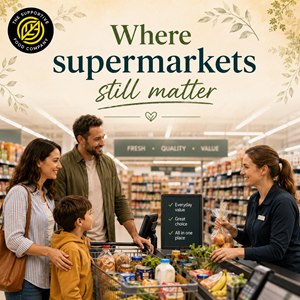 Where supermarkets still matter
It is easy to criticise supermarkets, but it is not fair to criticise the people who depend on them. For millions of households, supermarkets are the most practical option. They offer affordability, variety, accessibility, delivery, parking, late opening hours, and the ability to buy most things in one place.
That matters for busy families, older people, carers, disabled people, people without nearby independent shops, and anyone trying to stretch a budget.
Supermarkets also have the power to make healthier and more sustainable choices available to a lot of people. Because they are so large, even small improvements can have a big impact. Better sourcing, clearer labelling, fairer treatment of producers, affordable fresh food, improved ready meals, and less emphasis on highly processed promotions could all help many households.
The aim should not be to get rid of supermarkets or make people feel bad for using them. The aim should be to encourage supermarkets to use their influence responsibly, while also making sure smaller producers and local food networks have a fair chance to survive.
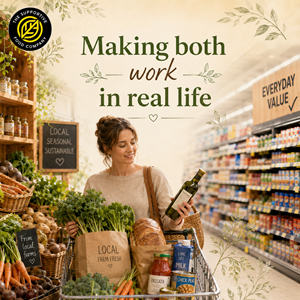 Making farm shops and supermarkets work in real life
For most people, the answer will not be either/or. It will be a mix.
You might buy staples, frozen food, tins, cleaning products, and budget basics from a supermarket, then use a farm shop for eggs, seasonal vegetables, meat, bread, preserves, or something special when you can. You might visit a farm shop once a month rather than every week. You might buy items that freeze well, ingredients you know you will use, or produce that can form the base of several meals.
If money is tight, it can help to shop seasonally rather than aspirationally. Farm shops are often at their best when they sell what is abundant and genuinely local, not just what has been packaged as a luxury product. Ask what is in season. Compare prices. Think about what will actually be eaten.
Good food choices should support your life, not make it harder.
Supportive Food exists because food sits inside a wider picture of health, money, access, community, and care. No one should be shamed for shopping where they can afford to shop. At the same time, when we do have some choice, it is worth thinking about what our spending supports.
Sometimes that might mean backing a local grower. Sometimes it might mean choosing the supermarket option that keeps the weekly budget under control. Sometimes it might mean buying frozen vegetables because they are affordable, nutritious, and do not go to waste.
A better food future will not be built by expecting people to shop perfectly. It will be built by making nourishing food easier to access, helping farmers and producers earn fairly, and making local food more visible, practical, and welcoming.
In the end, the best choice is the one that feeds you well, respects your circumstances, and supports the kind of food system you want to see more of — whenever and however that is possible.