
 Richest and poorest nations? | Zero Hunger Projects | This page: Food Justice Campaigns | Editor
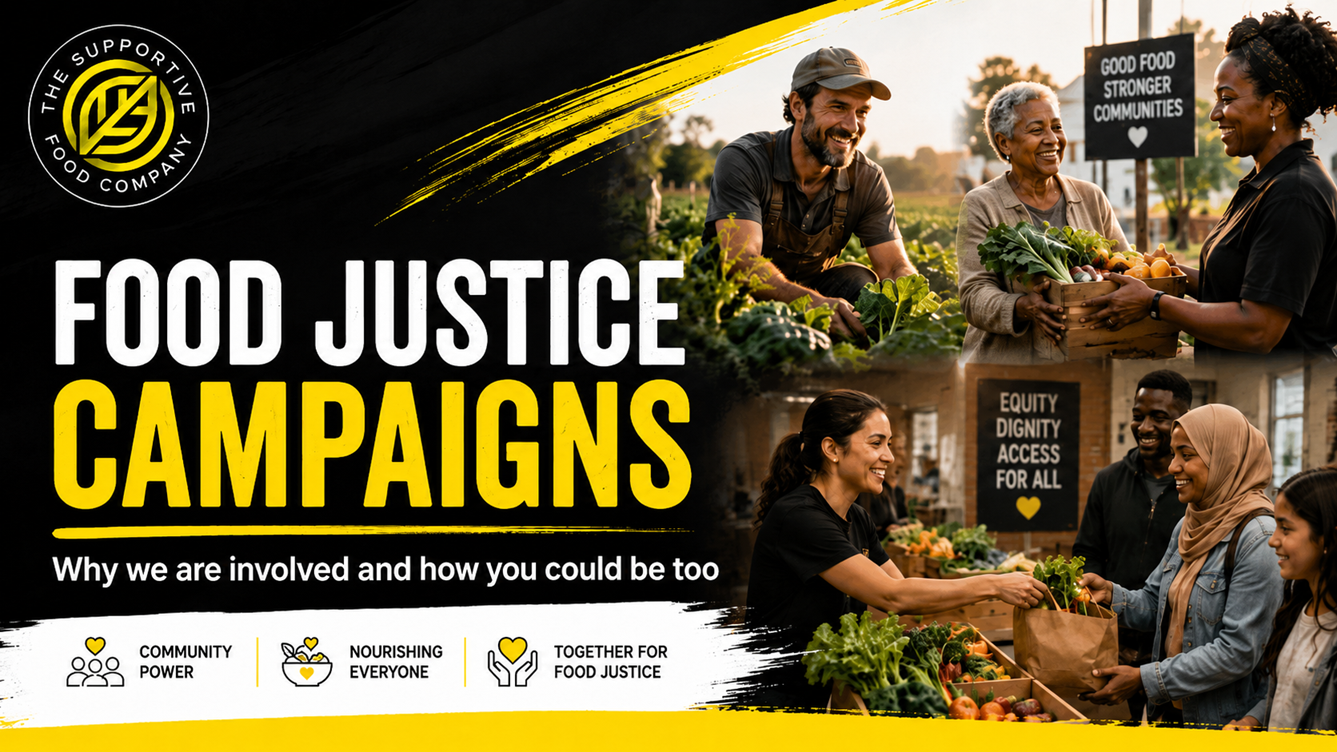
Food Justice Campaigns: Why We Are Involved and How You Could Be Too
A parent should not have to choose between paying the energy bill and buying fresh food for a child with diabetes. A farmer should not be forced to waste good produce while families nearby struggle to eat well.
These are the kinds of contradictions that food justice campaigns are trying to challenge.
Food justice is about more than charity. It is not only about food banks or emergency parcels, important though they can be. At its heart, food justice asks a bigger question: who can reliably access nourishing food, who cannot, and why?
The answer takes us into poverty, transport, farming, school meals, public health, retail pricing, land use and dignity. It also reminds us that food is not just a product. It is part of health, family life, culture, recovery and community resilience.
What Food Justice Campaigns Are Trying to Change

Food injustice looks different in different places.
For one person, it may mean living in an area with no easy route to shops selling affordable fresh food. For another, it may mean trying to manage cancer treatment, heart disease, diabetes, dementia or menopause symptoms on a budget that barely covers the basics. For a grower or producer, it may mean being trapped in a system that rewards low prices and volume while undervaluing quality, care and resilience.
Food justice campaigns challenge the idea that poor access to good food is simply a personal problem. In most cases, hunger is not caused by a lack of food overall. It is caused by poverty, poor distribution, weak local infrastructure, unequal policy choices and a food economy that leaves too many people priced out or overlooked.
That matters for health as well as fairness. Diet-related illness does not affect everyone equally. People already facing low income, insecure housing, disability, long-term illness or discrimination are often more likely to face barriers to nourishing food.
When campaigners talk about food justice, they are talking about prevention, dignity and practical support — not blame.
Why Food Justice Matters for Health
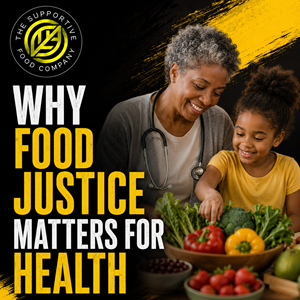
For people living with illness, food is never just fuel. It can affect blood sugar, inflammation, digestion, strength, energy, treatment tolerance and recovery.
But advice about eating well can feel impossible when someone cannot afford ingredients, has no suitable cooking facilities, lacks time, or can only buy what is nearby and discounted.
This is where food justice becomes so important. It bridges the gap between nutritional advice and real life. There is little point telling people to eat more fresh, fibre-rich, minimally processed food if the wider system makes that much harder for some households than others.
The consequences build quietly. Children may struggle to concentrate. Older adults may skip meals to save money. Patients may lose strength because suitable food is unavailable or unaffordable. Carers may burn out trying to keep everyone fed.
None of this is inevitable. It reflects choices in planning, policy, investment and community support.
If we care about prevention, recovery and long-term wellbeing, access to nourishing food must be treated as part of public health — not as a lifestyle extra.
What Food Justice Campaigns Can Look Like
Food justice work can take many forms.
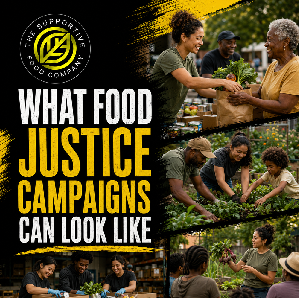
Some campaigns are highly visible. They call for better school food, protect community growing spaces, support local markets or campaign for fairer food policies.
Others are quieter but just as important. They redistribute surplus food, support community kitchens, build mutual aid networks, improve food education, or connect low-income households with growers and producers.
The strongest campaigns usually do two things at once. They respond to immediate need, while also asking why that need exists in the first place.
Emergency food support can be essential during a crisis. But if the work stops there, the deeper problem remains. A fairer food system also needs income security, decent local food provision, fairer returns for producers and stronger links between food, farming, health and community life – aided by community groups.
There is also a big difference between campaigns done for communities and campaigns built with them. People experiencing food insecurity understand the barriers better than anyone: transport, opening hours, stigma, cultural relevance, disability access, cooking facilities and whether the food offered is actually usable at home.
Good campaigns listen to that lived experience.
Where Good Intentions Can Fall Short
Food justice work needs honesty as well as compassion.
Some projects rely heavily on surplus food without asking why so many people need emergency help in the first place. Others use the language of community but give little power to the people most affected.
There are also real trade-offs. A local food project may improve access in one area but struggle to stay funded. Supporting small producers may strengthen local supply, but prices can still be too high for households under severe pressure. Campaigns for healthier diets can sound judgemental if they ignore poverty, stress, illness and lack of time.
This does not mean food justice campaigns should be less ambitious. It means they need to be thoughtful.
Rural communities face different barriers from inner-city neighbourhoods. Families dealing with disability, cancer treatment, dementia or long-term illness may need more tailored support. What works well for one group may be inaccessible to another unless campaigns are designed with care.
What Makes Campaigns More Effective
The most effective food justice campaigns connect hunger, health and fairness.
They recognise that farmers, food workers, patients, carers and consumers are not separate issues. They are part of the same system.
They also speak plainly. People are more likely to engage when campaigns respect dignity, avoid blame and offer practical ways to take part.
That might mean supporting a community pantry, improving access to affordable fresh food, advocating for better school meals, defending local producers, or creating spaces where health professionals, carers, growers and community groups can share knowledge.
Strong campaigns also make room for complexity. Food prices matter, but so do wages. Availability matters, but so does transport. Education matters, but so do energy bills, kitchen access and time.
If only one part of the problem is addressed, progress can be fragile.
This is where a mission-led platform such as The Supportive Food Company has a meaningful role. By connecting producers, patients, carers, health-conscious households and community-minded organisations, we can help move the conversation beyond food as a commodity alone.
Food is also about health, dignity, resilience and care.
How You Can Support Food Justice
You do not need to run a national campaign to make a difference. Food justice often grows through steady local action.
You might support a community pantry that protects dignity. You might buy from ethical producers when you can. You might speak up for better school food, support local growing projects, or back organisations helping people access suitable food during illness or financial pressure.
If you work in health, care or wellbeing, you can ask whether people can realistically access the food they are being advised to eat. You can notice when food insecurity is affecting treatment, recovery or day-to-day health. You can help make nutrition and food access part of care, rather than an afterthought.
If you are a farmer, grower or producer, your voice matters too. Food justice is not anti-farmer. In fact, fairer food systems depend on producers being respected and paid properly for the work they do.
And if you are currently struggling, food justice includes your right to dignity. Needing support should not mean shame. A decent food system should help people eat well without making them prove they are desperate first.
Towards a Fairer Food System
No single campaign can fix hunger, poor diet and inequality all at once. But food justice campaigns matter because they insist these issues belong together.
They refuse the false choice between meeting urgent need and asking for deeper change.
A fairer food system would mean good nutrition is not reserved for those who can afford it. It would mean people managing illness or recovery have real access to suitable food. It would mean producers are not pushed to the brink while communities go without.
That future will not be built by goodwill alone. It will take pressure, partnership and persistence.
But every time we replace blame with solidarity, and treat nourishing food as something people should be able to count on, we move closer to the food system we all deserve.
Home | Food | Facebook | Other sources | Investors | Editors | Contact