
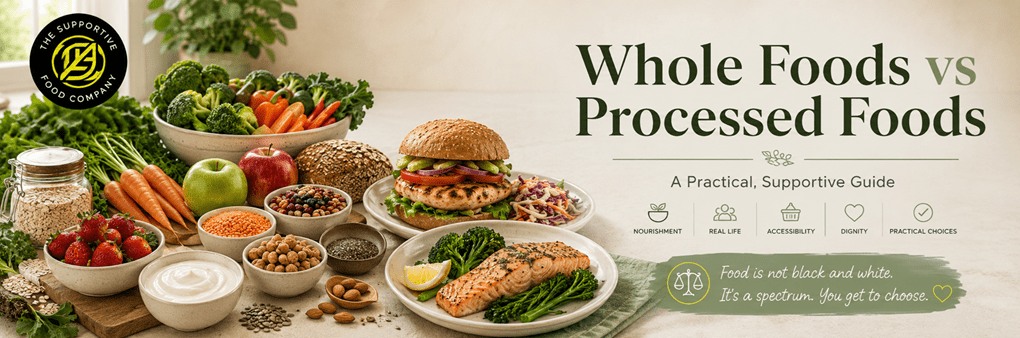
 Whole Foods vs Processed Foods: A Practical, Supportive Guide
A can of beans, a box of strawberries, a sliced loaf of bread, a tub of yoghurt, a packet of crisps or chips. When people talk about “whole foods” and “processed foods”, everyday life quickly becomes more complicated than the slogans suggest.
For many people, food choices are not shaped by nutrition advice alone. They are shaped by energy, income, transport, symptoms, appetite, cooking facilities, caring responsibilities, culture, availability and time. Someone recovering from treatment, caring for a relative, living with fatigue or trying to stretch a weekly food budget may not have the same choices as someone with a full kitchen, a flexible schedule and easy access to fresh produce.
That is why this conversation needs honesty, not judgement. For a more practical look at this issue, see our guide to healthy eating on a budget, which focuses on realistic food choices when money, time and energy are limited.
At its simplest, whole foods are foods that remain close to their natural state. Processed foods are foods that have been changed in some way, whether by cooking, freezing, drying, fermenting, milling, canning, pasteurising, refining or adding ingredients.
But processing is not automatically a problem. Some processing makes food safer, more affordable, easier to store and more practical to use. Other types of processing remove fibre and nutrients while adding large amounts of sugar, salt, refined starches, flavourings and industrial fats.
So the real question is not: “Is all processed food bad?”
A better question is: “What kind of processing are we talking about, and how does this food fit into someone’s real life?”
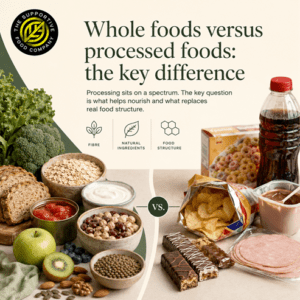 Whole foods versus processed foods: the key difference
Whole foods usually include vegetables, fruit, beans, lentils, nuts, seeds, eggs, fish, meat, plain grains and minimally altered dairy foods. These foods often contain fibre, vitamins, minerals, protein, healthy fats and natural food structures that help the body use them well.
That structure matters. An apple is not the same as an apple-flavoured snack bar. A bowl of oats is not the same as a sugary cereal made with refined grains and flavourings. Foods are more than lists of nutrients. Their texture, fibre, water content and natural structure all affect how filling they are and how the body responds to them.
Processed foods sit on a spectrum. Frozen vegetables, plain oats, tinned tomatoes, canned beans, pasteurised milk and plain yoghurt are all processed, but they can still be nourishing, practical staples.
At the other end of the spectrum are heavily manufactured foods designed for long shelf life, intense flavour and repeated purchase. These are often described as ultra-processed foods. They may contain refined starches, added sugars, emulsifiers, flavourings, colourings, sweeteners and high levels of salt or fat. They can be easy to overeat because they are often soft, sweet, salty, low in fibre and designed to be eaten quickly.
This matters because health is shaped by patterns, not single foods. A meal built around beans, vegetables, extra virgin olive oil and whole grains affects the body differently from one built around processed meat products, sweetened drinks and low-fibre snacks, even if the calorie count looks similar.
This is also why the question of whether organic food is a better choice or a bigger myth needs nuance rather than simple slogans.
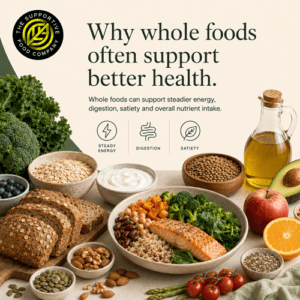 Why whole foods often support better health
Whole foods often help support steadier energy, better digestion and longer-lasting fullness. Fibre slows digestion, supports gut bacteria and can help with blood sugar and cholesterol regulation. Protein from less processed foods is often more satisfying than highly processed alternatives. Vitamins and minerals arrive as part of a wider food structure, rather than as a marketing claim added to a packet.
For people living with diabetes, heart disease, digestive conditions or the side effects of medical treatment, this can be especially important. A pattern that includes more whole and minimally processed foods may support blood glucose management, bowel regularity, blood pressure, appetite regulation and overall nutrient intake.
However, there is no single perfect way of eating for every person or every condition. Someone going through cancer treatment may temporarily tolerate soft, plain foods better than high-fibre meals. An older adult with a poor appetite may need energy-dense foods that are not “perfect” on paper but are helpful in practice. A person with a bowel condition may need to avoid certain whole foods during a flare-up.
Nutrition has to meet people where they are. The aim is not purity. The aim is support.
Processing is not one thing
It is helpful to separate useful processing from harmful overprocessing.
Washing, freezing, fermenting, pasteurising, drying and canning can make food safer and easier to use. Frozen spinach may be more realistic than fresh spinach for someone with fatigue or limited shopping access. Canned sardines can provide affordable protein and omega-3 fats. Plain yoghurt is processed, but it can provide protein, calcium and live cultures. Tinned beans can make a quick, nourishing meal possible when time or energy is low.
The difficulty comes when processing turns food into a product whose main purpose is convenience, craving and profit rather than nourishment. These foods often replace meals made from recognisable ingredients. They are also heavily marketed, especially in places where people are already under pressure from low incomes, long working hours, limited transport and poor food access.
So the issue is not simply whether a food has been processed. The issue is whether the processing helps preserve nourishment or whether it strips food down, rebuilds it and sells it back in a form that is less filling, less balanced and easier to overconsume.
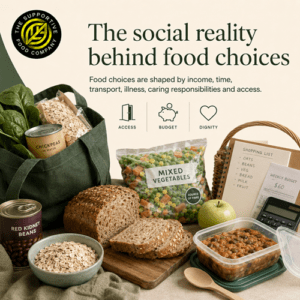 The social reality behind food choices
It is easy to tell people to eat more whole foods. It is harder to acknowledge why that may not always be simple.
Many households are navigating low incomes, reduced mobility, food deserts, limited kitchen space, unreliable transport, caring responsibilities, illness, pain, fatigue and time pressure. Some people do not live near a shop with affordable fresh produce. Some are working long shifts and need food that can be stored safely and prepared quickly. Some carers are managing hospital appointments, medication schedules, disrupted sleep and emotional exhaustion.
In those situations, convenience is not laziness. It may be survival.
This is closely connected to why food justice campaigns matter, because access to nourishing food is shaped by income, transport, health, local shops, policy and dignity.
This is why conversations about whole foods and processed foods must include food justice. Whole foods are often presented as the “right” choice, but access is not equal. Healthier eating cannot depend only on individual willpower while structural barriers remain in place.
A fairer food system matters. Farmers and small producers need viable routes to market. Communities need local food infrastructure. Patients, carers and families need trustworthy guidance that respects illness, disability, culture and budget. For a wider view, read what a fairer food system really looks like.
The Supportive Food Directory sits within this wider conversation: food is not only about nutrients, but also about dignity, access and care.
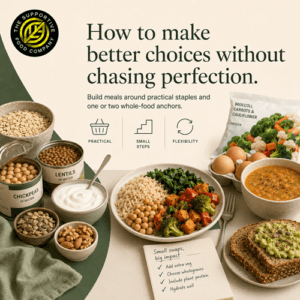 How to make better choices without chasing perfection
If your current diet includes a lot of packaged food, the goal is not to change everything overnight. A more realistic approach is to strengthen the nutritional centre of meals while keeping life manageable.
Start with foods that are processed but still close to their original form. Useful examples include tinned beans or lentils in water, frozen vegetables, plain oats, brown rice, eggs, unsalted nuts, seeds, natural yoghurt, tinned fish, wholegrain bread, canned tomatoes and simple soups with recognisable ingredients.
These foods can become the base of meals even when fresh ingredients are limited. If cost, fatigue or waste are barriers, our guide to reducing food waste at home offers practical ideas for using what you already have without adding more pressure.
It can also help to look at what a product is mostly made from. If the first ingredients are refined flour, sugar, syrups, modified starches or oils, the product may be less filling and lower in fibre. If the food looks like something you could make in a normal kitchen, that is often a better sign.
This is not a perfect rule, but it is a useful guide.
Another simple step is to build meals around one or two whole-food anchors. Add beans to soup. Put seeds or nuts on porridge. Serve frozen vegetables with eggs or fish. Add lentils to a sauce. Choose a baked potato with tuna, beans or yoghurt. Use wholegrain toast with soup. These small additions can improve the balance of a meal without requiring a complete lifestyle overhaul.
Small swaps that can make a real difference
Small, repeatable changes often matter more than dramatic short-term changes.
Swapping sugary breakfast cereals for porridge or unsweetened muesli can increase fibre. Replacing processed meats with eggs, beans, lentils or fish a few times a week may reduce salt and additives. Choosing fruit, yoghurt, oatcakes, nuts or wholegrain toast more often than sweets, pastries, crisps or chips may help support steadier energy.
These changes do not need to be expensive, complicated or perfect.
There is also room for compassion. A shop-bought soup with wholegrain toast may be the best meal someone can manage during treatment, grief, exhaustion or a difficult week. A frozen meal with added vegetables may be a realistic improvement. A canned bean stew may be more achievable than a recipe requiring ten fresh ingredients.
Progress in nutrition often comes from steady improvements, not strict rules.
Reading labels with common sense
Food labels can help, but they can also mislead. Claims such as “high protein”, “low fat”, “natural”, “source of vitamins” or “plant-based” do not automatically mean a product is nourishing. A snack bar can use healthy-sounding language and still be mostly sugar, syrup, refined starch and added flavourings.
When reading labels, look first at sugar, salt, fibre and the main ingredients. A shorter ingredient list is not always better, but long lists filled with flavour enhancers, sweeteners, fillers and modified starches often suggest a more heavily engineered food.
It is also useful to compare similar products rather than expecting every label to be perfect. One loaf of bread may have more fibre and less salt than another. One yoghurt may be plain and protein-rich, while another may be closer to a dessert. One soup may be mostly vegetables and lentils, while another may contain little more than starch, salt and flavourings.
For people managing conditions such as diabetes, cardiovascular disease, kidney disease or digestive disorders, label reading may be part of symptom or risk management. But even then, foods should not be judged by one number alone. A food may be higher in natural fat and still be nourishing. Another may be low in fat but high in sugar and low in fibre.
Food needs context.
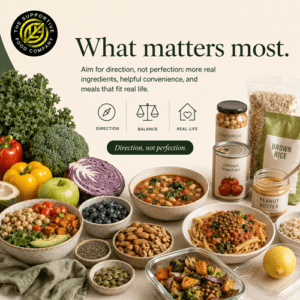 What matters most
The strongest everyday approach is usually a pattern rich in vegetables, fruit, beans, lentils, nuts, seeds, whole grains and other minimally processed staples, with processed convenience foods used thoughtfully where needed. This kind of pattern tends to support health more reliably than one dominated by ultra-processed products.
But people do not eat in perfect conditions. They eat in families, neighbourhoods, workplaces, hospitals, care settings and real kitchens. They eat with budgets, symptoms, traditions, preferences and limitations.
So when thinking about whole foods versus processed foods, aim for direction rather than perfection.
Keep more real ingredients in rotation. Use helpful convenience when life requires it. Be cautious with products designed to replace proper meals rather than support them. Choose foods that satisfy, nourish and fit your circumstances.
When readers want to think beyond individual meals, they can also explore how to find ethical producers and how to support local farmers directly.
And above all, remember this: healthier eating should not be treated as a privilege for the few. It should be a practical possibility for everyone.
Supportive Food provides general educational information only. It is not a substitute for personalised medical, nutritional or professional advice. If you are managing a medical condition, treatment side effects, medication interactions or significant dietary changes, please speak with a qualified health professional.