
 Organic Farming | Farming Practices | Today’s Food System | Advantages & challenges | A Message to Farmers | Farming benefits
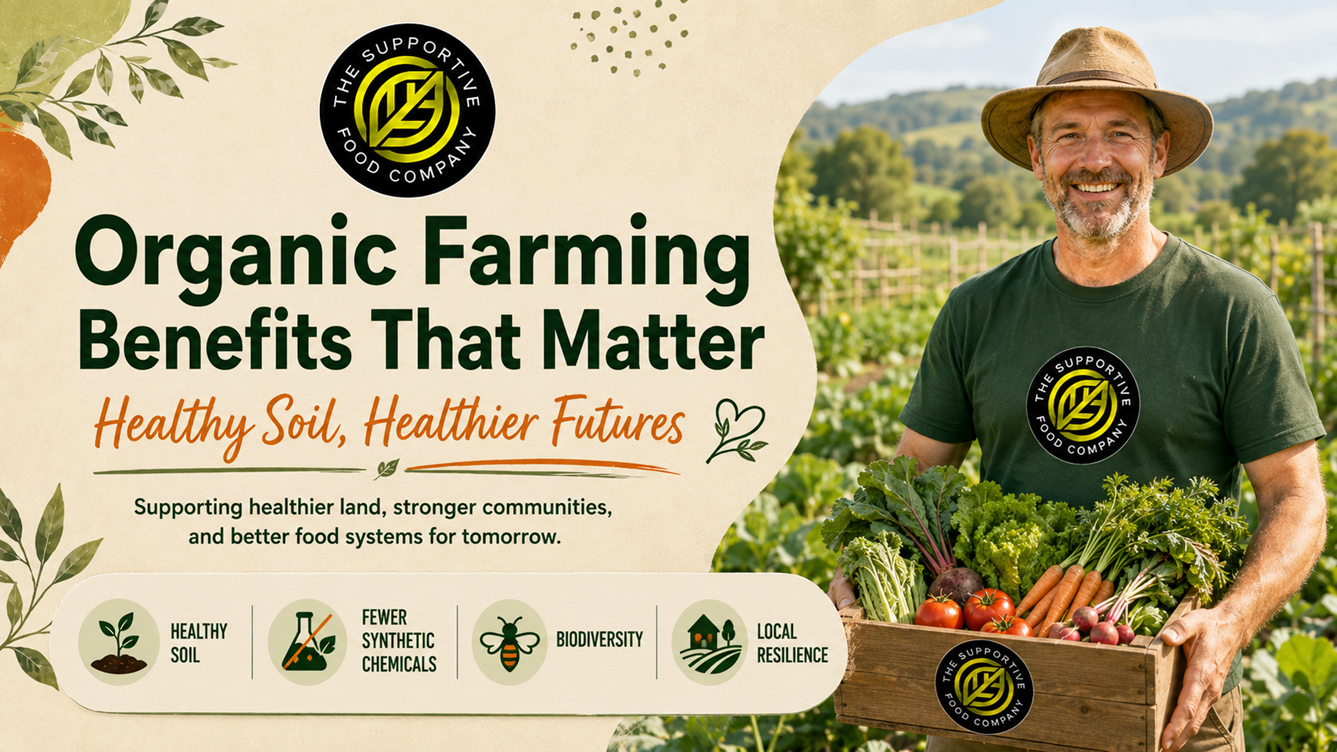
Organic Farming Benefits That Matter
Conversations about organic farming benefits matter
A field can look productive and still be losing its future. Topsoil can thin, pollinators can disappear, water can carry residues downstream, and the food system can become ever more dependent on inputs that many farmers can barely afford.
That is why conversations about organic farming benefits matter far beyond a label on a packet. They touch health, land stewardship, rural livelihoods and whether good food is available with dignity, not just to a few but across communities.
Why organic farming benefits matter beyond the farm gate
Organic farming is often summed up as avoiding synthetic pesticides, artificial fertilizers, and routine chemical fixes. While that’s part of it, there’s much more to the story.
At its core, it’s about working within nature’s limits instead of pushing past them. It’s about keeping soil healthy, safeguarding water, caring for animals more thoughtfully, and building an ethical food system that can last.
For households trying to make better food choices, especially those already managing chronic illness, this wider picture matters. Food is not only about nutrients on a label. It is also about how land is treated, what farm workers are exposed to, how local producers survive and whether farming methods strengthen or weaken the systems people rely on for long-term health.
Soil health is one of the biggest organic farming benefits
Healthy soil is not a passive growing medium. It is a living system, full of microbes, fungi, insects and organic matter that help crops grow, retain water and cycle nutrients. Organic farming tends to put soil health much closer to the centre of decision-making, using crop rotations, compost, cover crops and careful livestock integration to build fertility over time.
Damaged soil is costly in every way. It can cause erosion, lower yields, increase irrigation needs, and make farmers more reliant on purchased inputs. Building healthy soil structure helps the land retain moisture in dry spells and drain well during heavy rains. In a climate with growing extremes, that kind of resilience isn’t just theoretical—it can be the difference between a surviving harvest and a failed one.
There is no romance in pretending every organic system is perfect. Poorly managed organic land can still suffer degradation. But the model itself generally rewards practices that restore biological life in the soil instead of treating fertility as a product delivered in a bag.
Fewer synthetic chemicals, with wider public health implications
One of the most widely recognised organic farming benefits is reduced reliance on synthetic pesticides and fertilisers. For many consumers, that is the main reason they seek out organic produce. The concern is understandable. People do not want unnecessary chemical exposure in their food, homes, waterways or neighbourhoods.
It’s important to keep a balanced view. Organic doesn’t mean completely free of chemicals, since all farming involves chemistry, and certain approved organic inputs are still used when necessary. It also doesn’t mean every conventional farm is careless—many nonic farmers work responsibly and with great skill.
Even so, the overall direction of organic standards is clear. They are designed to reduce synthetic chemical use and encourage preventive approaches first. That can mean fewer residues in some foods, less contamination pressure on surrounding ecosystems and less routine exposure for those working on the land. For farming families and rural communities, that matters as much as the produce on a supermarket shelf.
Biodiversity gains are real, even if they vary
When hedgerows are protected, rotations are longer, mixed habitats are maintained and pesticide use is lower, wildlife often has a better chance. Birds, pollinators, soil organisms and beneficial insects can all benefit from farms managed with ecological diversity in mind.
One of the often-overlooked perks of organic farming is its boost to biodiversity, which is far from just a decorative touch. It plays a key role in pollination, natural pest control, and keeping ecosystems in balance. Farms rich in biological variety are usually more resilient to disruptions than those stripped down to the brink of collapse.
That said, results vary by landscape, crop type and management quality. An organic farm in a biodiversity-poor area will not magically restore everything on its own. But as part of a wider shift towards nature-friendly farming, organic methods can help create more hospitable conditions for life to return.
Animal welfare is often stronger under organic systems
For many people, ethical food choices include concern for the lives of animals. Organic standards usually place tighter rules on stocking densities, outdoor access, feed and welfare practices than intensive systems. That does not remove every welfare problem, and it should not stop consumers asking hard questions. Certification is a floor, not a guarantee of perfection.
Still, the approach makes a difference. Farming that offers animals more space and natural conditions aligns better with values of dignity and care than systems focused on productivity at the expense of behavior, stress, or routine drug use. For consumers aiming to shop with their conscience, that matters.
Nutrition claims need honesty, not hype
People often ask whether organic food is more nutritious. The truthful answer is that it depends. Some studies show differences in certain nutrients or lower pesticide residues, while others find nutritional gaps are modest or inconsistent. A carrot does not become medicinal simply because it is organic.
But that’s no reason to get cynical. Nutrition is just one piece of the food quality puzzle. If a farming system preserves soil health, limits chemical use, supports biodiversity, and treats animals more humanely, those are valuable wins—even if nutrient comparisons are mixed. For people living with illness or caring for someone who is, the bigger challenge is figuring out how to create a diet built on minimally processed, nutrient-rich foods that’s both affordable and doable.
Organic can play a part in that, but it is not the only route to a healthy plate. We need to say that plainly, because food justice is weakened when good nutrition is presented as something available only to those who can afford a premium.
The challenge of cost and access
Any honest article on organic farming benefits must confront the hardest issue – price. Organic food is often more expensive, and for many households it is simply out of reach as a regular option. Higher labour demands, certification costs, lower yields in some systems and weaker economies of scale all play a part.
This is where the discussion moves from individual choice to public responsibility. If farming methods that protect soil, water and biodiversity are better for society, the burden of paying for them should not fall only on shoppers already stretched by rent, heating and basic groceries. Fairer procurement, better support for small and transition-stage farmers, stronger local supply chains and serious action on poverty all matter here.
Food ethics cannot stop at the checkout. A healthier food system should not ask low-income families to carry the moral weight of structural failure. It should make nourishing, responsibly produced food more available as a matter of justice.
Organic farming benefits for smaller producers and local resilience
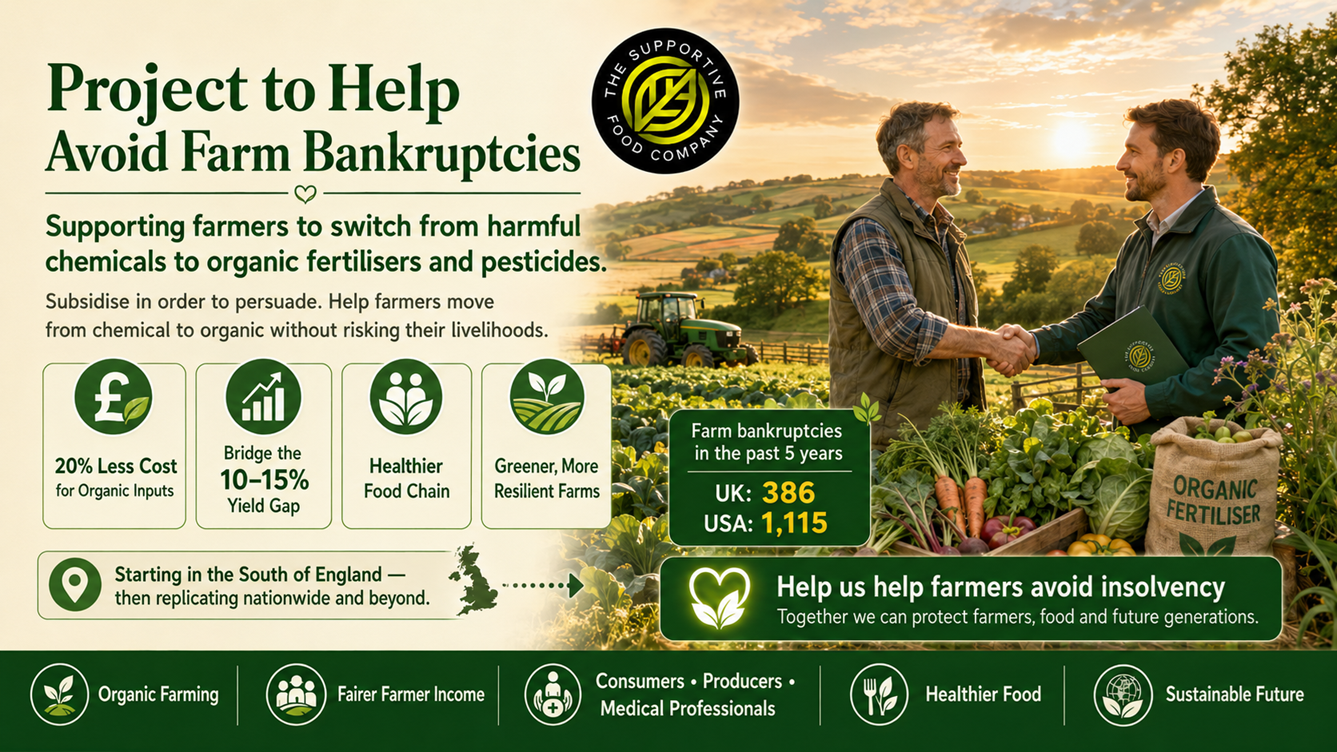
For independent farmers and producers, going organic can sometimes be a way to break free from costly synthetic inputs and unpredictable commodity markets. Still, the switch isn’t simple—it can mean extra paperwork, financial risk, a steep learning curve, and short-term money challenges. For some farms it’s doable; for others, it’s just not practical.
Where it works, though, organic production can help smaller enterprises build trust, tell a clearer story about their values and connect more directly with customers who care about provenance, ecology and health. In a directory-led, community-rooted space such as Supportive Food Directory, that connection matters. It turns food from an anonymous product into a relationship between land, producer and public wellbeing.
Local resilience also grows when communities know who grows their food and under what conditions. Shorter supply chains will not solve everything, but they can reduce distance between producer and eater, strengthen accountability and keep more value circulating closer to home.
What organic can and cannot solve
Organic farming is not a cure-all. It cannot by itself end hunger, reverse every chronic disease trend or repair decades of damage in rural economies. Some organic products travel long distances. Others are heavily marketed. Some farms cannot convert without serious support. And if diets remain dominated by ultra-processed food, an organic badge on a small fraction of purchases will not transform public health.
Dismissing organic farming just because it’s not perfect would be a mistake. Rarely do meaningful reforms come in a flawless package. Organic farming provides a proven approach that moves agriculture toward healthier soils, reduced synthetic chemical use, improved biodiversity, and often better animal welfare. It also preserves an important idea—that food production should be valued not only for yield, but for its impact on people, the environment, and future generations.
For readers trying to make thoughtful choices, perhaps the most useful approach is not purity but direction. Buy organic where it is accessible and where it matters most to you. Support farmers who are transparent about their methods. Ask how food is grown, not just what it costs. And keep pushing for a system where the benefits of better farming are not treated as a luxury. They are part of the common good.
A fair food future will not be built by labels alone, but labels can still point us towards better questions, better practices and a healthier relationship with the land that feeds us.