
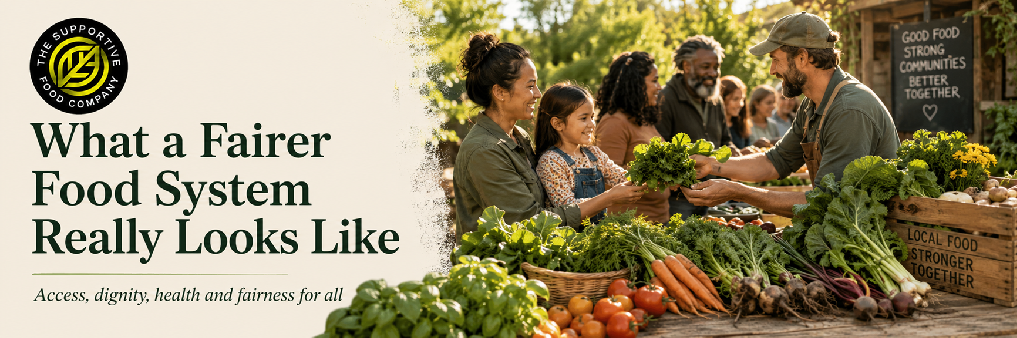
What a Fairer Food System Really Looks Like
A food system can look successful on paper while still failing the people who depend on it most.
Supermarket shelves may be full, yet fresh produce can still feel out of reach. Farmers may be praised for feeding communities, yet struggle to earn enough to keep going. Patients may be told to eat well, while suitable, affordable food remains difficult to access.
That is why a fairer food system is not just a farming issue or a shopping issue. It is a public health issue, a cost-of-living issue and a question of dignity.
For many households, food inequality is not an abstract idea. It shows up in missed meals, cheaper ultra-processed substitutions, long journeys to find decent produce, and the daily stress of trying to eat well on limited time, money or energy. For people living with illness, the pressure can be even greater. Good nutrition may matter more than ever, but access to the right food may become harder at exactly the wrong time.
A fairer, more ethical food system should work better for both ends of the chain: the people who need nourishing food, and the farmers, growers, producers, cooks, carers, community workers and food businesses who make that food possible.
Why a fairer food system matters to health
 Food is often described as a personal choice, but health outcomes show that choice is shaped by circumstances.
People do not make food decisions in a vacuum. They are influenced by price, income, transport, housing, cooking facilities, local shops, work patterns, caring responsibilities, health knowledge and energy levels.
If the surrounding conditions make nourishing food harder to buy, store, prepare or afford, advice alone will not solve the problem.
That matters deeply for people living with cancer, diabetes, heart disease, dementia, obesity, digestive problems and other chronic conditions. Nutritional needs can become more specific at the very time when income, appetite, confidence and daily energy may be under strain.
A person recovering from treatment may need gentle, nourishing meals. A carer may know what would help but still be limited by budget, fatigue or local supply. Someone managing blood sugar, heart health or weight may be trying hard, while the cheapest and most convenient options work against them.
A fairer approach to food must therefore include health access. Not wellness as a luxury product, but nourishment as part of basic care. This is why Supportive Food also points readers towards Nutritional Sources and Medical Sources where broader evidence and health information can be explored.
What makes a food system unfair?
 An unfair food system is not only one where hunger exists. It is also one where good food exists, but is not equally reachable.
It is where cheap calories are easy to find, while fresh, varied and nourishing foods are less visible, less convenient or more expensive. It is where people are told to make healthier choices without being given fair conditions in which to do so. It is where smaller farmers and ethical producers carry risk but do not receive enough of the value.
Many communities face poor retail access, rising food bills, limited public transport and shrinking household resilience. At the same time, independent growers and producers may face volatile input costs, labour pressures, unpredictable demand and buying systems that reward scale more than care.
The result is a chain full of contradictions. Consumers are told to take responsibility. Farmers are told to be more efficient. Charities are asked to fill the gaps. Food businesses are expected to absorb shocks. Yet the structure underneath remains too fragile and too unequal.
This is why Food Justice Campaigns matter. They help move the conversation away from blame and towards the systems that shape what people can realistically eat.
A fairer food system starts with access, not blame
 People do not need more shame around food. They need better conditions in which to eat well.
Access has several parts. There is physical access: whether people can reach shops, markets, community projects, growers or affordable delivery options. There is financial access: whether nourishing food is within budget. There is practical access: whether people have the time, equipment, storage and energy to prepare meals. There is informational access: whether guidance is clear, realistic and relevant to real lives.
This is especially important where illness is involved. Nutrition advice that ignores fatigue, medication side effects, swallowing difficulties, mobility problems, caring pressures or low income can leave people feeling they have failed, when the advice itself was not designed for their reality.
Fairness means meeting people where they are. It means recognising that a person may care deeply about eating well and still face serious barriers.
Local food can be part of the solution, but it must be discussed honestly. It can support freshness, traceability, community relationships and farmer resilience. However, local food is not automatically affordable for every household. Large-scale supply can improve availability, but it can also concentrate power. Community food projects can be life-changing, but they should not be expected to carry the weight of a broken system alone.
A fairer system needs many pieces working together: public policy, health services, education, farming support, local infrastructure, fair retail practices and community-led action.
Farmers and producers need fairness too
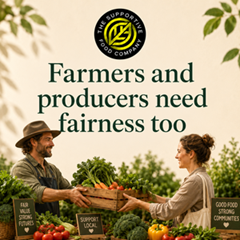 A healthier food future cannot be built on exhausted farmers and underpaid producers.
A fair food conversation that focuses only on consumers misses a crucial truth. If the people growing, rearing, making, cooking and distributing food cannot survive economically, the whole system becomes weaker. Communities lose skills, local supply becomes more fragile, and the market becomes more dependent on fewer large players.
Fairness for producers includes fair prices, better routes to market, reliable demand, sensible regulation, access to land, support for sustainable practices and stronger local food infrastructure. Small farms and independent producers often offer quality, care and traceability, but many operate with very little buffer.
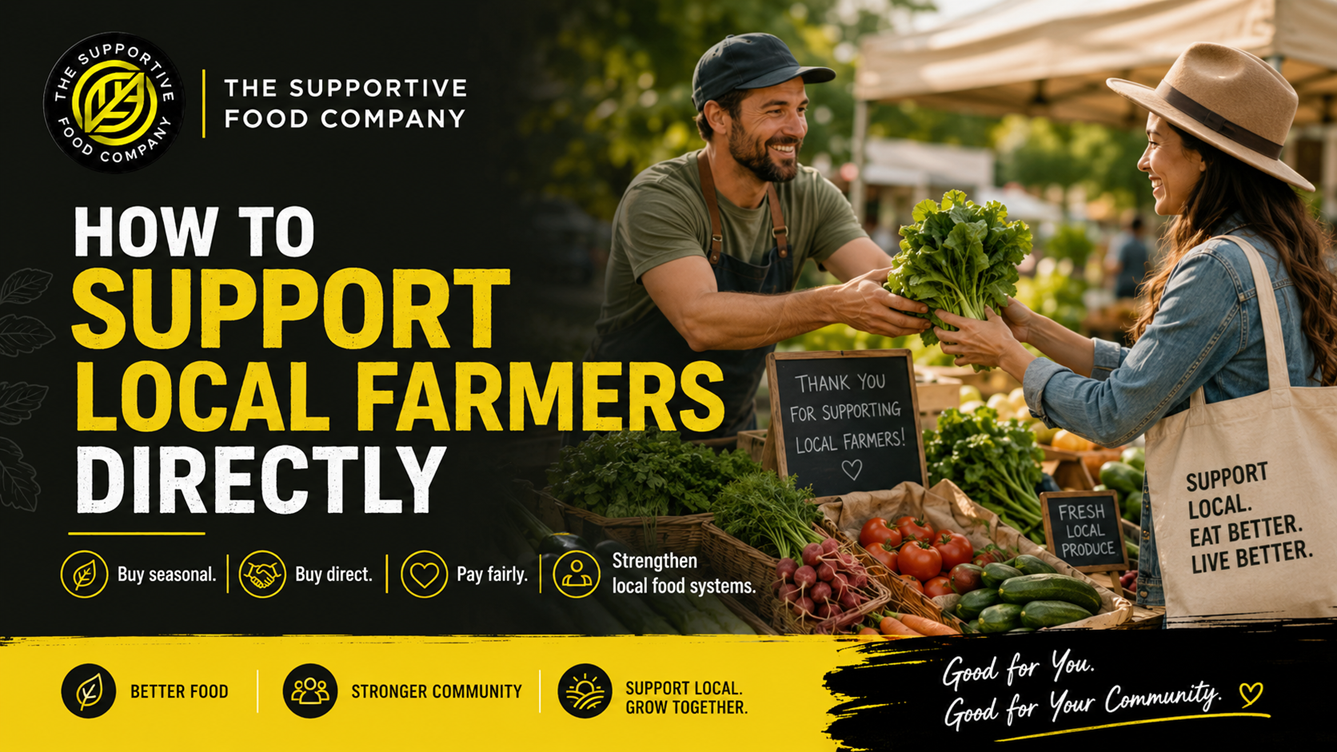
This is why it matters to ask how people can support local farmers directly. Buying directly is not possible for every household every week, but where it is possible, it can help more value reach the people producing the food.
Public institutions also have a role. Schools, hospitals, care homes, councils and public services can shape healthier markets through what they buy and from whom. Better procurement will not solve every problem, but it can create steadier demand for producers whose work supports health, community and resilience.
Organic and regenerative approaches may also form part of a fairer food future, especially where they protect soil, biodiversity and long-term growing capacity. For a farming-focused angle, readers can explore best examples of organic crops for farmers to grow.
The role of community in a fairer food system
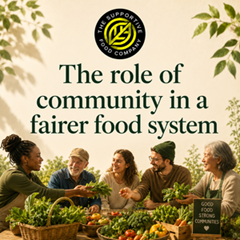 Policy matters, but so does proximity. Some of the strongest examples of a fairer food system come from local relationships.
These may include growers supplying neighbours, community kitchens reducing waste while feeding families, carers sharing practical nutrition knowledge, clinicians recognising food insecurity as part of care, and grassroots organisers connecting surplus with need.
Community action restores connection. It helps people see food not as an isolated product, but as part of a wider web of health, labour, land, culture and mutual responsibility.
When communities know who produces their food, and producers understand the health and financial pressures within their communities, better decisions become more possible. Food becomes less anonymous. Support becomes more human. Waste becomes harder to ignore. Dignity becomes easier to protect.
But community work should not be romanticised. Volunteers burn out. Funding runs short. Some areas have strong local networks, while others have very little infrastructure. A lasting solution needs both grassroots energy and structural support.
It also needs practical household-level change where possible. Reducing waste, cooking more confidently, using leftovers and valuing seasonal food can all help. The guide on how to reduce food waste at home connects directly with this wider fairness issue, because waste and scarcity should never sit side by side as if that is normal.
What needs to change in practice
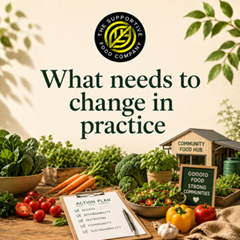 A fairer food system will look different depending on place, income, culture, health needs and local supply. Even so, some priorities are clear.
We need better support for independent farmers, growers and ethical producers. That means visibility, fair pricing, practical regulation, route-to-market support and procurement systems that reward quality and responsibility.
We need nutrition information that speaks plainly to people living with disease, disability, financial pressure or caring responsibilities. Advice should be realistic, respectful and grounded in ordinary life.
We need anti-hunger work that protects dignity rather than treating emergency food as a permanent answer. Food support should not only be about calories. It should include choice, cultural relevance, nutrition, respect and a pathway towards greater security.
We need more joined-up thinking between healthcare, food education, agriculture, local government and community organisations. Food access should be treated as preventative health infrastructure. Fresh produce, cooking confidence, local resilience, culturally appropriate options and trustworthy information all help people stay well.
We also need to support small growing efforts, whether in gardens, balconies, schools, community spaces or shared plots. Growing food at home will not replace a fair national or global food system, but it can build skills, confidence and connection. The article on organic foods and herbs to grow in your garden offers a practical starting point for households who want to grow even a little of what they eat.
Why fairness must include dignity
 One of the clearest tests of any food system is how it treats people when they are struggling.
If support is stigmatising, fairness is missing. If patients are given vague dietary advice without practical help, fairness is missing. If producers are praised publicly while being squeezed privately, fairness is missing. If emergency food becomes normal instead of temporary, fairness is missing.
Dignity should be the baseline.
That means food support that respects choice, not just calorie provision. It means public messaging that avoids shaming language. It means understanding that people can be trying hard and still face impossible constraints.
Dignity also applies to work. Farming, food production, food retail, care work, cooking and community food labour should not be treated as invisible or expendable. A healthier food future depends on valuing the people who make it possible.
A fairer system should also recognise that food is emotional and cultural as well as nutritional. People do not only need nutrients. They need meals they recognise, flavours they enjoy, food they can share, and support that does not make them feel judged.
The fairer food system we should be building
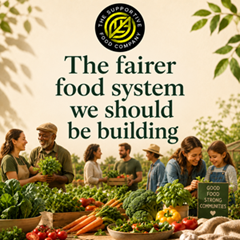 A truly fairer food system would make healthy food easier to reach, not harder.
It would reward good production, not punish it. It would treat nutrition as part of healthcare, not an optional extra for those who can afford it. It would reduce waste without normalising scarcity. It would support farmers without abandoning consumers. It would value community action without using it as an excuse for policy failure.
Most of all, it would measure success by real lives.
Who can access nourishing food? Who is left relying on poor-quality emergency support? Who can afford to cook? Who has safe storage and equipment? Who is producing the food, and are they being paid fairly? Who is carrying the unpaid labour of feeding families, neighbours and communities? Who benefits when the system works, and who pays when it fails?
That kind of change will not come from one sector alone. It asks something of policy, institutions, markets, producers, health services, communities and households. But if food is central to life, health and dignity, then building a better system is not an idealistic side issue.
It is practical, urgent work.
A fairer food system begins by refusing to accept that inequality around food is normal. It grows through better access, fairer production, stronger local networks, clearer health support and a deeper respect for everyone involved in feeding others.
Home | Food | Facebook | Other sources | Editors